Written by Colin McEvoy | May 5, 2026 | SHARE


Lehigh students brought a community-centered approach to global sustainability to the United Nations, highlighting how local action in the Lehigh Valley contributes to the U.N. Sustainable Development Goals.
For Indira Alvarado ‘26, the United Nations Sustainable Development Goals (SDGs) are not just a global framework. They are something she sees taking shape every day at Lehigh University and across the Lehigh Valley community.
“People here are constantly doing things in the Bethlehem community that actually contribute to the Sustainable Development Goals,” said Alvarado, who is graduating this month with a degree in political science. “We just don’t always recognize it.”
From volunteering through Lehigh’s Community Service Office to experiential learning through Creative Inquiry projects that engage directly with local organizations, she sees a clear link between global challenges and the work happening in the Lehigh Valley.
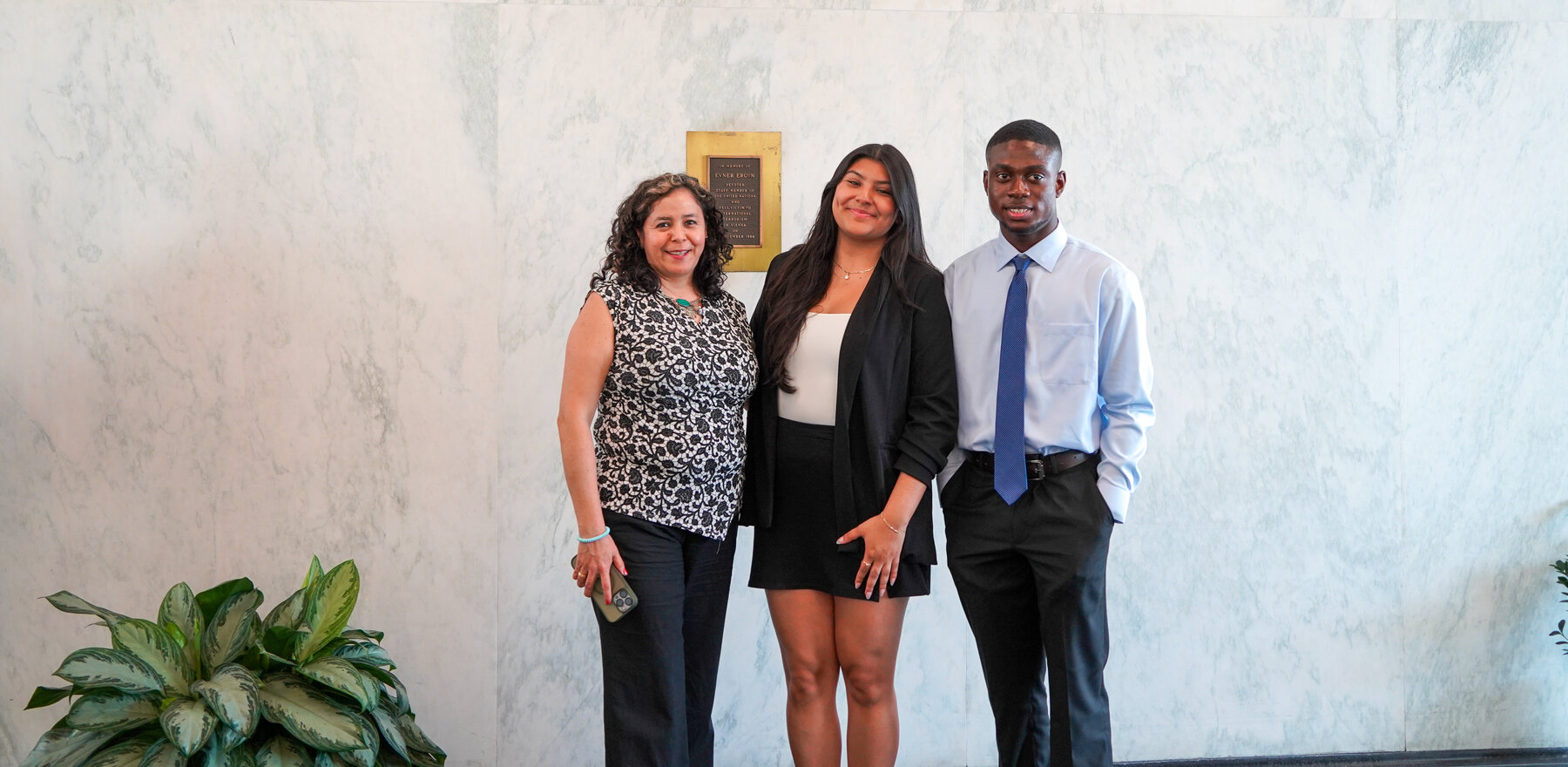
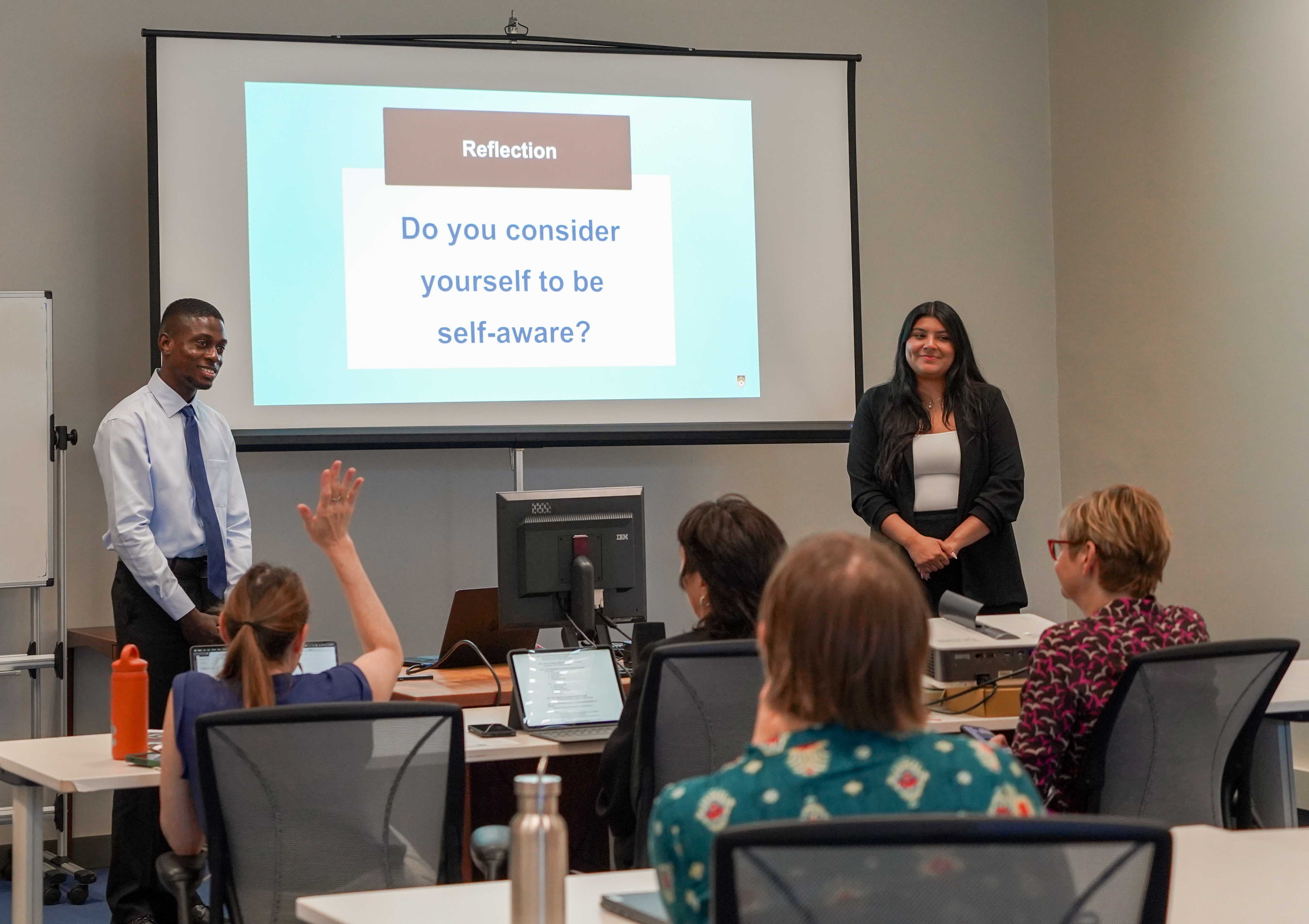
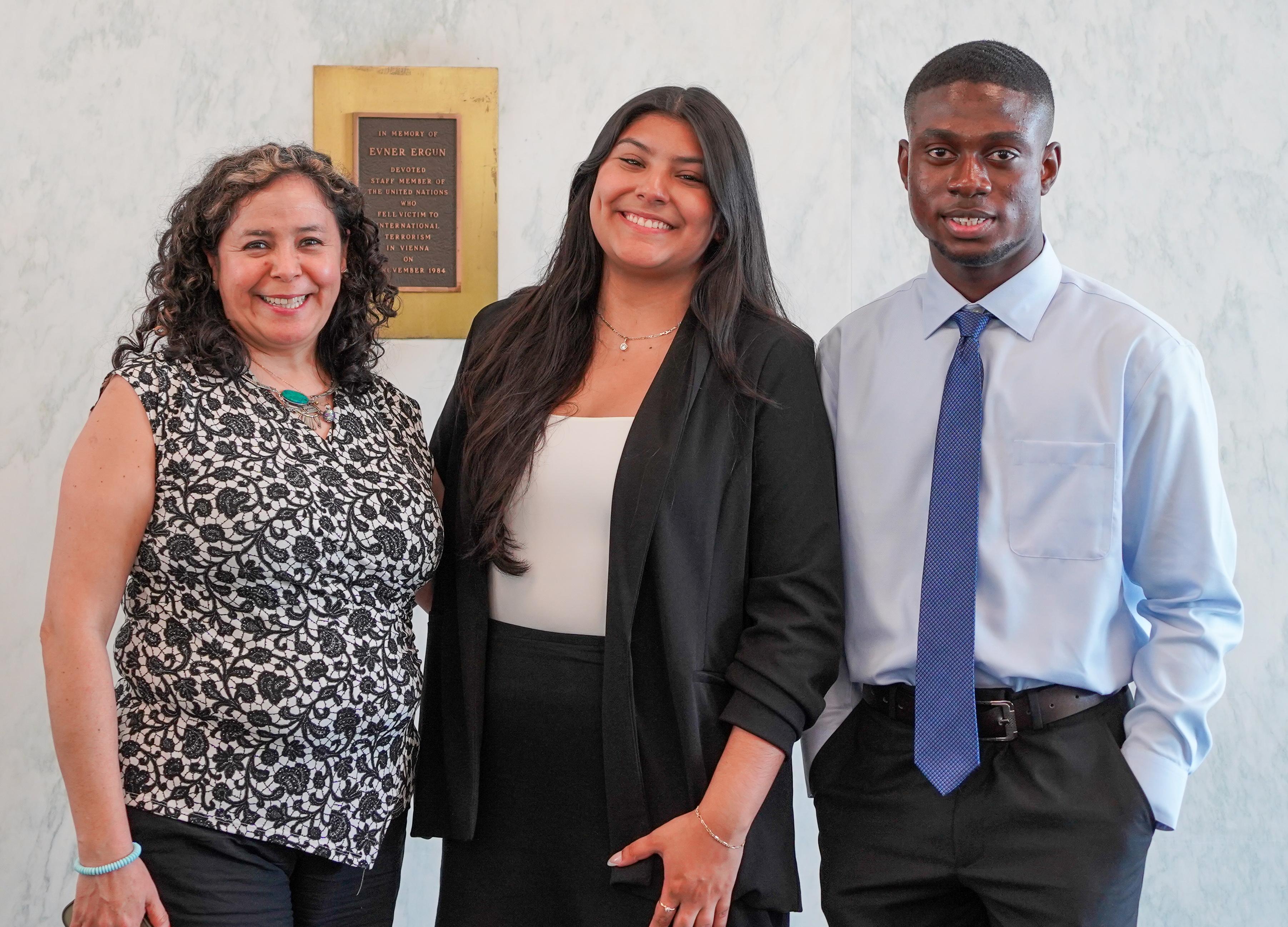
Alvarado and Abraham Yarba ‘28, an electrical engineering major at Lehigh, shared those perspectives at the United Nations on April 17. They discussed how universities can collaborate more intentionally on the SDGs, starting with a better understanding of the communities they serve.
LU/UN Faculty Fellows
The presentation grew out of an interdisciplinary class project led by Maria Cristina Montufar, a language specialist at the International Center for Academic and Professional English (ICAPE), and part of the Lehigh University/United Nations (LU/UN) Faculty Fellows Program.
The course challenges students to connect global issues like the SDGs to their own experiences and communities. That idea resonated with Yarba, who grew up in Ghana and saw the impacts of water scarcity firsthand, an experience that now shapes how he thinks about sustainability both globally and in the Lehigh community.
“We’ve been focusing a lot on external solutions like policy and funding,” Yarba said during the presentation. “But something is missing. We need to build self-awareness and empathy so we can better understand the people and communities we’re trying to help.”
The LU/UN Faculty Fellows Program is a first-of-its-kind initiative designed to deepen Lehigh’s engagement with the United Nations. It allows faculty from all five of Lehigh’s colleges to build international partnerships, advance research, and contribute directly to the U.N.’s work on the SDGs through the LU/UN Partnership.
Looking Inward
Montufar’s class project explores “inner cultivation” as a missing dimension in sustainability frameworks, emphasizing self-awareness and personal responsibility as a foundation for addressing global challenges. The course also examines how individual decisions, particularly around gender and equity, shape communities and environmental outcomes.
“We can’t solve global problems if we’re not willing to look inward first,” Montufar said. “As humanity, we really need to go within first and then be able to sort things out outside. The way we think and act in our own communities is where real change begins.”
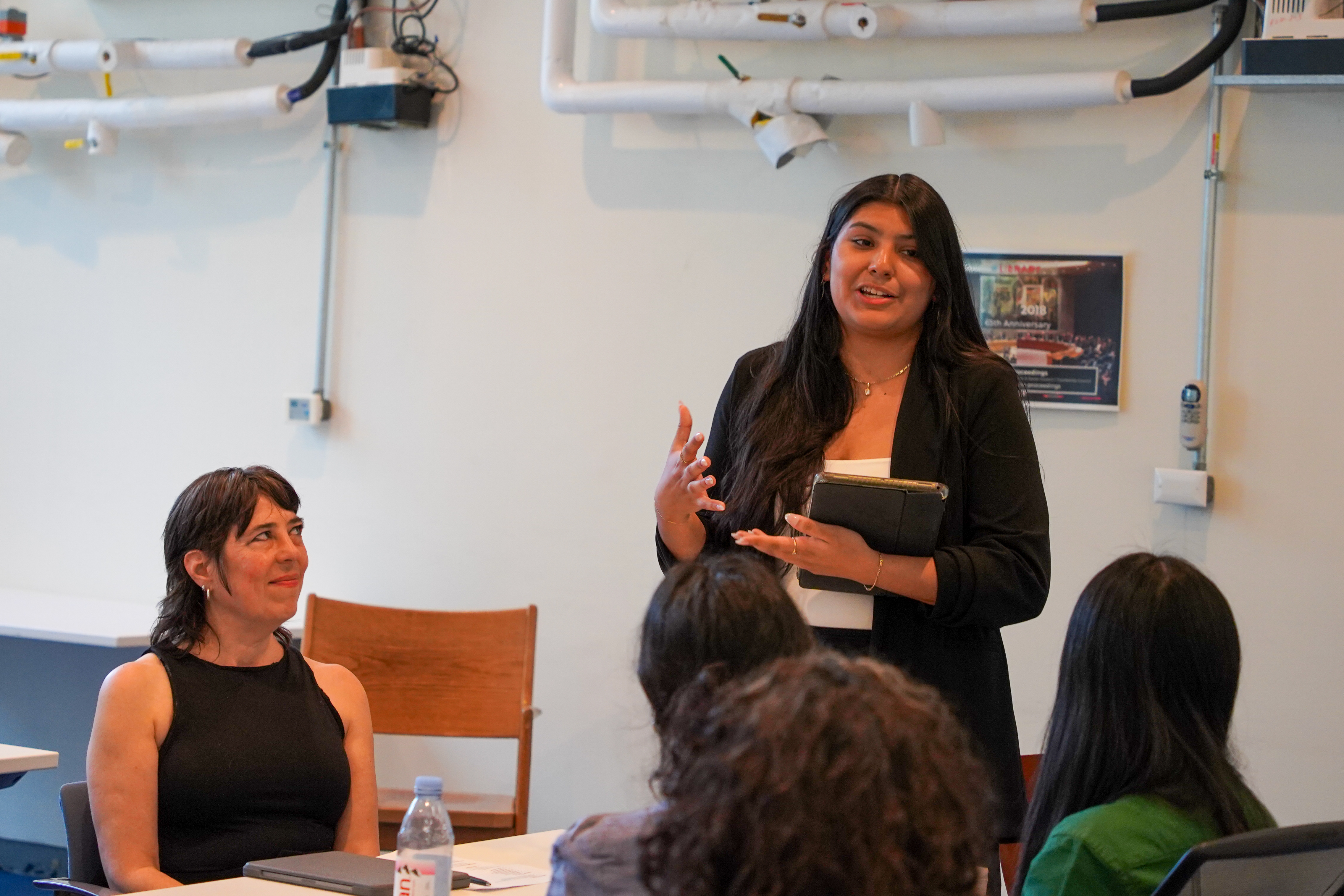
Through their United Nations Academic Impact presentation, Alvarado and Yarba challenged universities to rethink how they approach the SDGs, arguing that efforts should depend not only on policy, funding, and global agreements, but also on self-awareness, empathy, and stronger collaboration across institutions.
A Local Focus
For Alvarado, that work begins locally. She pointed to Lehigh community service efforts—such as tutoring at Broughal Middle School or volunteering with women’s shelters—as examples of how everyday actions in the Lehigh Valley already contribute to global goals like quality education and gender equality.
“Instead of trying to be good at everything, we can leverage our strengths and collaborate to have the greatest impact,” Alvarado said. “That also means building solutions that are empathetic and grounded in the realities of the communities they’re meant to serve, rather than based on assumptions.”
Alvarado first learned of Montufar’s project through a course on women’s rights at the U.N. taught by Elena Reiss, Assistant Director of Lehigh’s Office of Fellowship Advising (OFA). Montufar and Reiss collaborated after they received an Office of International Affairs (OIA) grant last spring for the project “Building Community Across Borders: A Collaborative Model for Global Learning.”
Alvarado visited the U.N. four times this semester through the LU/UN Partnership. This presentation marked Yarba’s first visit to the U.N., and he also presented at the Pratt Institute in Brooklyn shortly afterward.
Yarba said opportunities like these highlight the global and sustainability-focused experiences available to Lehigh students, particularly international students like him.
“There are a lot of opportunities here to engage with global issues here at Lehigh,” Yarba said. “Experiences like this help us connect what we learn in the classroom to real-world challenges and to the communities we’re part of.”