Written by Colin McEvoy | December 12, 2025 | SHARE


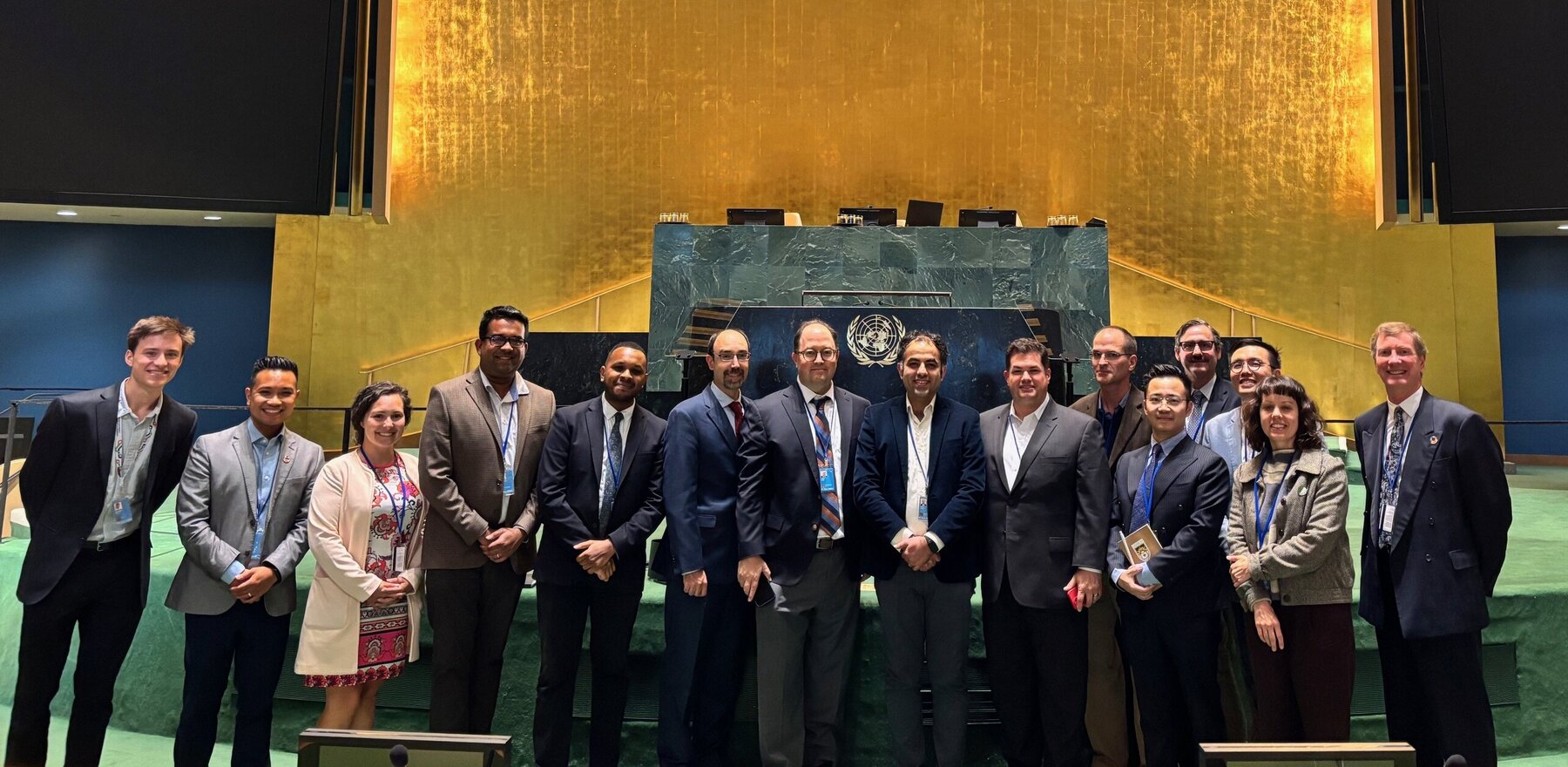
Lehigh University has launched a first-of-its-kind LU/UN Faculty Fellows Program, leveraging its ECOSOC accreditation to enable faculty from across all five colleges to engage directly with the United Nations on research, policy, and the Sustainable Development Goals.
Lehigh University has launched a first-of-its-kind faculty initiative designed to deepen its engagement with the United Nations, made possible by Lehigh’s recent elevation to U.N. Economic and Social Council (ECOSOC) accreditation.
The new LU/UN Faculty Fellows Program brings together faculty from all five of Lehigh’s colleges to build international partnerships, advance research, and contribute directly to the United Nations’ work on the Sustainable Development Goals (SDGs) through the LU/UN Partnership.
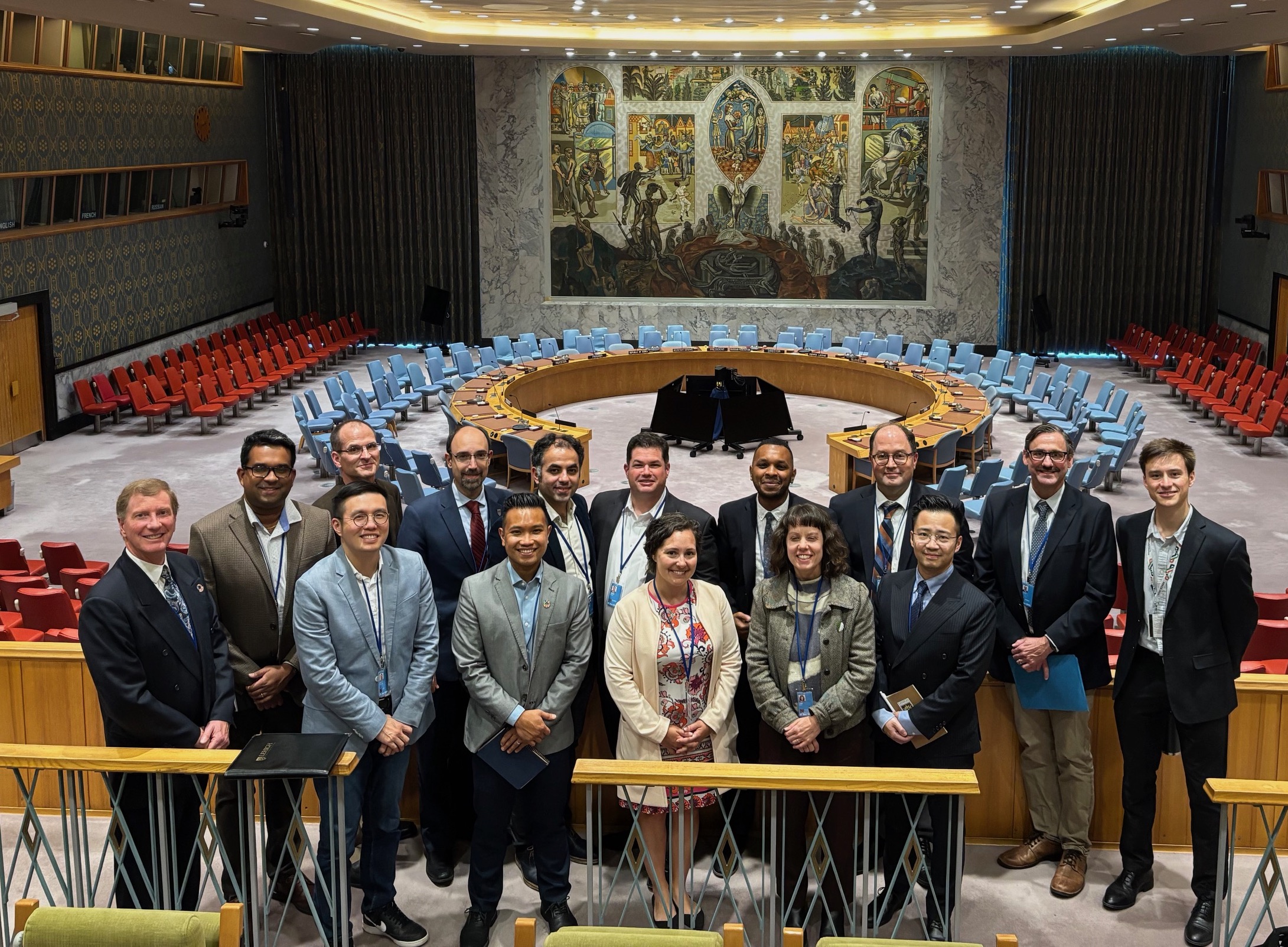
Among the program’s inaugural fellows is civil and environmental engineer Paolo Bocchini, whose research on catastrophic storms and climate-driven disasters routinely extends far beyond national borders.
As director of Lehigh’s Center for Catastrophe Modeling and Resilience, Bocchini’s global perspective has led him into close collaboration with United Nations disaster-risk experts and positioned him to help shape emerging international standards.
“I have always looked at the United Nations as the natural venue to have global conversations for the common good,” Bocchini said.
Through the Faculty Fellows Program, faculty members are chosen through a competitive process to hold full U.N. non-governmental organization (NGO) badges for a designated period. This allows them to engage directly with United Nations officials, diplomats, NGOs, and global thought leaders at the U.N. headquarters in New York City.
“We’ve always been very engaged with the United Nations, but with a lot of conferences we were sort of peering in the window,” said Bill Hunter, Director of Fellowship Advising and UN Programs at Lehigh. “The ECOSOC status changes all that. Now we have a seat at the table and have a real opportunity to make an impact globally.”
Lehigh’s new ECOSOC special consultative status provides expanded access, privileges and influence, allowing for more meaningful participation and policy impact on international economic, social and cultural issues.
“Only 20 universities in the world have ECOSOC status, and none of them are doing something like the Faculty Fellows program in such a comprehensive, strategic way,” Hunter said. “We’re pretty certain this is the only program of its kind in the world.”
About 16 faculty members will participate per year, Hunter said. Those seeking to participate had to explain how they would use a U.N. badge, how it would contribute to the SDGs, and how it would advance their teaching, research, department, or college.
Dhruv Seshadri, Assistant Professor in the Department of Bioengineering at Lehigh’s P.C. Rossin College of Engineered and Applied Science, is among the inaugural Faculty Fellows. He is developing AI-enabled wearables and low-cost health technologies.
Seshadri is using the fellowship to advance projects focused on mental health, women’s health, and sustainable innovation in low- and middle-income countries. These initiatives align with the U.N. SDG goals focused on health, education, gender equality, and innovation.
Mohammed Jibriel, Assistant Professor in the College of Health’s Department of Community and Global Health, is another Faculty Fellow. He is drawing on his experience in global biosecurity and human rights to amplify the health impacts of Sudan’s ongoing conflict.
“While teaching Global Perspectives on Health during the fellowship, I will draw directly on U.N. briefings, reports, and meetings to give students real-time insight into global policymaking,” Jibriel wrote in his Faculty Fellows application.
In addition to Bocchini, Jibriel, and Seshadri, other current Lehigh Faculty Fellows include:
- Sabrina Arias, Assistant Professor, Department of International Relations
- JP Balmonte, Assistant Professor, Department of Earth & Environmental Sciences
- Devin Finn, Visiting Assistant Professor, Department of International Relations
- Krista Liguori, Teaching Assistant Professor, Department of Community & Global Health
- Vinod Namboodiri, Professor and Forlenza Chair in Health Innovation and Technology in the Department of Computer Science and Engineering and College of Health
- Gabrielle String, Assistant Professor, Departments of Population Health, College of Health; Civil and Environmental Engineering, P.C. Rossin College of Engineering and Applied Science
- Hsuan-Wei Lee, Assistant Professor, Department of Biostatistics & Health Data Science
- Mark Noble, Teaching Assistant Professor of Political Science
- Zilong Pan, Assistant Professor of Teaching, Learning & Technology
- Michael Rivera, Assistant Professor of Business Information Systems, Department of Decision and Technology Analytics (DATA)
- Amirtaha Taebi, Assistant Professor, Department of Bioengineering
- David Vicic, Howard S. Bunn Distinguished Professor of Chemistry
- Bruce Whitehouse, Associate Professor, Department of Sociology & Anthropology
Additionally, these Lehigh faculty members will begin serving as Faculty Fellows in April:
- Himanshu Jain, T.L. Diamond Distinguished Chair in Engineering and Applied Science and Professor of Materials Science and Engineering
- Maria Cristina Montufar, English Professor & Language Specialist
- Haoyan Sun, Assistant Professor, Department of Decision and Technology Analytics (DATA)
- Andrew Ward, Professor & Department Chair, Management Department