Written by Ayah Mallah | March 3, 2026 | SHARE


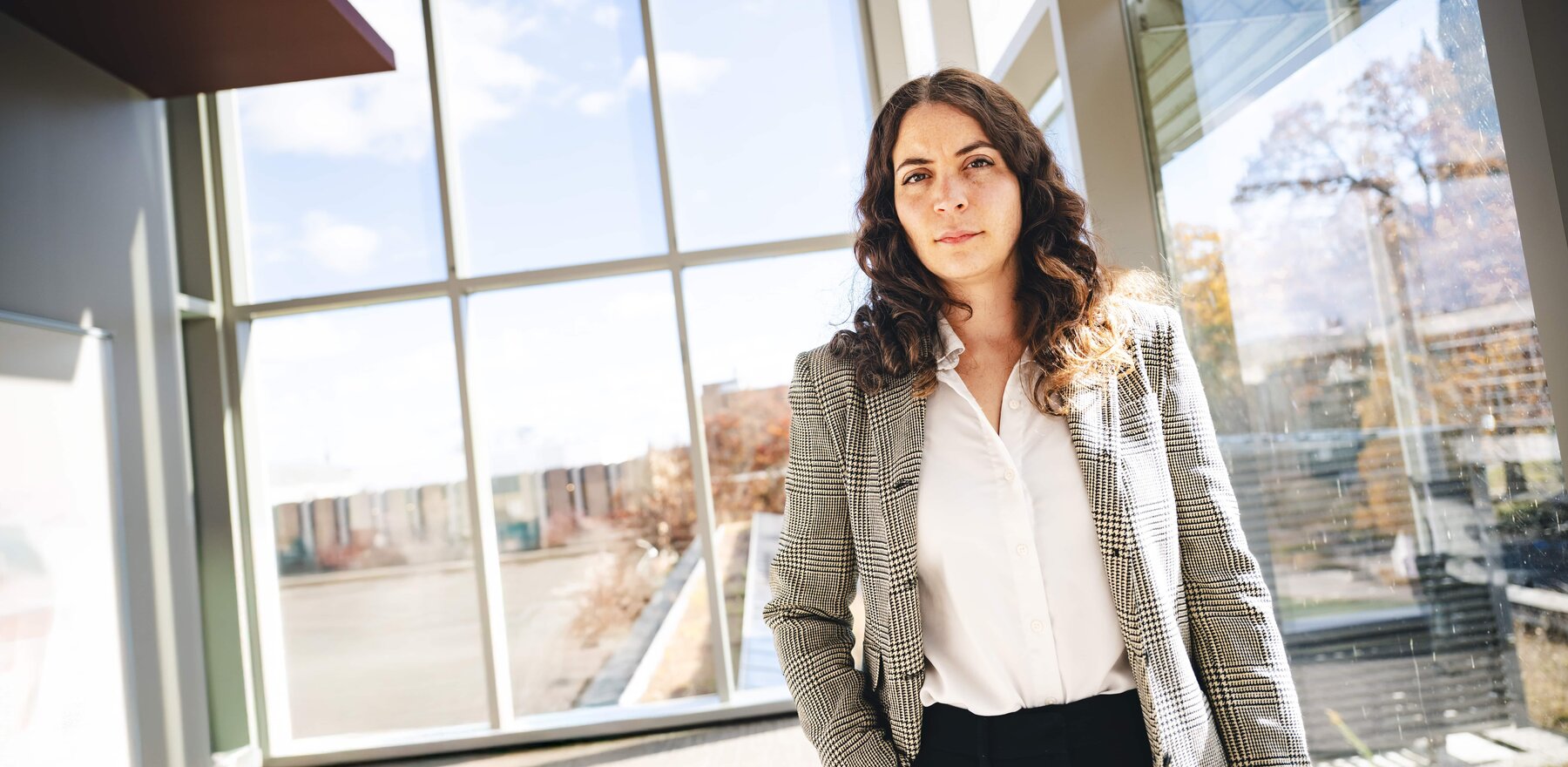
Through Lehigh’s LU/UN Faculty Fellows initiative, Sabrina Arias is uncovering how small states use strategy, relationships and expertise to shape the United Nations from behind the scenes.
When headlines cover the United Nations, the focus is almost always on the world’s most powerful states. But according to Sabrina Arias, assistant professor of international relations at Lehigh University, the real story of influence often unfolds far from the spotlight.
Through Lehigh’s Faculty Fellows initiative within the Lehigh University/United Nations (LU/UN) Partnership, Arias is investigating how small states shape the U.N. agenda — not through military or economic might, but through strategy, expertise and relationships.
Her work challenges conventional assumptions about global power and offers a closer look at how diplomacy actually functions inside one of the world’s most complex institutions.
A Scholar's Curiosity
Arias’ interest in the U.N. began early. As a high school and college student, she participated in Model U.N. and initially imagined a future in diplomacy.
“I originally thought I wanted to be a diplomat,” she said. “But over time, I realized I was more interested in studying how diplomacy works than practicing it.”
That curiosity followed her into graduate school, where she immersed herself in scholarship emphasizing the dominance of powerful countries in international affairs. Yet as she read and observed, she began noticing examples that did not fit neatly into that narrative.
“I kept seeing diplomats from smaller countries doing an extraordinary job advancing initiatives,” she said. “It made me ask: If they don’t have material power, what do they have? And how are they using it?”
That question now is the focus of her Faculty Fellows project. A first-of-its-kind initiative, the LU/UN Faculty Fellows Program enables faculty from across all five colleges to engage directly with the United Nations on research, policy, and the Sustainable Development Goals.
Mapping Diplomatic Capital
Arias’ research centers on what she calls “diplomatic capital” — the relationships, credibility, and procedural knowledge that individual diplomats accumulate over time.
Through on-site research at U.N. headquarters, interviews with diplomats from more than 50 countries and archival work tracing agenda changes, she is mapping how influence operates behind formal voting procedures.
Her days at the U.N. are spent speaking with diplomats about their daily negotiations, consulting historical records and tracing how new issues make their way onto the agenda.
“I’m interested in the human dimension of international institutions,” Arias said. “What does it take to build a coalition? How do you persuade others when you don’t control resources?”
Some of Arias’ most revealing insights come from candid interviews. She recalls a conversation with a diplomat from a Caribbean island nation describing the dynamics of negotiating with representatives from powerful countries.
“You go into a meeting knowing they have influence,” Arias said. “But influence doesn’t automatically translate into cooperation. Smaller states often rely on preparation, coalition-building and strategic persistence.”
Small States, Big Impact
These behind-the-scenes dynamics are essential, she argues, for understanding institutional legitimacy and fairness — issues closely aligned with the U.N. Sustainable Development Goals on strong institutions and reduced inequalities.
“It might seem like we’re in a world where powerful states simply get what they want,” she said. “But small states are pushing back, elevating issues like climate change and accountability. We need to pay attention to how they’re doing it.”
By looking behind the curtain of formal power, Arias’ work reframes how we understand global governance as a dynamic arena shaped by skill, strategy and persistence.
The Faculty Fellows program was made possible by Lehigh’s recent elevation to U.N. Economic and Social Council (ECOSOC) accreditation. It provides expanded access, privileges and influence, allowing for more meaningful participation and policy impact on international economic, social and cultural issues.