Written by Gianna Cusumano | May 12, 2026 | SHARE


Lehigh’s ICAPE program helped Turkish student Hande Karadut build the language skills, confidence, and cultural understanding that prepared her for graduate study in Lehigh’s MBA program.
After completing workshops and classes from Lehigh’s International Center for Academic and Professional English (ICAPE), Turkish student Hande Karadut will be enrolling in a one-year intensive Master of Business Administration (MBA) program at Lehigh.
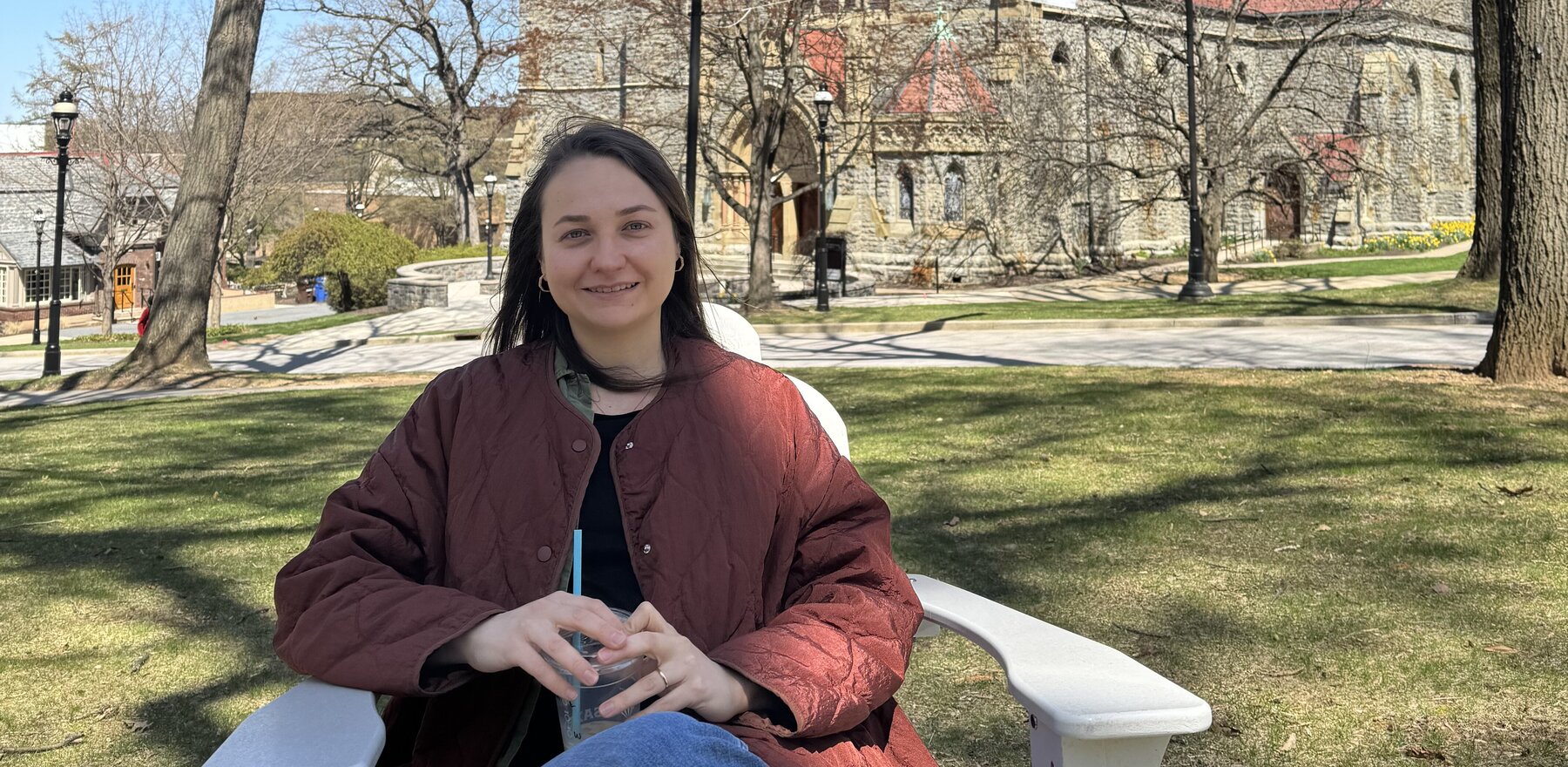
Karadut originally moved to the United States with her husband, who is now completing a Ph.D. in Mechanical Engineering at Lehigh University. Before coming to the United States, Karadut earned an undergraduate degree in Electrical Engineering at Anadolu University in Eskişehir, Turkey. She will study Business Analytics in the MBA program beginning this summer.
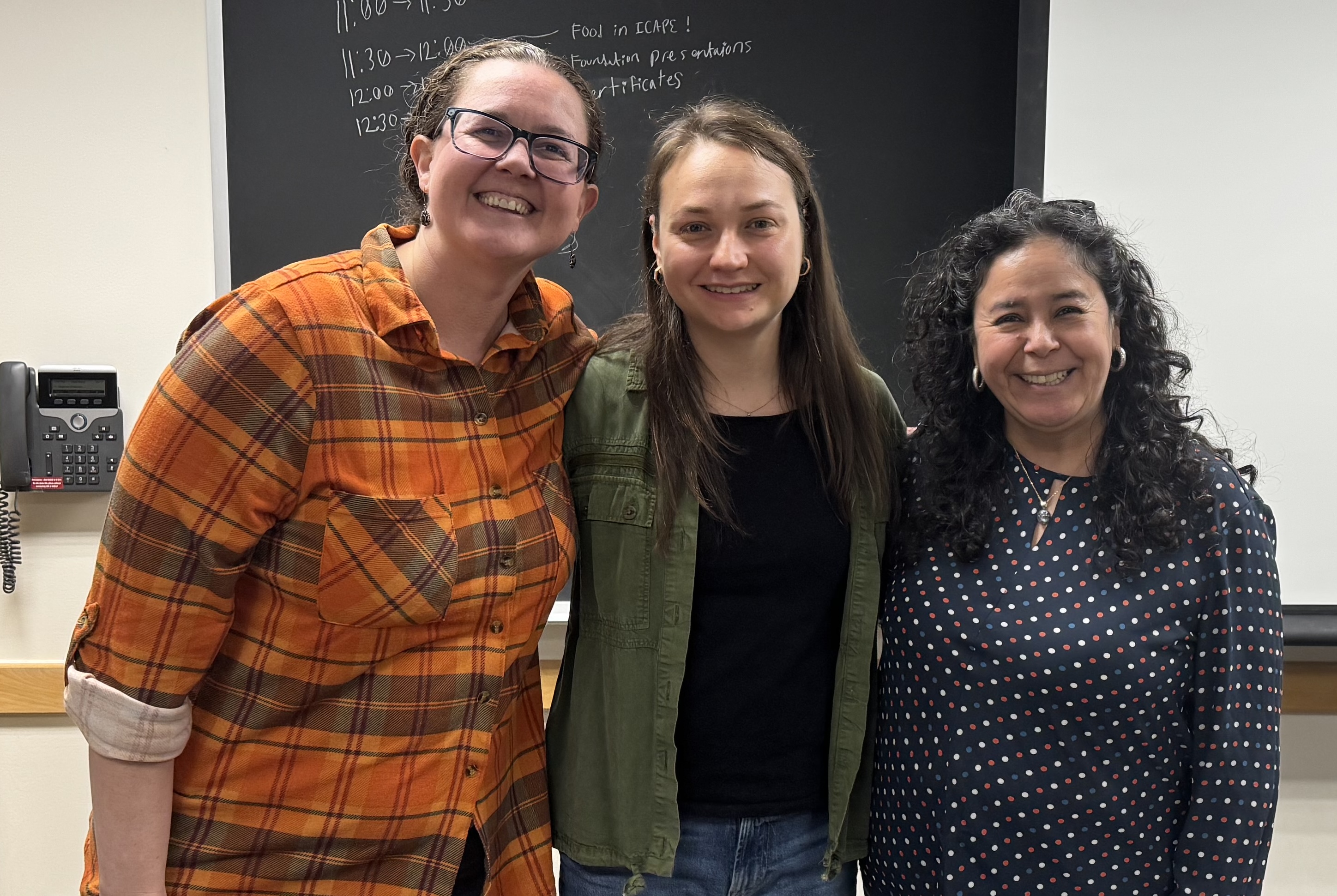
Ashley Murphy, Assistant Director of ICAPE, worked closely with Karadut. Murphy says that while success from the ICAPE program is common, Karadut’s trajectory to graduate school at Lehigh is unique.
“It was just amazing to see; she became one of our top students with really amazing work," Murphy said. “Just everything that she does, she puts 100% into, and it really shows. Her grammar grew more sophisticated, her vocabulary increased. She's really now able to express herself very eloquently in English, and I can't wait to see what she does with her graduate degree.”
The ICAPE program at Lehigh helps multilingual students, faculty, and staff improve their English grammar, communication skills, and cultural awareness. It offers credit courses, non-credit workshops, private tutoring, and Graduate Teaching Assistant (GTA) certification.
As the spouse of a Lehigh student, Karadut was able to use the ICAPE resources to build her English proficiency. She first heard about the program from her husband, who also completed ICAPE classes. Before taking classes, Karadut participated in the free workshops and the pronunciation club.
Starting in the fall of 2024, Karadut took classes for three semesters through the StepUp Intensive English program for students with intermediate to advanced levels of proficiency. She studied topics such as American Culture and Conversation, Reading and Vocabulary, Portfolio, Writing and Grammar, and Communicating on Campus.
One of Karadut’s favorite workshops was one that focused on common pronunciation and grammar mistakes for non-native English speakers.
“I think this is the best part of the ICAPE StepUp Program is that we learn from our mistakes, and they are really good at guiding students. They know what we need, individually,” Karadut said, “They don't suggest the same thing to each student. They suggest different things to different students by looking at their mistakes.”
Mike O’Neill, a language specialist at ICAPE, witnessed Karadut’s progress as an instructor for both the Pronunciation for Multilingual Students and Scholars workshop and StepUp Intensive English program. He recognizes the importance of welcoming mistakes as part of the learning process.
“I think big ones are never apologizing for being a second language speaker of English, but using strategies to communicate effectively,” O’Neill said.
In addition to Karadut’s willingness to learn from her mistakes, she also benefited from learning about cultural differences as a part of her language education.
Particularly in the culturally focused ICAPE workshops, Murphy says that Karadut had the opportunity to learn about cultural differences in the workplace. This was a crucial part of her holistic education, enabling her to more easily connect with English-speaking students and professors in her graduate program.
Beyond language skills, ICAPE also helped introduce Karadut to and navigate cultural changes. Karadut said that through the workshops and her immersion in American culture while living in Bethlehem, she developed a deeper understanding of these differences. For instance, greetings in the United States are much less expressive than in Turkey, where hugging and kissing acquaintances is a common practice.
ICAPE’s curriculum also introduced Karadut to the differences between the Turkish and American education systems. Karadut says that participation and group discussion are more heavily emphasized by American professors. She also learned that American education is more focused on practical applications to academic concepts as opposed to analyzing theory.
Karadut’s mother, Kezban Yilmaz, has noticed a difference in her daughter’s confidence following her participation in the ICAPE program. Hande translated while Yilmaz spoke about her daughter’s work ethic.
“She was always successful in her educational life, from the beginning," Yilmaz said. "I see her moving to high levels professionally”
These ICAPE programs do not just help foreign students succeed in American higher education, but also provide an outlet for the community.
Karadut experienced this firsthand through social gatherings for students who met through StepUp.
Murphy also emphasizes how ICAPE can help individuals who may speak unrepresented languages in the United States establish meaningful relationships.
“I know that spouses who speak a language that is well represented in Bethlehem, like Chinese and Spanish, can find a group of people to talk with. But we have had people, you know, like Hande, she speaks Turkish,” Murphy said, “There's some Turkish students, but there's not a huge population. So it's really fantastic for meeting people, getting them out of the house.”
Above all else, Karadut is thankful for how she has grown as a person through her experience as an ICAPE student and becoming more self-assured in her language skills.
“I gained confidence while speaking in English. It's a great thing for me because, I mean, my biggest concern in the year was communication,” Karadut said.