Written by Ayah Mallah | September 21, 2026 | SHARE


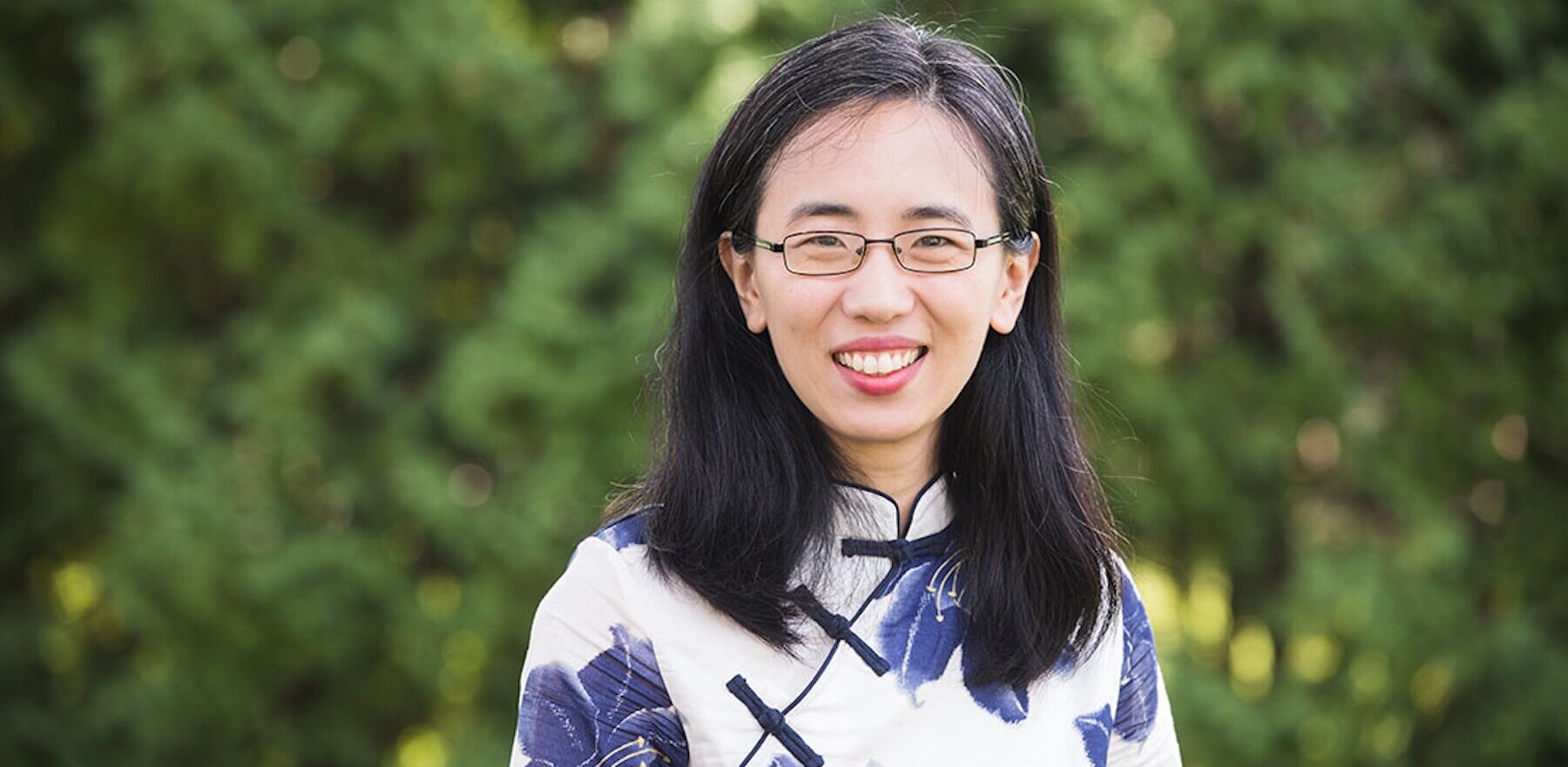
Lehigh journalism professor Haiyan Jia will bring her research on artificial intelligence, information credibility and global inequality to an international communication conference in New York City this October.
Haiyan Jia, associate professor of journalism and communication at Lehigh University, will present her research on artificial intelligence and information credibility at “Communicating for a Better World” in New York City in October.
“Communicating for a Better World” is a three-day conference organized by Columbia University’s School of International and Public Affairs and the City University of New York’s Ralph Bunche Institute for International Studies.
The conference will take place Oct. 21–23 and will bring together researchers, United Nations officials, diplomats and communication professionals to discuss how communication can address global issues.
Jia’s presentation will focus on trust, transparency and the ethics of AI-mediated information. Her research examines how people determine whether information produced with or by AI is credible and trustworthy.
Jia said her interest in the conference grew from her application to Lehigh’s LU/UN Partnership Faculty Fellows program, which asks faculty to connect their work to global issues.
She began thinking about how her research on AI and journalism could fit into a broader international context.
“Journalism is fundamental to a democracy,” Jia said. “We expect citizens to be informed because in a democracy, we make informed decisions.”
Jia said the growing use of AI to search for and summarize information could disrupt that process.
Rather than directing users to original sources, AI systems can repackage information and present users with a personalized response, she said.
“When you have that in mind and think about what AI is doing to our news consumption, what you’re seeing is the technology increasingly creating this additional layer between individuals and the information,” Jia said.
Jia said that layer creates several problems, including misinformation, personalization and the loss of cues people traditionally use to evaluate sources. Her research examines how people make those credibility judgments.
What makes AI-generated information credible?
Jia has conducted a series of studies examining how audiences respond to different levels of AI involvement in journalism.
Participants in one study were shown news articles with different descriptions of how the articles were produced. Some were described as written entirely by humans, while others involved AI as an assistant, collaborator or sole author.
Jia said the results showed that people’s perceptions of AI’s involvement affected how credible they considered the information, although the relationship was not straightforward.
Participants tended to view information less favorably when they believed AI played a larger role in producing it. Jia said those judgments were connected to perceptions that AI is less human, less empathetic, less intelligent and less moral.
At the same time, participants often assumed AI had been involved even when they were told an article had been written entirely by a human.
“People nowadays see AI involvement in journalistic practices as a norm,” she said.
That finding has led Jia to examine how news organizations should disclose their use of AI and whether different forms of disclosure affect how audiences evaluate information.
Her research also considers how AI’s ability to communicate in emotional and empathetic ways could change people’s perceptions of AI-generated information.
From Lehigh to a global conversation
Jia said the conference gives her an opportunity to connect her research, which has largely focused on the United States, to broader questions about AI and global inequality.
AI development and access are not distributed evenly around the world, she said, raising questions about how countries in the Global South will experience AI.
Jia said she is particularly interested in whether countries that have historically faced digital inequalities will have a voice in determining how AI develops.
“Are we inviting them to our table and discussing what the future should look like as the technology brings opportunities, but more importantly, risks and harms?” Jia asked.
Jia recently discussed similar concerns with Amandeep Singh Gill, United Nations Under-Secretary-General and Special Envoy for Digital and Emerging Technologies, who visited Lehigh earlier this month.
She said their discussion highlighted AI and misinformation as major areas of concern and the need for governments, researchers and other stakeholders to participate in conversations about AI.
Bill Hunter, Director Lehigh University/United Nations Programs Office, said Jia has been eager to connect her academic expertise with Lehigh’s UN-related work.
“Even before Haiyan officially became part of our LU/UN Partnership Faculty Fellows program, she jumped at the chance to share her expertise on a UN-related panel,” Hunter said. “I am glad to see her work featured in such a prestigious conference.”
Looking beyond the conference
For Jia, the conference is also an opportunity to expand her research beyond its current focus.
She said she hopes to learn from UN officials, nonprofit leaders and researchers working on similar questions and develop future collaborations.
Jia also said students studying data journalism and AI need to think critically about how technology is changing the way people understand the world.
“I hope in the future, through my Lehigh UN fellowship, I could bring my students to the UN,” Jia said. “You guys are the future leaders and you guys need to think deeply about these questions.”