Written by Gianna Cusumano | September 9, 2026 | SHARE


U.N. tech envoy Amandeep Singh Gill visited Lehigh to explore how artificial intelligence is reshaping education, global governance and the future of human decision-making.
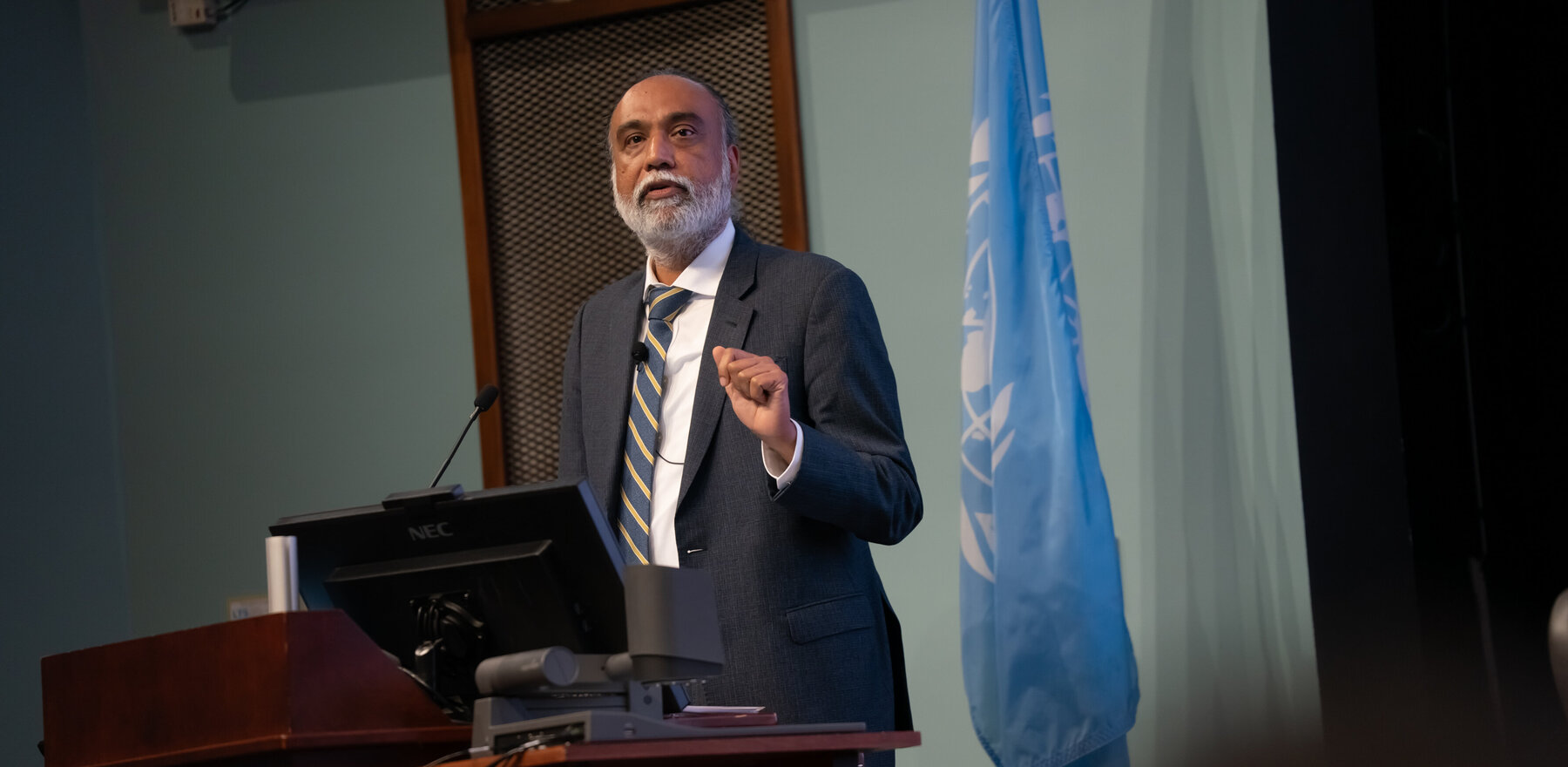
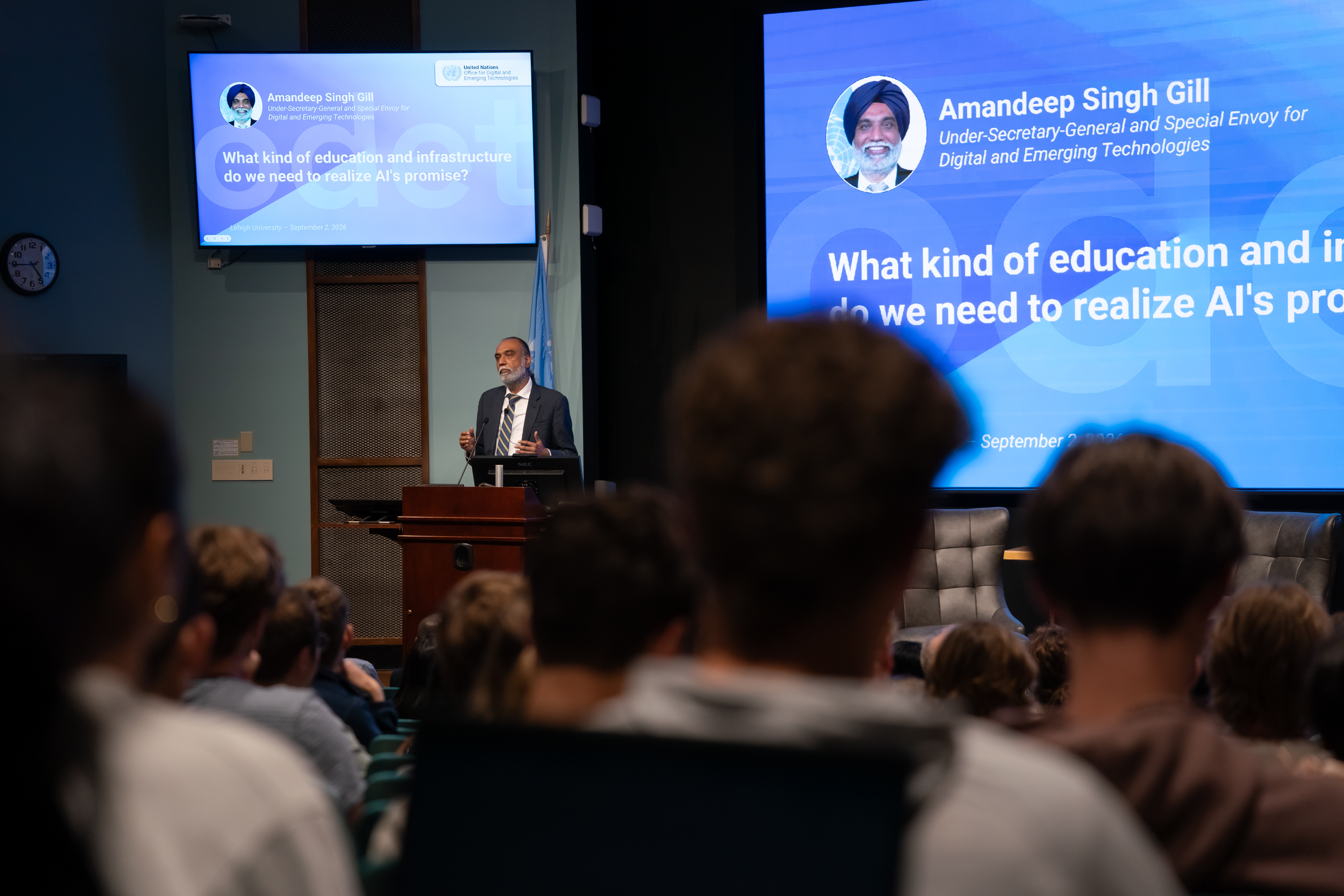
On Wednesday, Sept. 3, United Nations Under-Secretary-General and Special Envoy for Digital and Emerging Technologies Amandeep Singh Gill visited Lehigh University to speak with students, staff, and alumni about how the future of artificial intelligence fits into modern education and global governance.
Recognized by Time magazine as one of the 100 most influential figures in Artificial Intelligence, Amandeep Singh Gill is shaping emerging AI policy.
Lehigh had the opportunity to engage with Under-Secretary-General Gill through multiple expert-led discussions during his visit to campus. He additionally gave a presentation focused on AI’s growing role in education to an audience of 160 community members.
Gill began his talk by addressing his personal biases around artificial intelligence, giving the audience insight into his thought process on the technology. Gill explained that he does not believe in the theories of tech determinism – that technology is the primary driver of culture. Instead, he believes technology is socially constructed. Gill also said that policy should not choose one option over another; consumers should decide for themselves.
In Gill’s presentation, he also addressed concerns over the divide between the Global North and Global South in the potential to reap benefits from artificial intelligence. Drawing on statistics, he emphasized that Africa possesses 1% of the world’s data centers. This capacity gap also keeps continents with more developing countries overlooked in global policy conversations.
“It's not just a matter of uneven distribution of benefits or the capacity to generate benefits, but it's also a matter of uneven capacity to govern. So you have a situation where not only are the benefits shared unevenly, but the risks can be loaded on unfairly to those who have the least capacity to govern this,” Gill said.
After touching on the issues surrounding AI development, Gill shared that the United Nations is leading AI development with three pillars in mind: science, policy, and capacity. He believes these three values will help build systems not just rapidly, but responsibly.
“I would say governance, in terms of the institutional side of infrastructure, is part of, or should be part of, our understanding of AI infrastructure, because the objective is not simply to build AI systems; it is to build systems that protect human rights, advance equity, strengthen inclusion, and reflect the diversity of humanity,” Gill said.
Gill then transitioned to the impact AI has created on higher education. Gill explained that students are one of the largest user demographics for language models such as ChatGPT. He urged students to utilize these tools but not at the expense of their own critical thinking. Instead, Gill encouraged students to look at how AI can intersect different branches of knowledge.
“Everything about AI is multidisciplinary. The greatest value in AI is to be found at the junction of disciplines,” Gill said.
Lehigh student Lydia Uhlman ‘30 resonated with this sentiment, reflecting on how AI has been implemented into new areas of study.
“AI is progressing extremely quickly and is becoming involved in many different aspects of society. It is no longer something that only exists in technology or science,” Uhlman said. “It is increasingly being used in education, healthcare, business, communication, and many other fields. It's important for people of all disciplines to understand AI and how it works.”
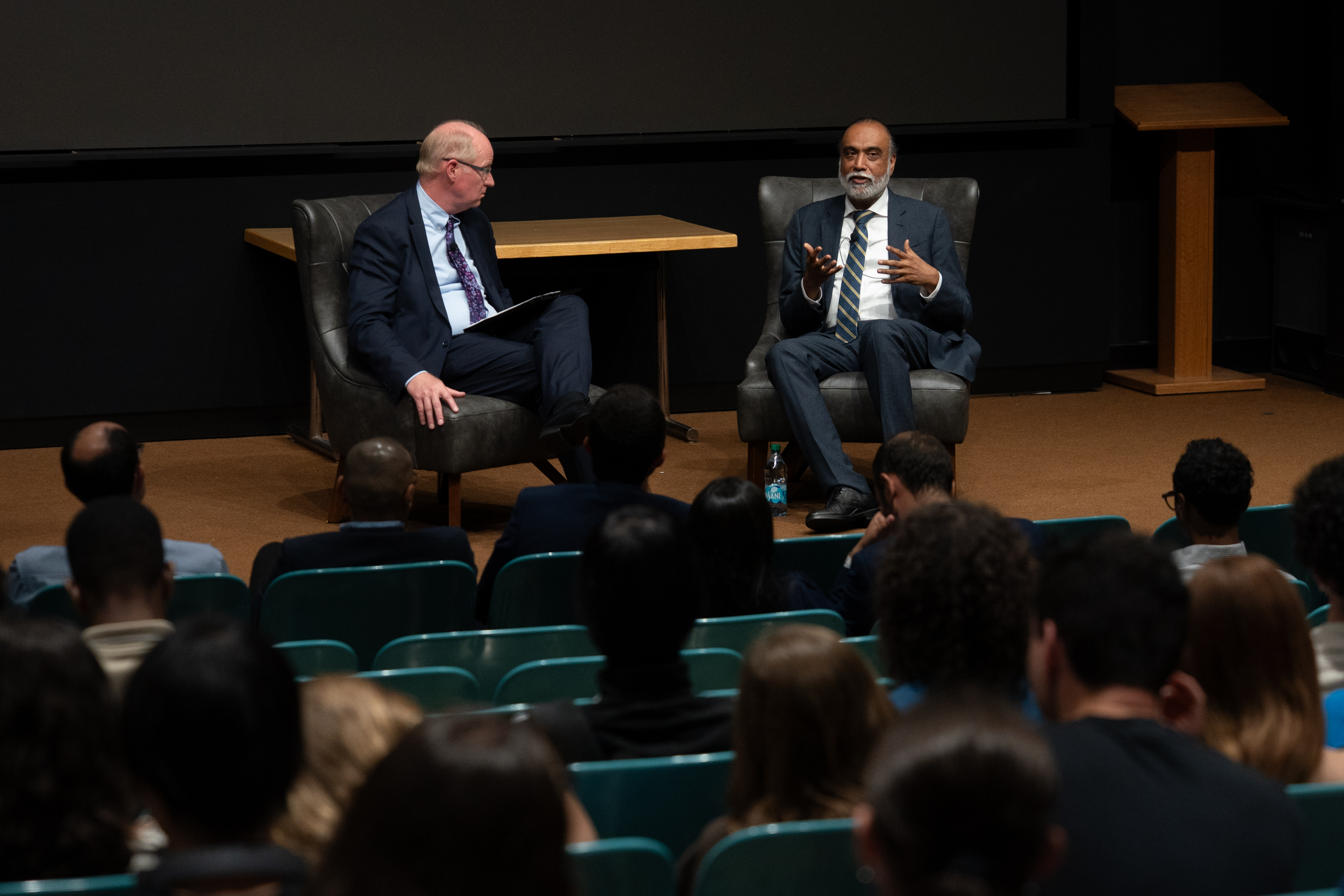
At the end of Gill’s presentation, Nathan Urban, provost and senior vice president of Lehigh, hosted a fireside chat with the Under-Secretary-General. Urban said Gill appeared to have a optimistic outlook for the future of artificial intelligence.
“For those amazing remarks, I would characterize you or your viewpoint as leaning towards optimism around AI and related technologies,” Urban said, “And I'm curious if you can talk a little bit about the things in your history, the previous roles that contribute to that sense of optimism.”
Gill said his personal history growing up in India shaped his worldview, as he saw the technological growth of the 1980s align with anti-corruption and financial prosperity.
Conversely, Urban questioned Gill about his reservations about AI and how it relatively compares to other past developments and technologies.

Reflecting on the lessons of the past, Gill compared AI's development to the Cold War arms race.
“Even in the worst days of the Cold War, there was this understanding that it's not good for anyone if nuclear weapons go off. So the Americans developed the technology of progressive action links which deliberately leaped to the Soviets on the margins of arms control talks,” Gill said, “So I think here we are talking about something that would help everyone, so bare minimum.”
After Urban finished his conversation with Gill, the provost opened the floor for audience questions. One Lehigh student named Brandon Gallo, 30’, asked about how leaders of developing nations can weigh the risks of environmentally damaging data centers with their benefits.
Although Gill acknowledged the valid ecological concerns, he believes AI development is still worth the risks involved.
“It's a cruel animal. So you can't sit this out because that AI capacity may also be the answer to your water problems,” Gill said.
Fernanda Sanz, ‘27, feared that developing nations should focus on more critical issues, such as climate change, rather than artificial intelligence. However, she considered this new perspective by saying, “I think his opinion is valid, as AI is something to be frightened of but also has tremendous upside,” Sanz said.
Gill’s point of view reflects the growing challenge governments face in balancing regulation and innovation. In the United States, this dilemma has already inspired political action.
Recently, in Pennsylvania, Governor Josh Shapiro has signed an executive order to control data center growth in PA. To get a data center approved, it must meet requirements such as sourcing a portion of its energy from clean sources and paying all electricity-related costs.
Gill says these debates are productive for sparking global conversations about AI governance.
“In democracies, this is always a kind of discussion, a conversation which gets furthered out always in democracies through dialogue, elections, democratic ways. The U.S. is leading the world in AI development, and also in debates about AI. So these are all developments that can be instructive for the rest of the world,” Gill said.
In addition to giving a formal presentation, Gill engaged with a panel of Lehigh professors representing all five colleges to discuss how Lehigh’s artificial intelligence-focused research can advance the broader goals of the United Nations. This group included members of the Lehigh University United Nations Partnership Faculty Fellows – a cohort of 16 Economic and Social Council (ECOSOC) badge holders.
After his discussion with faculty members, Gill also spoke with representatives from the AI Club Executive Board and Indian Student Association Executive Board about how AI can support professional development.
In light of concerns raised about AI’s role in the workforce, he urged students to remember that artificial intelligence cannot compare to the complexity and importance of human intuition. He said this is important to remember when considering the value of your education:
“AI can never supply judgment, the constitution of a goal, the cultivation of taste, the slow formation of a person in the presence of a demanding teacher. These are exactly the qualities that serious education is always for. Education is fundamentally about empowerment, not about jobs.”