Written by By Téa Weinstein, LU/UN Partnership Intern | February 3, 2026 | SHARE


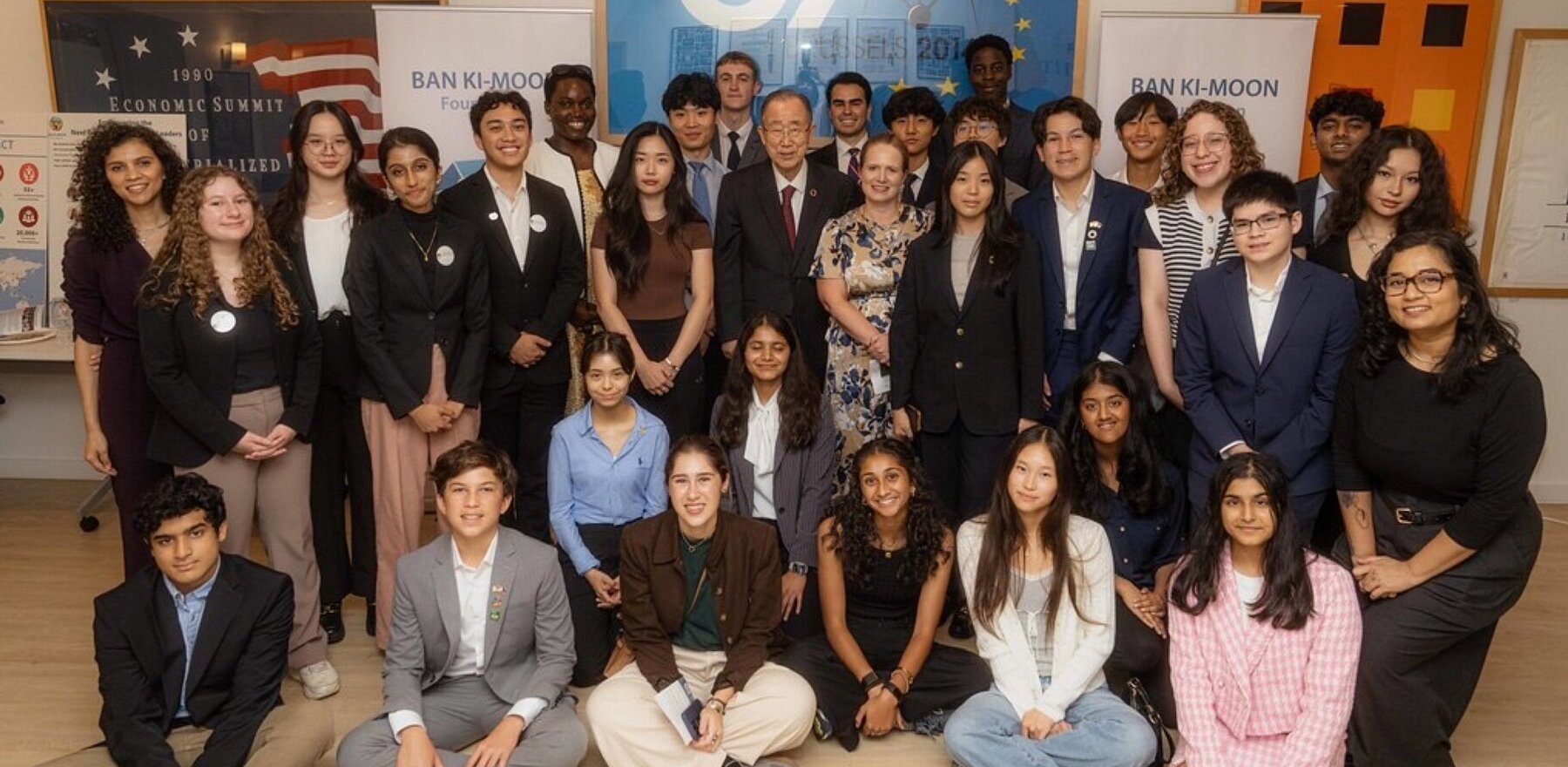
What was supposed to just be a group meeting with former UN Secretary General Ban Ki-moon turned into a semester of extraordinary opportunity for Ryan Javier, ‘26.
After hearing Ban Ki-Moon speak and conversing with others in his foundation, Javier became aware of the new Emerging Policy Leaders Program, offered by the Ban Ki-moon Foundation for students headed toward careers in policy design.
Javier, a student in the IDEAS program with concentrations in Graphic Design and Computer Science, and also pursuing a dual degree in Global Studies, was selected as one of just six students in the world to join the program.
The program consisted of six sessions throughout Fall 2025 in New York City, with the end goal of having participants write a policy brief for South Korea that pertains to a Sustainable Development Goal. The purpose was to help build leadership skills and to better understand Ban Ki-Moon’s mission with the Sustainable Development Goal.
Ban served for 10 years as the UN Secretary General (2007-2016), during which he oversaw the creation of the Sustainable Development Goals, started UN Women, and other crucial initiatives. In 2022, he launched the Ban Ki-Moon Foundation in New York City.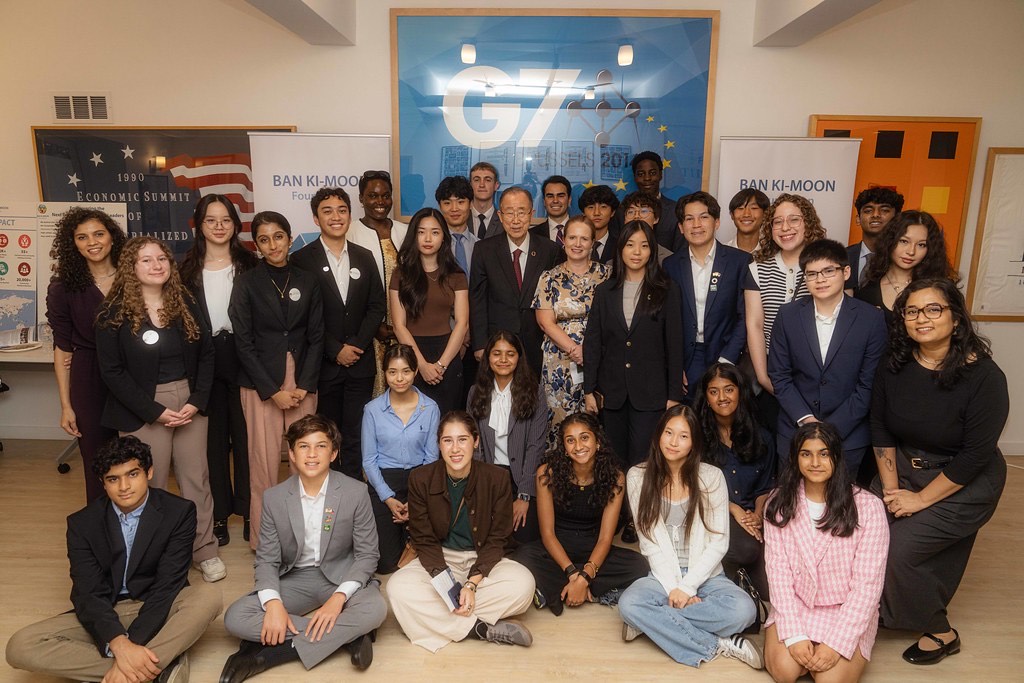
Each session involved looking at examples of policy briefs, focusing on issues in South Korea, and workshops on how to write good policy briefs.
Javier, President of the Asian Culture Society, a Future Maker Award recipient, a Global Exchange Fellow, and a former programming intern for the LU/UN Partnership, is very passionate about the Asian region. He spent extensive time there between being an Iacocca Intern in Hong Kong, and a summer program under the U.S. Department of State, where he intensively studied Mandarin for two months and visited the U.S. embassy in Singapore.
He decided to write a policy brief on how to improve South Korea’s weakening democracy, targeting Sustainable Development Goal #16: Peace, Justice, and Strong Institutions.
He said that although the West often characterizes South Korea as a “beacon of democracy,” in actuality, its government has been very fragile.
In 2024, South Korea declared martial law, which hadn’t occurred since the country was under authoritarian leadership at the end of the 20th century. Javier wanted to focus on the symptoms that led to this.
Throughout ample research, Javier found that the problem lies in the Constitution, where the President has control of practically the whole legislative branch. Other problems, like the dominance of a two-party system and the heavy influence of large-scale business corporations on politics, have also contributed to weakening South Korea’s democracy.
His main policy brief recommendation was constitutional reform, with modifications to how politicians are elected, such as run-off campaigns that can help to break political gridlock that results from the dominance of a two-party system.
Javier found the program very worthwhile, not just for the short-term benefits like improving his writing skills, but also looking to the future of his career.
His policy report will be made accessible online by the foundation.
The Foundation seeks to cultivate leadership that advances the Sustainable Development Goals by empowering youth and promoting global citizenship in pursuit of a more sustainable and peaceful world.