Written by Nicholas Guider, Programs Intern | February 25, 2026 | SHARE


Students Engage EU Diplomat to the United Nations
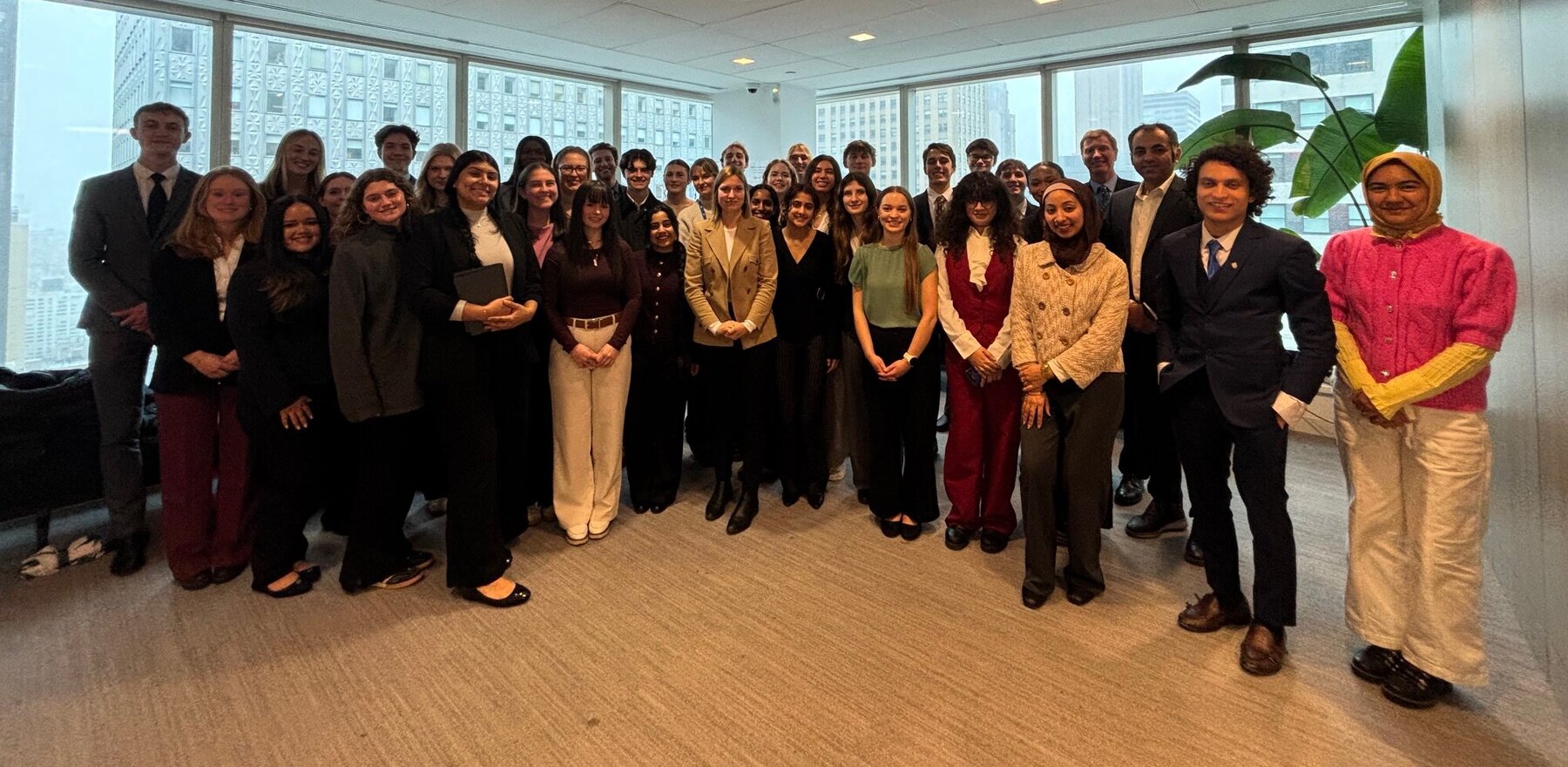
Counselor Elisa Hein of the EU Mission to the United Nations recently held a captivating discussion with a group of nearly 40 students, faculty, and staff on a number of key issues, such as global trade and the current UN financing controversy.
The LU/UN Partnership’s meeting with the EU Mission accompanied a trip to the Danish Mission to the United Nations as part of a larger theme focusing on national sovereignty, the new world order, and how the United Nations continues to be a principal stakeholder in world affairs. These discussions come at an important time, as some Member States seek to disrupt the traditional funding mechanisms outlined in the UN charter.
The meeting began with a short presentation from Counselor Hein, who described the role of the European Union at the United Nations and how she works to further the agenda of the supranational organization. During her presentation, Hein relayed the importance of EU Member States in supporting the UN. Indeed, EU members are responsible for one-third of the UN regular budget, and represent a quarter of contributions to peacekeeping operations, other funds, and programmes. 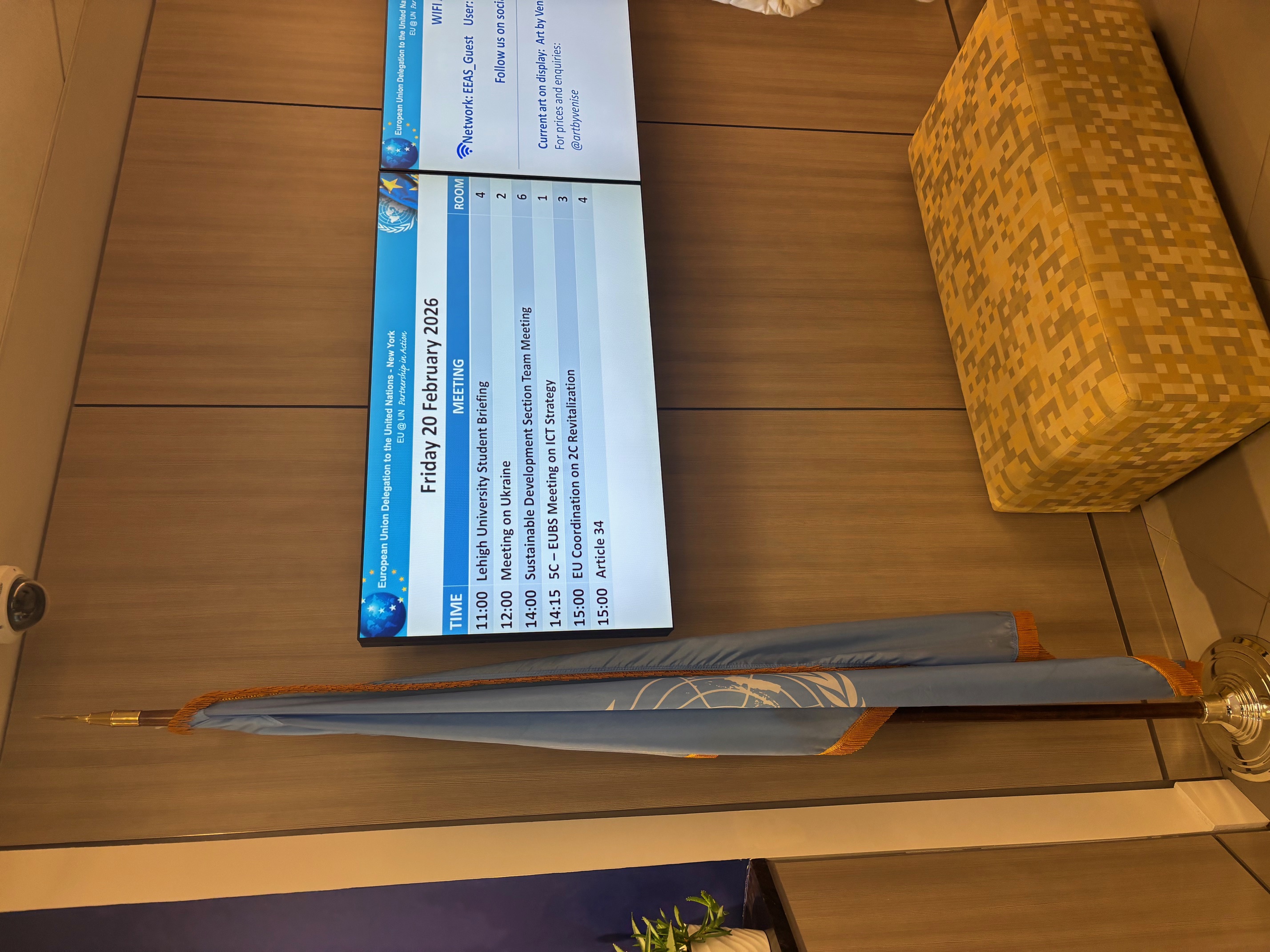
Going into detail on their role, Hein described the European Union as holding “enhanced observer status” at the United Nations. This privilege allows the EU to engage in debates, submit policy proposals, and circulate documents. These unique abilities let the EU coordinate the agenda of its 27 member states, while attempting to shape policy at the UN. Despite wielding notable influence, the EU does not hold voting rights, relying on its members to carry out its will.
Counselor Hein also described her work on the Fifth Committee of the United Nations (C5), also known as the Administrative and Budgetary Committee. According to Hein, the C5 works on important matters such as managing how Member State funds are allocated, determining the peacekeeping budget, and handling various administrative issues like governance and oversight.
Counselor Hein’s presentation set the stage for the Q&A session that followed. Students asked a variety of questions that ranged from concerns about the UN budget to the EU’s position in support of Ukraine. The Counselor was careful to answer all questions diplomatically, while still providing students with the most educational response.
Lehigh student Ibtihal Gaseem asked how the EU and the United Nations plan to address budgetary constraints in the wake of withheld funding from the United States. Hein responded by calling the issue a “liquidity crisis”, which threatened to destabilize the body. She also stressed the importance of the UN80 initiative, an ambitious system-wide reform effort that seeks to adapt the UN to the needs of the 21st century. The counselor’s intern chimed in, given her experience on the project, lamenting that many UN agencies may become integrated or combined with others in an effort to improve efficiency and cut costs. In fact, many important UN agencies, including UN Women, are at risk of reorganization.
Kiki Mes, a Lehigh student from the Netherlands, asked how the EU conducts negotiations between its Member States as it develops its UN platform. Concerning the sheer number of players that must come to a united position, Mes mentioned how it must be difficult to coordinate so many states. To her surprise, Hein said that EU Member States often agree on the issues, and that their economic and security interests regularly align. When issues do arise, Hein stressed the importance of pre-meeting negotiations, where states come to an agreement before they formally come together to decide policy.
The Partnership’s meeting concluded with a Vote of Thanks from Claire Eckroat, spoken in both English and German. A German native, Hein was pleasantly surprised by the addition. These remarks concluded a discussion that offered students a rare glimpse into the realities of multilateral diplomacy, underscoring the influence of the European Union at the United Nations and the enduring importance of global cooperation.