Written by Gianna Cusumano | October 22, 2026 | SHARE


Lehigh doctoral student Meenal Harolikar draws on her experience as a United Nations tour guide to bring a global perspective to her research on artificial intelligence in education.
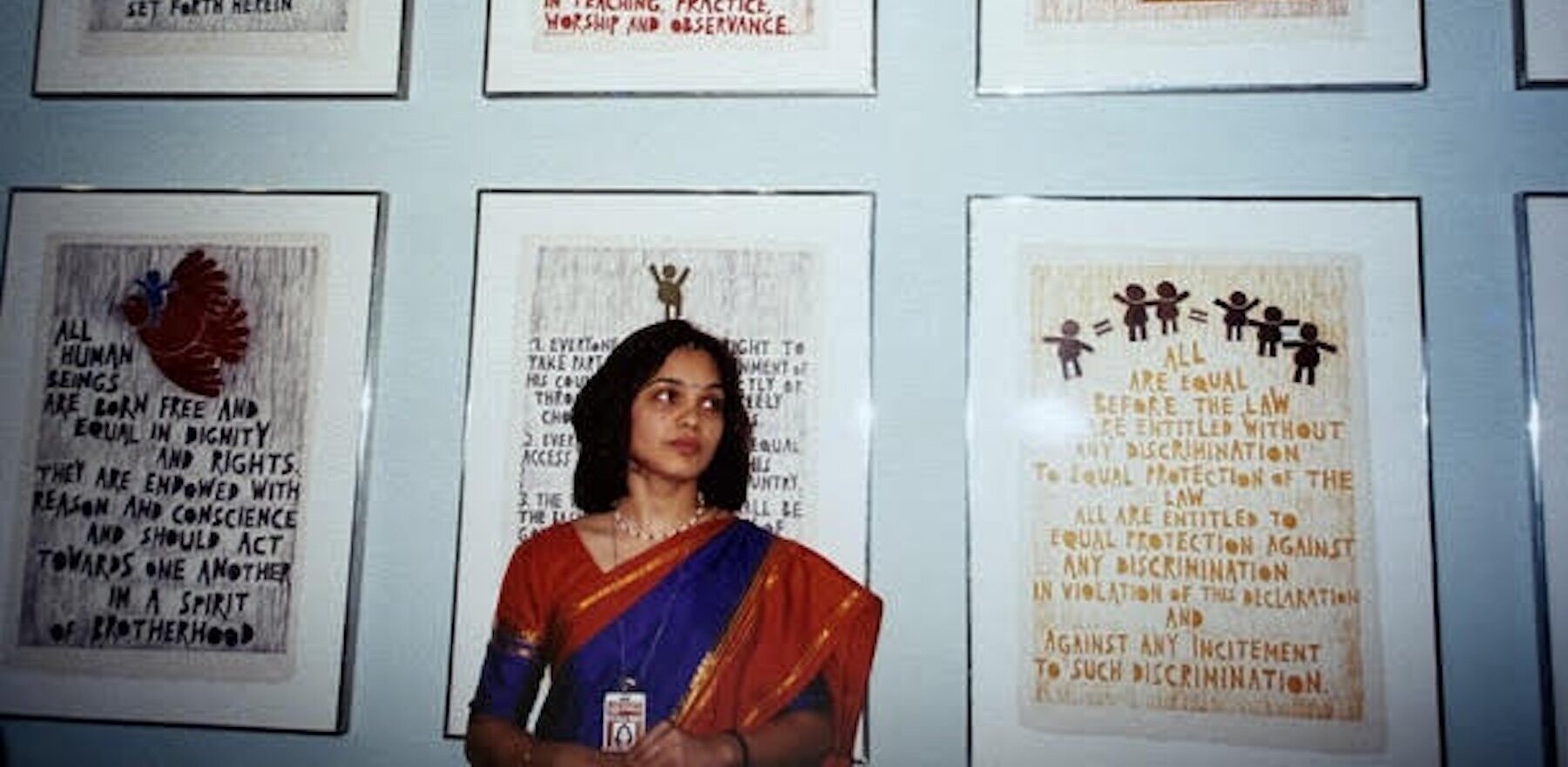
As students considered these questions at the fall Lehigh University/United Nations (LU/UN) Open House, Meenal Harolikar was taken back to an earlier time in her life: when she was a graduate student working as a United Nations (UN) tour guide.
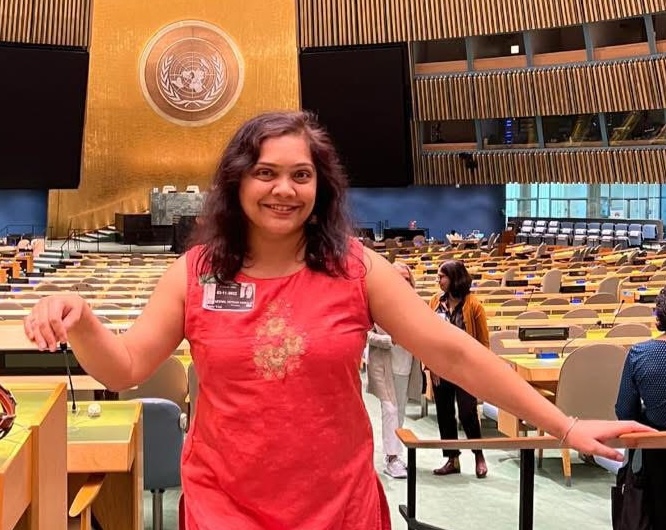
Harolikar then confidently raised her hand and answered correctly, remembering asking these same questions to her tour groups. Having worked at the UN, she attended the session to see how she might now engage with the UN as a doctoral student in Lehigh’s College of Education.
After completing her undergraduate education at the Savitribai Phule Pune University (India), she immigrated to Dallas, Texas. She later moved to New Jersey and commuted two hours to obtain a Master of Arts Degree in Education Technology at New York University. To help pay her tuition, she worked at the UN.
“It was an education in itself. So I got an education nine to five, and then I went for the paid education. … It was one of the defining and refining experiences of my life,” Harolikar said.
Harolikar was one of 50 tour guides from 45 different countries.
She was especially suited to the role because of her aptitude and passion for learning languages. As a graduate student, she was fluent in English, Hindi, Kannada, and Marathi, her mother tongue. Harolikar was also conversational in Japanese, German, and French.
“I think languages kind of influence how you think, and not many people think about languages that way,” Harolikar said. “That they– the structure of the language, the grammar, the vocabulary – it will influence how you think.”
As a guide, Harolikar met with her co-workers for a 45-minute briefing on world affairs each day. As she led her tour groups, she was prepared to answer questions about current events or switch languages if needed.
To represent the diversity of countries, tour guides were encouraged to wear traditional cultural clothing. This meant that Harolikar would wear a different saree each day – a traditional South Asian garment made from a single, unstitched piece of fabric draped around the body.
Harolikar believes one of the most influential parts of this experience was the diverse friendships she developed and has maintained over the years.
She became particularly close with a Swedish-speaking Finnish girl named Nina Stubb. Although it has been 20 years since they worked together, Stubb visited Harolikar in Pune, India, after briefly moving back there. Stubb agrees with Harolikar that the connections she made through this experience, including their friendship, have influenced her academic interests.
“The privilege of hearing people's life stories has been the most educational thing in my life. The curiosity it sparked in me to learn more about countries, religions, and the history of different regions has deepened my knowledge of the world,” Stubb said.
The wide-reaching relationships Harolikar developed gave her a unique international perspective. She considers her ability to approach problems from a global perspective to be one of her greatest strengths, both personally and professionally.
“I'm always looking at the worldview. I'm always looking at how it applies to other societies, or maybe where I come from, because the culture is different, right, everywhere,” Harolikar said. “It has completely changed my brain forever.”
This worldview has been especially helpful in her graduate research on the implementation of artificial intelligence in education.
Harolikar’s faculty advisor, Dr. Tom Hammond, has noticed this strength in her work investigating how English teachers can implement AI learning into their writing courses and how this question may vary across cultures.
“She does have family members all around the world… it comes into her work, and the questions we're talking about,” Hammond said. “They're global questions that everybody with internet access basically is looking at that same question.”
To supplement her academic interests, Harolikar recently attended a roundtable discussion with UN Under-Secretary-General Amandeep Gill and the Lehigh Artificial Intelligence Club.
In the future, Harolikar hopes to continue bringing her global curiosity to the question of AI’s role in education.
“I would love to work either with an international institution or international organization about AI, about education, or both related, ideally, or with an educational organization… that is effecting change, actual change in the