
Written by Colin McEvoy | October 7, 2026 | SHARE


Lehigh shared its approach to connecting campus programs and initiatives with the United Nations Sustainable Development Goals during a NAFSA virtual event on higher education and global engagement.
Lehigh University was featured in a NAFSA virtual event this week exploring how colleges and universities can engage with the United Nations Sustainable Development Goals (SDGs) and connect global priorities with meaningful action on their campuses and in their communities.
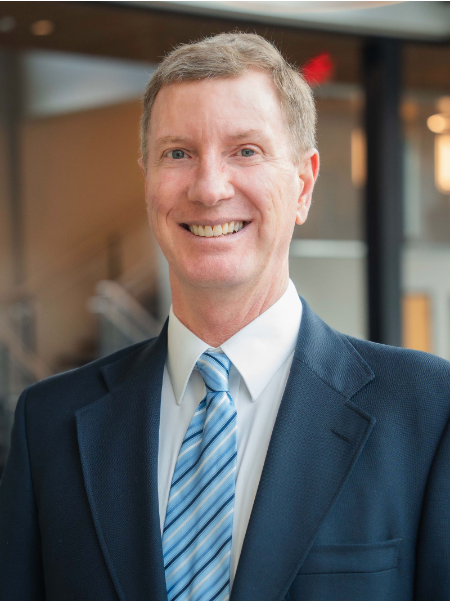
Bill Hunter, Director of the Lehigh University/United Nations (LU/UN) Partnership, was among the featured speakers at the UN Interest Group virtual event hosted by NAFSA, the world’s largest nonprofit organization dedicated to international education and exchange.
The event focused on how colleges and universities can turn the U.N.’s global SDGs into meaningful local action. Hunter discussed Lehigh’s long history of engagement through the LU/UN Partnership, which creates opportunities for students, faculty and staff to connect directly with the United Nations through programs, research, internships and other initiatives.
“On Lehigh’s behalf, we’ve sent 25,000 faculty, staff and students to directly engage with the U.N.,” Hunter said, “whether at the U.N. itself, through research and internships, or through partnerships with U.N. agencies. In a regular semester, we send about 1,000 students to the U.N.”
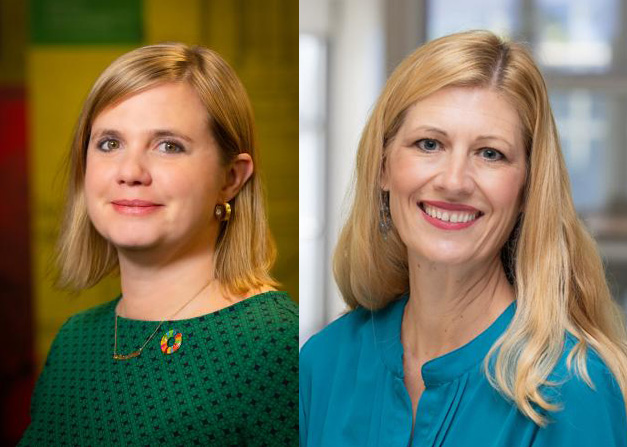
Other speakers included Alexandra Hiniker, director of Carnegie Mellon University’s Sustainability Initiative, and Jolynn Shoemaker, Senior Director of Global Engagements at UC Davis.
Hunter encouraged participants to begin by looking at work already underway on their campuses and identifying how it aligns with the SDGs, rather than assuming that engagement requires creating entirely new programs.
“One of the things that I challenge you all to do is to look around your university and recognize that you’re already doing lots of work to support the SDGs,” Hunter said. “You’re already doing it. Just name it, claim it and then tell the world it’s here, it’s active.”
At Lehigh, that approach led to the creation of an “SDG pathway” across campus. Hunter said the university examined how academic departments, student organizations and other groups were contributing to each of the 17 goals.
One of the first examples came from chemical engineering, whose work on fertilizers and crop production aligned with SDG 2: Zero Hunger. The broader effort ultimately demonstrated that all 17 SDGs were represented through research, teaching and engagement across the university.
Hunter also highlighted a Student Senate resolution developed with the LU/UN Partnership that requires new student clubs and organizations seeking recognition to demonstrate how their work aligns with at least one SDG. The resolution passed unanimously, and a campus team now helps student groups identify those connections.
He urged other institutions to adopt simple approaches, such as adding relevant SDG logos to event materials and explaining how programs connect to the goals. Hunter also highlighted Lehigh’s “Solving the SDGs in 90 Minutes” simulation, which asks students to consider how to address challenges including poverty, climate change and global health.
The exercise has been presented about 70 times, including at the United Nations, and has been used by U.N. offices to train interns, Hunter said.
“My goal today was to demonstrate that you can do lots of things on campus immediately, at no charge, and directly engage the campus in its totality,” he said.
Hiniker discussed efforts by Carnegie Mellon’s Sustainability Initiative to integrate the SDGs across education, research and campus practices, including annual reviews, online dashboards, student sustainability liaisons and collaboration through United Nations Academic Impact with institutions including Lehigh and UC Davis.
“The one thing I have learned over the past decade or so working on this is there’s always something to learn from someone else in order for us to collectively do better,” Hinker said.
At UC Davis, Shoemaker highlighted campus, community and international efforts that include a first-year seminar, an undergraduate SDG internship, a partnership with the City of Sacramento and participation in United Nations Academic Impact, through which UC Davis co-chairs the SDG 2 Zero Hunger Hub.
Discussing universities’ potential to work with their surrounding communities, she said, “I think this is actually an area where there is so much potential for us as university players.”