Written by Gianna Cusumano | September 25, 2026 | SHARE


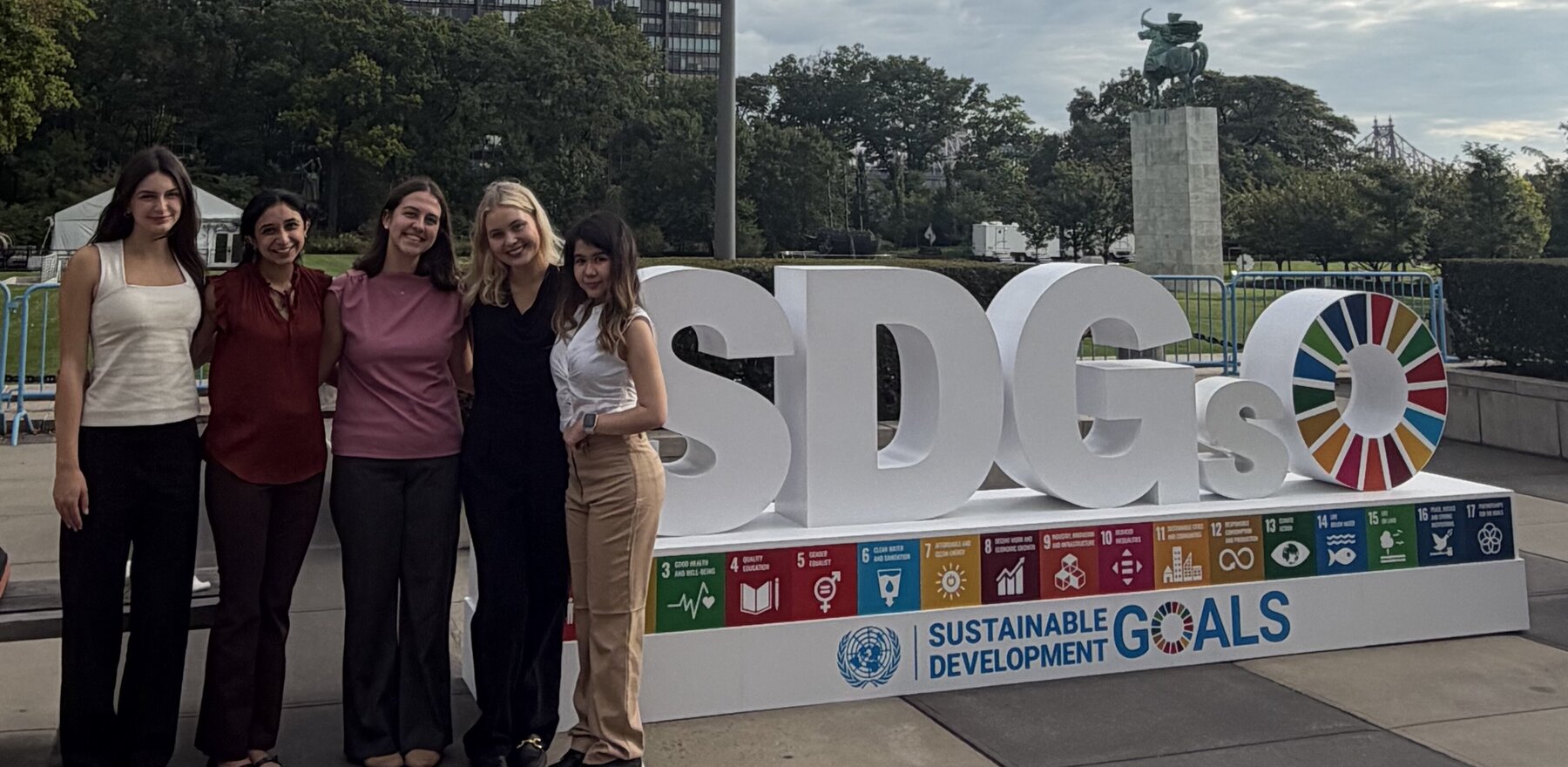
Lehigh students attended the United Nations SDG Moment, hearing global leaders and young advocates address the challenges and progress surrounding the Sustainable Development Goals.
Lehigh University students attending the United Nations Sustainable Development Goals Moment conference were faced with the facts: the world is $4 trillion a year short of meeting the SDGs, official development assistance has fallen 23% in the past year, and 2 billion people still drink water that can make them sick.
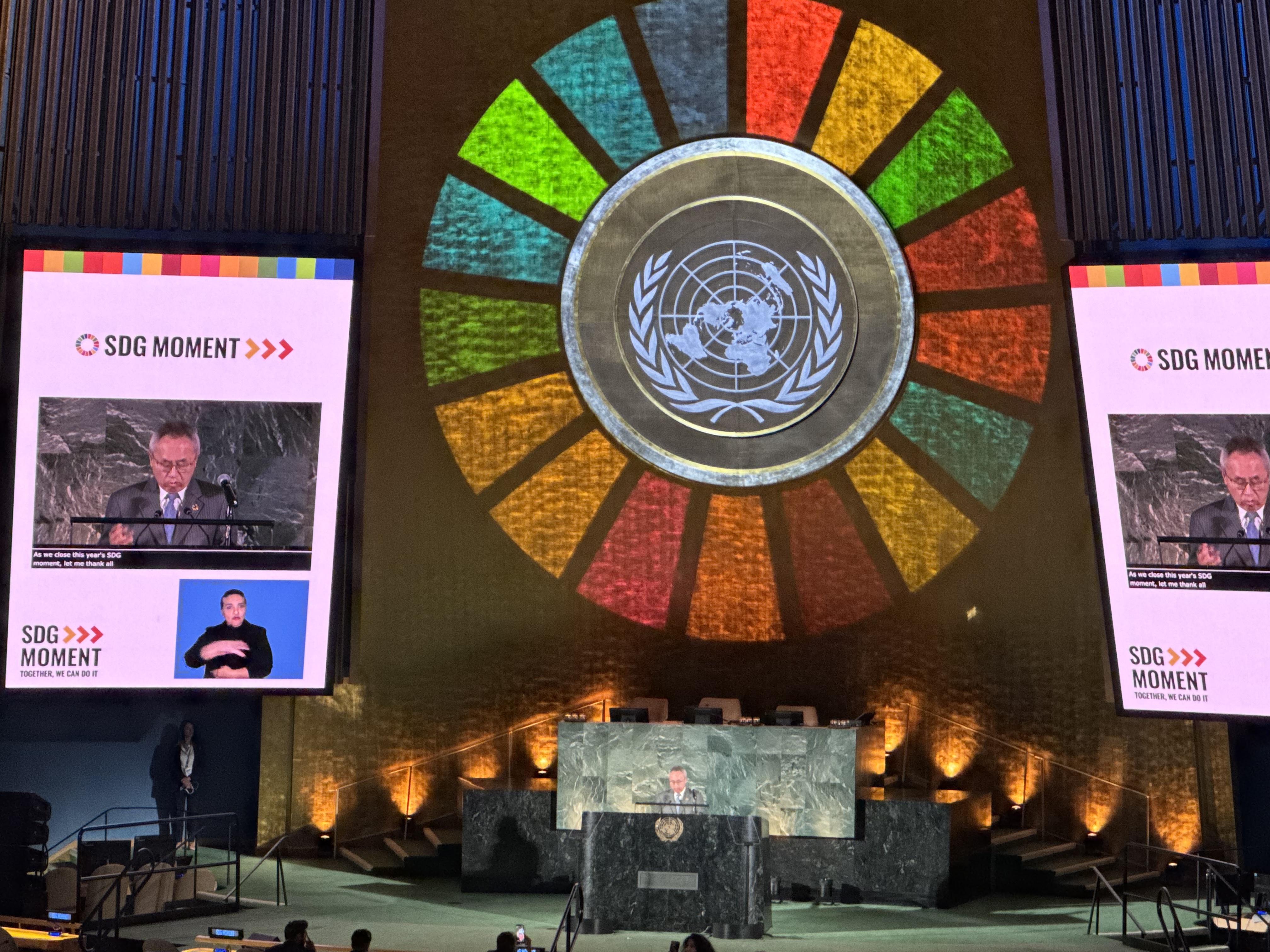 Amid these grim realities, United Nations Secretary-General António Guterres urged audiences to keep demanding meaningful progress from the international community and the United Nations in his opening remarks.
“Our efforts must remain dynamic," Guterres said. "They must remain ambitious, and they must deliver. Deliver the promise of the 2030 agenda. Let us spare no effort to work together to restore trust and honor our commitments.”
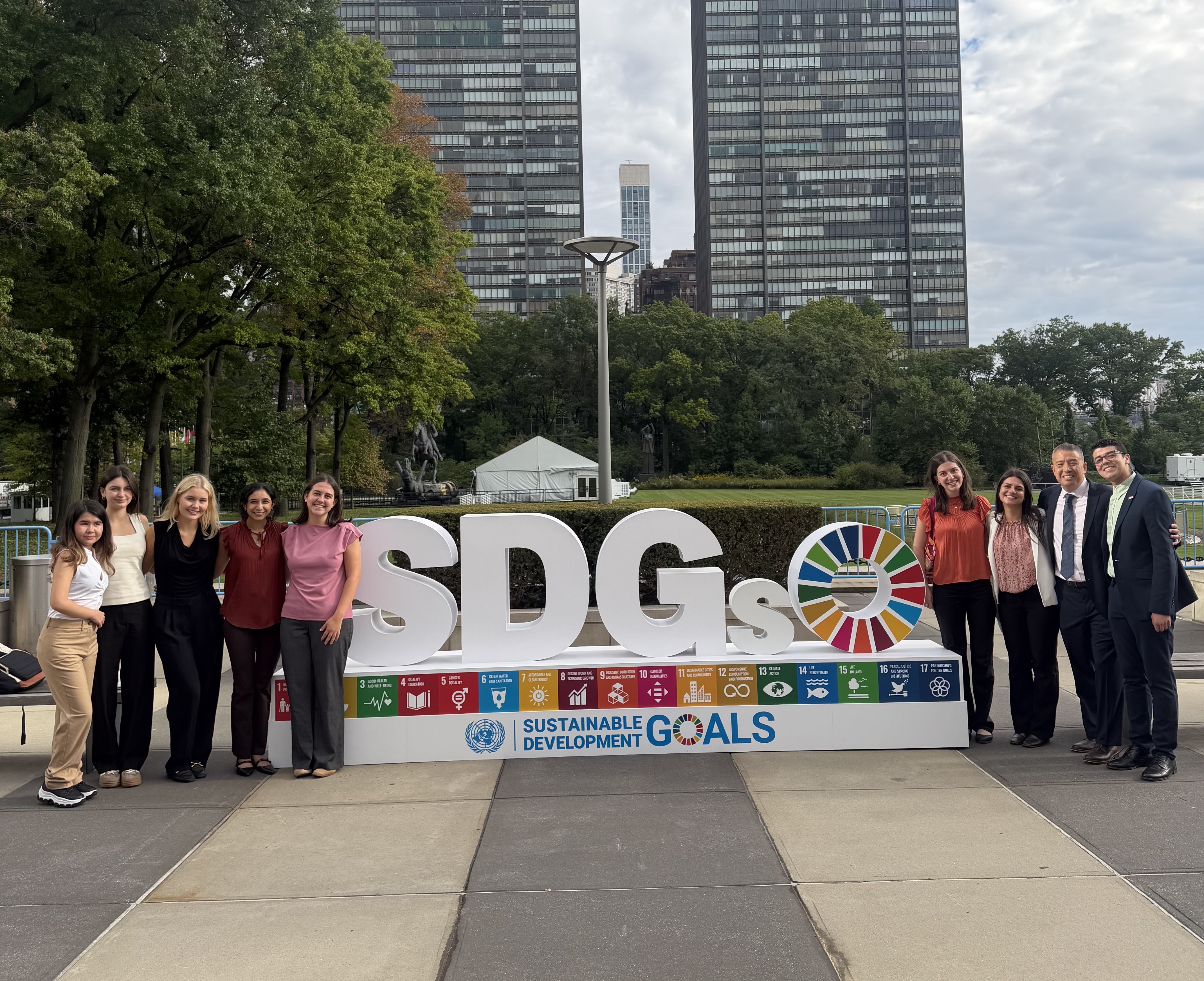
A cohort of Lehigh students attended the conference and formed their own opinions on the state of the Sustainable Development Goals (SDGs). The cohort included Lehigh University/United Nations (LU/UN) Partnership Interns, LU/UN Youth Representatives, and PhD students of counseling psychology.
The SDGs are a collection of 17 international targets created by the United Nations in 2015. The SDGs include goals such as eradicating poverty, ending hunger, and expanding access to education.
One of the main speakers at the SDG Moment conference was Amina J. Mohammad, widely recognized as one of the SDGs' main architects, who helped shape the program's objectives and timelines. Conference speakers said 36% of the SDGs are on track to be completed by the 2030 target date.
The event featured opening statements, video messages, live panel discussions, and closing remarks. Khaliur Rahman, President of the General Assembly, and Amar Bendjama, President of the Economic and Social Council, greeted the audience and gave brief speeches.
After the opening remarks, Lehigh University students took part in the symbolic candle ceremony honoring youth voices in the United Nations. After a video message from education and women’s rights activist Malala Yousafzai played, Lehigh students held candles to celebrate youth activists.
 This theme of welcoming new perspectives in the United Nations became a major focus of the conference.
Lehigh student Diya Narayan ‘27 represents a non-governmental organization (NGO) as part of the LU/UN Youth Representative program. She serves the International Public Relations Association (IPRA), and on Friday she attended the conference as a journalist and wrote a story about her experience. As a young advocate herself, she sees the value in ushering in new generations of leaders.
“I do encourage more conferences at the UN, where we can hear from youth voices and their perspectives because they're honestly like we're the people that are going to be impacted the most by a lot of this change, ” Narayan said.
The second panel, “Unlocking Possibilities for People and Planet,” featured young leaders in the UN, including Charitie Ropati, a member of the UN Secretary-General’s Youth Advisory Group on Climate Change, and Mariam Solika, Founder and CEO of GOOD NEWS.
Solika specifically talked about how she spread awareness of the SDGs before she really understood what they were. As a 21-year-old, she started GOOD NEWS, an online site that highlighted the achievements of Arab youth. Regarding the difficult road ahead to achieving the SDGs, Solika offered this piece of advice:
“I want to let you know that every single person in this room outside is born with a spark of hope; it's a survival mechanism. It's not functional. We all have hope, but it's a matter of how we keep this spark alive through constant actions,” Solika said.
In addition to youth leaders, the conference also focused on how mental health relates to the broader goals of the SDGs. During the panel, “The Future Speaks to Us Now,” Amina J. Mohammad spoke about her fears about the growing mental health crisis and the lack of community support systems.
“We did something amazing in our international community, and I think that was realizing that the head belonged on the body and not in the corner somewhere when we talked about mental health. It just really understanding that connection between the body and the mind,” Mohammad said.
Mohammad went on to say that mental health plays a large role in today's conflicts, such as the wars in Gaza and Ukraine.
As part of the trip, Professor Chris Liang attended with students from his doctoral-level Foundations of Counseling Psychology class. As a licensed psychiatrist, Dr. Liang connected with Mohammad’s comments on mental health and its role in the SDGs.
“Mental health is both a driver of behavior and an outcome of behavior… I think about that a lot, making sure that people have access to health resources and information, and that people don't feel ashamed of going to seek mental health services, and there also has to be availability of mental health services, and that's not the case in many parts of the world,” Liang said.
Frank Colon Matos, one of Liang’s PhD students, agreed that the problems the SDGs are addressing can have broader implications for mental health, leaving citizens in constant survival mode.
“Mentally healthy, supported communities are much better equipped to organize, stand up for their rights, and build real economic stability,” Matos said.
In addition to hearing about global issues such as climate change, the conference also featured musical and theatrical performances celebrating the progress made so far. The musical performances included a live rendition of “The Circle of Life” from three members of the Broadway cast of The Lion King. For the first time in United Nations history, the conference staged an original play imagining a future where the SDGs are completed.
In her closing remarks, Mohammad acknowledged both the difficulties of the path ahead to completing the SDGs and the need for hope: “The road to 2030 is a runway rather than a countdown, and every meter of it counts.”