Written by Gianna Cusumano | May 26, 2026 | SHARE


Fifteen years after a conversation over tea sparked the idea, Lehigh University’s ServeAbroad Antigua program continues to deepen global partnerships through service, sustainability and experiential learning in Antigua and Barbuda.
Long before Lehigh’s ServeAbroad Antigua and Barbuda trip logged 6,500 service hours, organized 25 trips, and engaged 165 students, it began as a simple conversation over tea.
 Dr. Bill Hunter, the founder of ServeAbroad Antigua and director of the Lehigh University/United Nations Partnership, first met Dame Deborah Mae Lovell while she was visiting Lehigh’s campus in 2010. Lovell was serving as the Antigua and Barbuda ambassador to the United States and traveled to Lehigh to meet with Antiguan and Barbudan students participating in the former Iacocca Global Village for Future Leaders summer program.
Hunter and Lovell became fast friends, and soon the idea emerged of Lehigh students visiting Antigua over a cup of tea. While Lovell claimed that Hunter’s students needed to visit the Caribbean beaches, Hunter also saw it as an opportunity for his students to get involved with the community of Antigua and Barbuda through a service project.
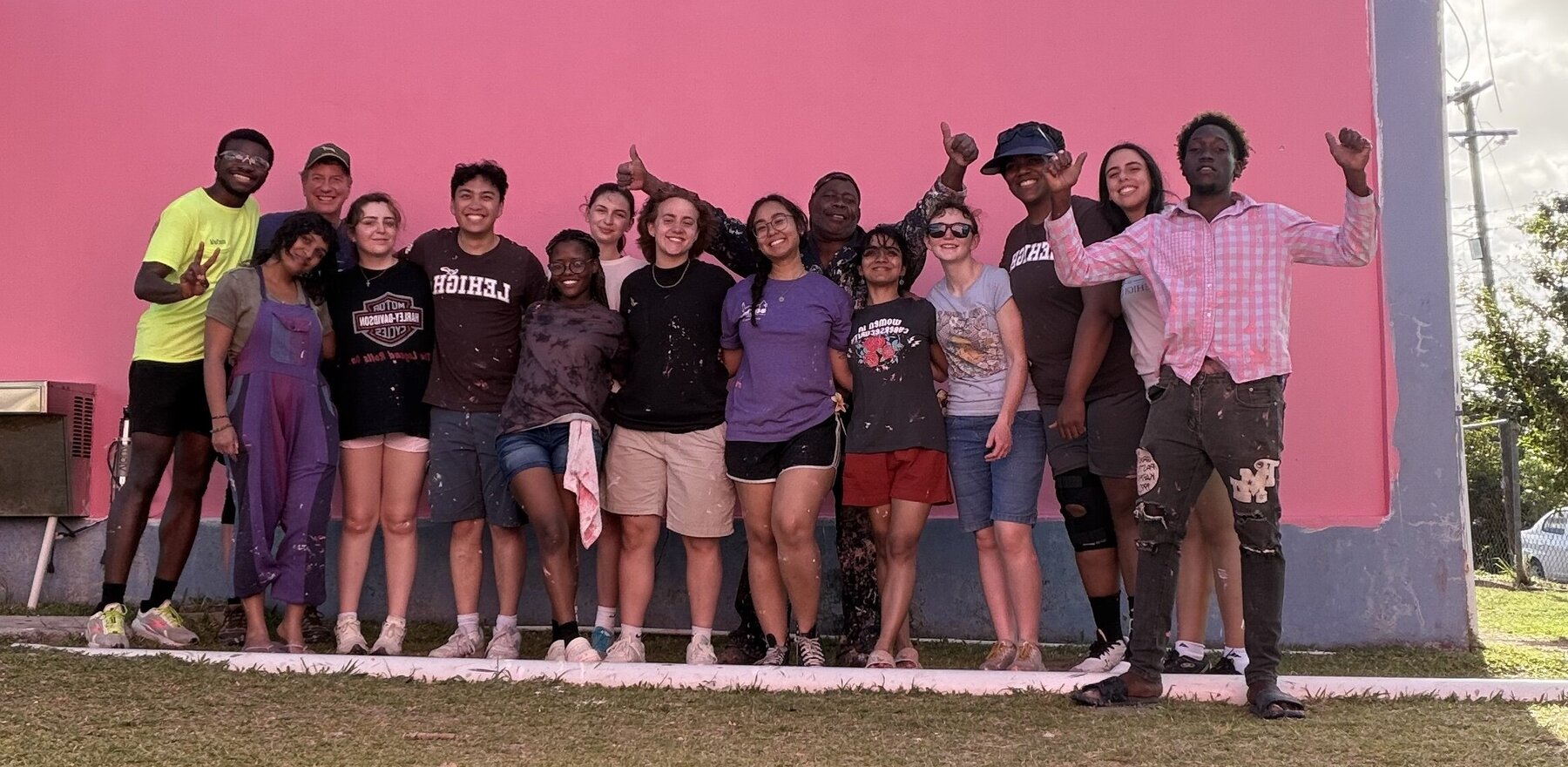
In 2011, Hunter launched the first ServeAbroad Antigua trip. Together, Hunter, Community Service Director Carolina Hernandez, and a small cohort of Lehigh students traveled to Antigua to paint an elementary school and immerse themselves in the culture. Over the next three years of the program, Lovell joined the students for a week, traveling on a bus around the island.
Building a Tradition
For 15 years, the program has run either during spring break or after the end of the school year, painting a new school each time, serving as aides at a school for students with special needs, and partnering with the Rotary Club of Antigua Sundown on a community project. Hunter believes that the ServeAbroad Antigua trip is a completely unique experience for students.
“No matter where you've gone in your travels, I would suggest that you'll get to know Antigua better and more deeply than maybe other places that you've gone before, because it's so tiny, because it's so interconnected,” Hunter said. “As we do our driving tour, you'll drive on almost every road in the country and see it in its totality.”
 Since 2022, Hunter has been joined on the trip by Denise Beautreau, director of student access and success at Lehigh. She believes that the mission of the trip has remained constant throughout the years she has been involved.
"I think things that have stayed the same are the core purpose of the trip,” Beautreau said, “We don't just go somewhere to go somewhere. We want to make sure we give back.”
During spring break this year, Lehigh students painted Sea View Farm Primary School and brought both exercise equipment and school supplies to its students. Since its inception, the trip's purpose has evolved with the island's current events; this year, students focused on sustainability, disaster prevention, and water access.
Antigua and Barbuda is a small Caribbean nation, spanning 170 square miles – roughly the geographical size of Philadelphia. The nation comprises both the main island, Antigua, and the smaller island of Barbuda. Because the island nation has limited space for landfills, Antigua and Barbuda has become a regional leader in climate change legislation, banning the sale of plastic bags.
Learning Through Sustainability
Antigua and Barbuda have also been hit hard by dangerous hurricanes, such as Hurricane Erin, due to their geographical vulnerability. Water accessibility has also remained an issue for Antigua as the country relies on desalination for 90% of its water supply.
This past spring break, students had the opportunity to explore these challenges through experiential learning opportunities. Hunter and his students toured the Department of Environment to hear more about climate change policy and housing options for disaster prevention. They also toured a water desalination plant near Fort James Beach and met with Mario Bento, Caribbean Water Treatment director.
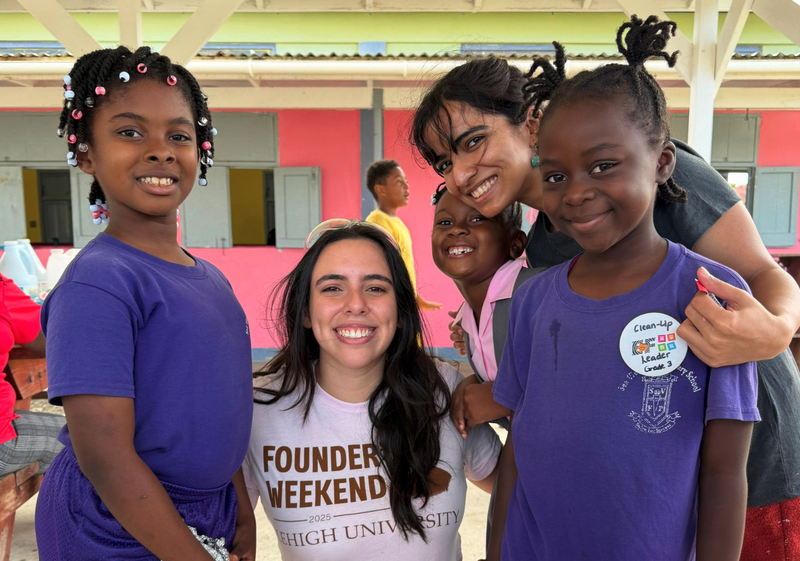
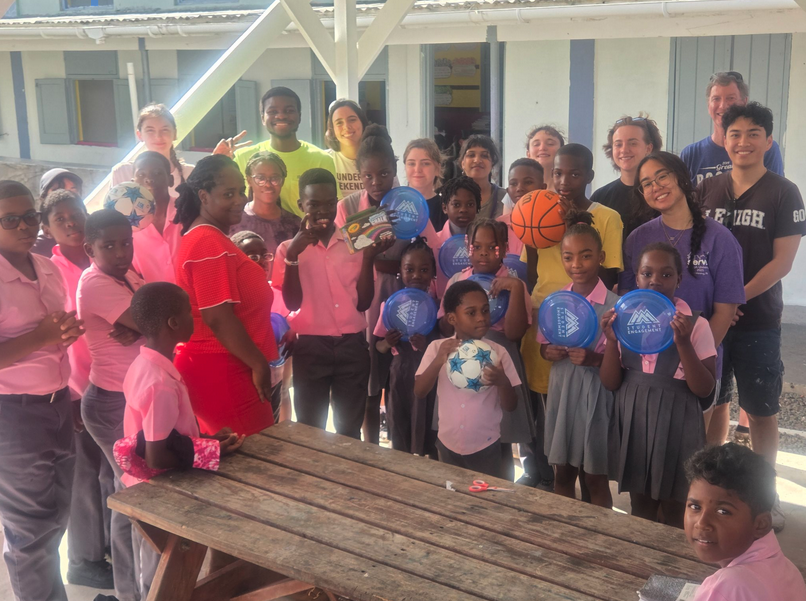 In addition to these opportunities, students on the trip formed relationships with students at both Sea View Farm Primary School and the Adele School for Special Children, playing with them at recess and touring their classrooms.
Principal Andrea Richards is grateful for how her students at the Adele School benefit from their interactions with Lehigh students.
“They gain social exposure, build confidence, and experience meaningful engagement with individuals from a different cultural and educational background,” Richards said, “The Lehigh team brings energy, creativity, and warmth, which creates a positive and stimulating environment for our students.”
Hunter’s team also got to attend a mock all-female parliament, where young women from Antigua and Barbuda debated cannabis law reform on International Women’s Day. At the end of their trip, Hunter, Beautreau, and the students were interviewed on Good Morning Antigua Barbuda about their experiences.
Partnerships Taking Root
Returning each year, Hunter has created meaningful connections with the people of Antigua and Barbuda, paving the way for new partnerships. Recently, there have been three major developments in Lehigh University’s collaboration with Antigua.
Following the May 2026 trip, Lehigh has sent its Center for Assistive Technology director to Antigua to meet with the Adele School for Special Children about inclusivity during the week of March 30. This collaboration focuses on helping Antiguan leadership achieve their goal of becoming the most disability-friendly nation in the Caribbean by creating a research project with Lehigh.
During the week of April 6, Hunter also introduced the director of Antigua’s risk and resilience department to Lehigh’s catastrophe modeling program; Hunter hopes that the catastrophe modeling program can help create more predictive analysis to ultimately save lives.
Finally, Hunter is partnering with the students from the University of the West Indies, which has a campus location in Antigua, to potentially offer a class on sustainability and the opportunity to visit Lehigh’s campus.
Hunter says the development of these partnerships has only been made possible by the genuine connections made with the Antiguan community. Beyond the educational opportunities and service projects, students meet and eat traditional food with longtime friends of the program, Hilroy and Denise Carr.
“Antigua is a very socially networked community. It's a small island where there are a lot of familiar connections across the community itself, and we've been able, each year, to deepen our network, to broaden it to people in different sectors – whether it be the government, whether it be education, whether it be civil society or professional sectors,” Hunter said, “And, that's really become an asset to the program; it’s deepened not only the networks, but our friendships.”
Student Perspectives
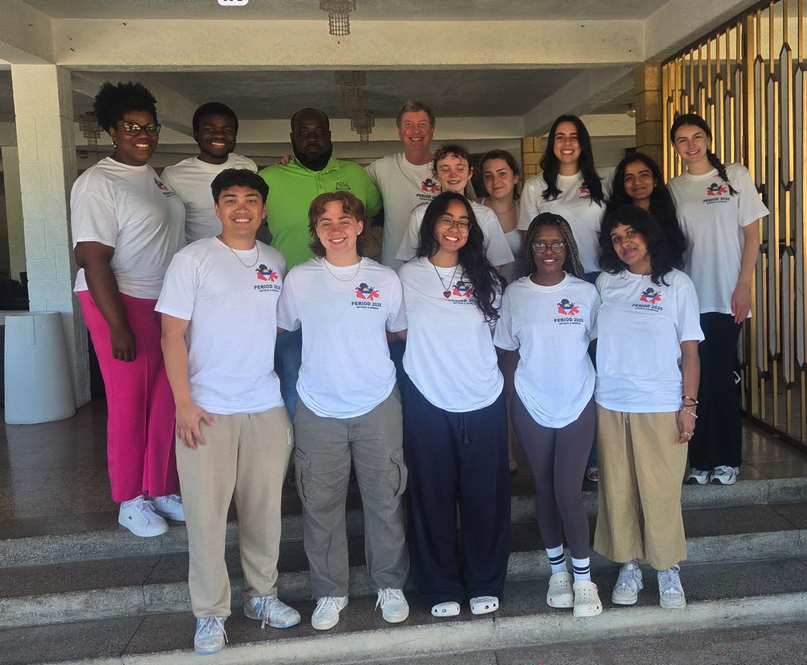
This year’s cohort featured ten students: Ayushka Dhakal ‘27, Christy Leong ‘27, Diya Pandey ‘27, Fernanda Sena ‘27, Gianna Cusumano ‘29, Gina Fleming ‘28, Lia Kattis ‘28, Lily Paschke ‘27, Lorraine Rwasoka ‘27, Rachid Seraphin ‘26, and Ryan Javier ‘26. These students represent a diverse collection of majors and shared passions for service and sustainability.
Pursuing an integrated degree in Environmental Engineering and International Relations, Lily Paschke was able to learn more about how engineering solutions like reverse osmosis are received by the Antiguan community after visiting the water desalination plant. She thought it was interesting to learn that many Antiguan people choose to drink bottled water because they are not accustomed to the salinity that remains from reverse osmosis.
“I feel like, as an environmental engineer, a lot of times, like, things like reverse osmosis are really being pushed,” Paschke says, “But it's hard when you're not actually on the ground, when these things are being done, to realize the cultural aspect of it and that is a big thing with engineering as a whole.”
Rachid Seraphin was also able to learn more about his academic interest in structural engineering through a demonstration of disaster-resistant housing at the Antiguan Department of Environment.
“I also loved the little demo, the fact that they have a demo to have a demonstration house show anyone that is interested in their product what they would look like,” Seraphin said, “I felt like the house that they had remodeled, looked really amazing.”
Hunter said the core service commitment of the program – to paint an entire school – will remain constant, but the trip continues to evolve alongside the changing needs and political climate of Antigua and Barbuda. After shifting towards sustainability in recent years, Hunter and his students will continue to explore this area of policy.
“I hope that the students, years from now, when they hear the name Antigua, first of all, smile and second of all, reflect back on their time there, because it is paradise,” Hunter said, “But what I hope you remember most is the people, the kids, our bus driver, Floyd — those sorts of people that you really got to know, who you spend time with. It's strange to say, but I no longer go to Antigua for the beaches. I go there for the people.”