Written by Colin McEvoy | January 23, 2026 | SHARE


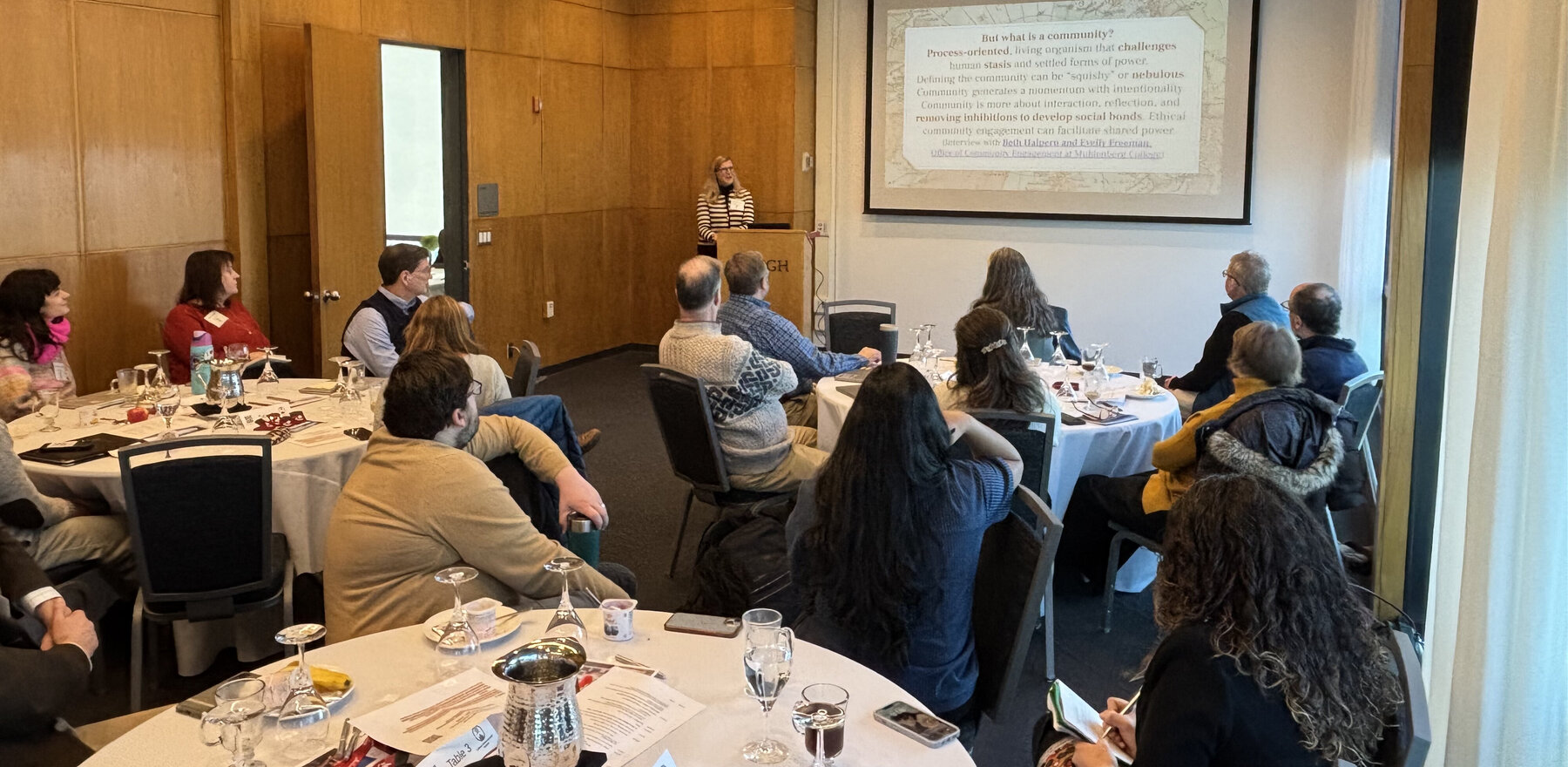
Educators from across the Lehigh Valley gathered to explore how students’ global experiences can be more intentionally connected to local learning and community engagement after they return home.
Students often return from study abroad and other global experiences energized and full of new perspectives, but don’t always have clear ways to apply what they have learned once they are back home.
Faculty and staff from Lehigh University, Muhlenberg College, Lafayette College, and other institutions, gathered to discuss that and other challenges at the Linking Global to Local Summit, a working meeting focused on strengthening connections between students’ global learning experiences and community engagement in the Lehigh Valley.
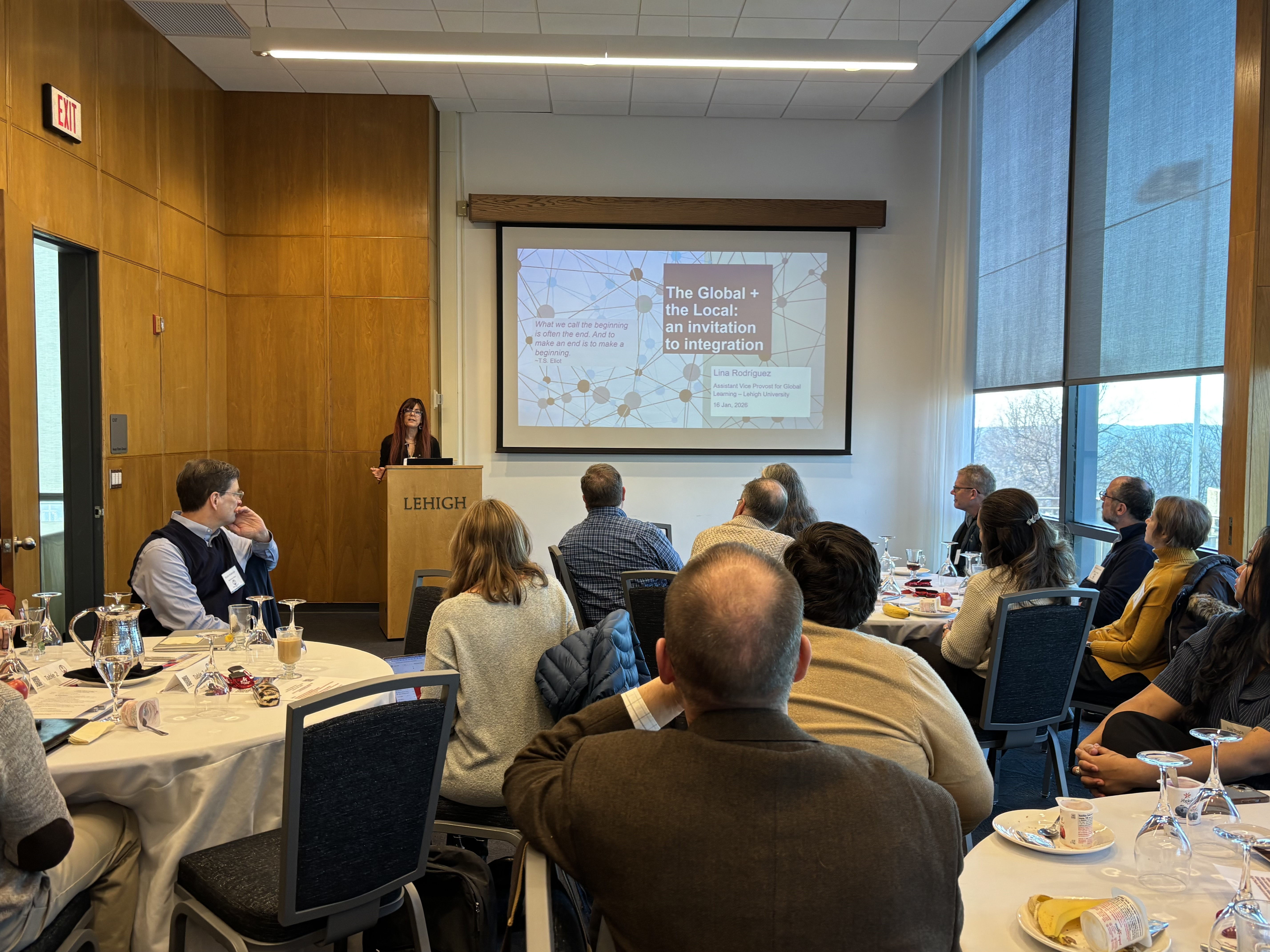
“We send students around the world to do incredible things, but we leave a lot of learning on the table,” said Angelina Rodríguez, Assistant Vice Provost for Global Learning at Lehigh. “Just learning something doesn’t guarantee that students can embody, carry forward, and enact what they’ve learned once they come home. We need to help students integrate these experiences.”
The summit, held on Jan. 16 in Lehigh’s Iacocca Hall, brought together educators and administrators who support study abroad, international internships, community-based learning, research, and career development.
Through roundtable discussions and short presentations, participants explored how experiences abroad can be more intentionally linked to local contexts so students can better integrate what they learn overseas into their academic, professional, and civic lives.
Cheryl Matherly, Vice President & Vice Provost for International Affairs at Lehigh, said the idea for the summit developed over several years through shared questions from faculty and staff about better connecting global learning with local community engagement across Lehigh and partner institutions.
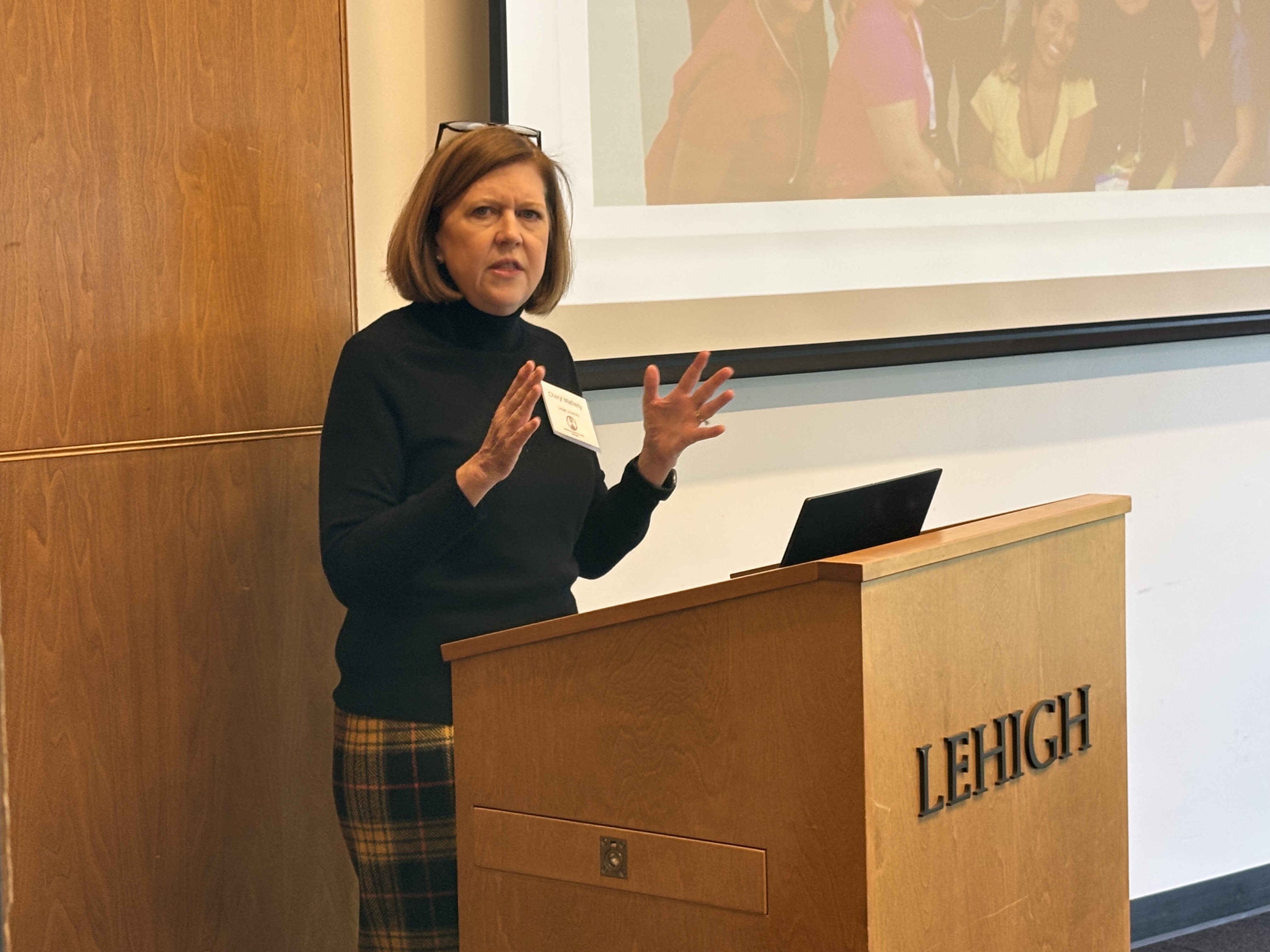
“Our central guiding question is: what if the next step in global learning happens right here in the Lehigh Valley?” Matherly said. “How can we as institutions design experiences that make that connection real and meaningful for our students, for our faculty, and for our communities.”
The group identified three primary goals for the day: to articulate a shared rationale for connecting global and local learning, to clarify the ethical principles and pedagogical approaches that should guide that work, and to examine the infrastructure, resources, and cross-campus collaborations needed to sustain it over time.
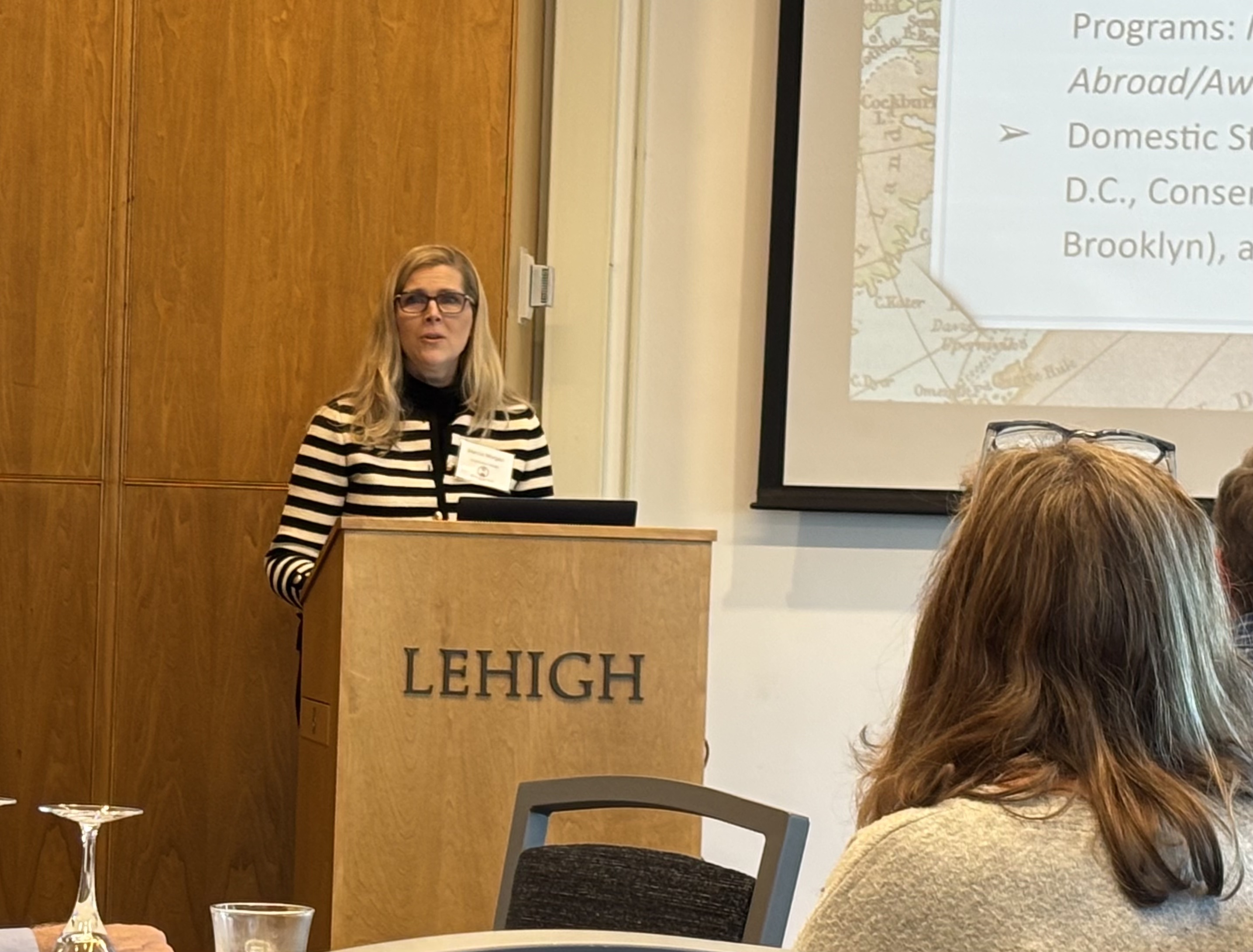
Marcia Morgan, Dean of Global Education at Muhlenberg, emphasized the importance of cross-campus collaboration in strengthening students’ global-local learning. She framed the work through ethical approaches that center care, equity, and lived experience, arguing that meaningful community engagement must be relational and collective rather than top-down.
“Some of the compartmentalized learning experiences that come from international education are, in part, our own creation, from the structures that we’ve fostered,” Morgan said. “We need to think about the global and the local as reciprocal lenses.”
At the conclusion of the summit, participants developed a set of recommendations that emphasized a more intentional approach to global-local integration, highlighting its role in deepening student development and strengthening reciprocal relationships with local communities.
They underscored the need for clearer ethical and pedagogical frameworks, including structured learning and reflection before, during, and after global experiences, as well as sustained, equity-centered partnerships with community stakeholders.
Participants also identified practical challenges, including time, incentives, faculty preparation, and institutional structures, and pointed to the importance of stronger cross-campus collaboration, dedicated staffing, and shared resources to support high-quality, assessable global-local learning.
Matherly described the Lehigh Valley as a deeply global community with high immigration levels, multilingual households, and international businesses. This makes it a natural site for global-local integration, she said.
“Lehigh County is among the top one percent of counties in the country for immigration,” Matherly said. “In Allentown, over 40% of homes have Spanish as a primary language. We’re really global; it’s part of where we are.”