Written by Colin McEvoy | April 9, 2026 | SHARE


Lehigh students traveled to India through a new course to collaborate with global partners and develop real-world solutions to pressing health challenges.
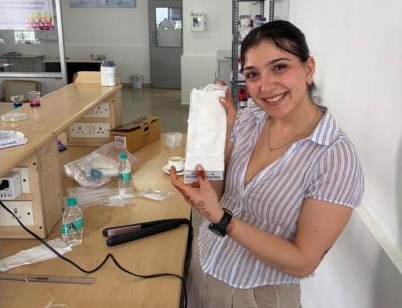
Less than 24 hours after stepping into a lab in southern India, Francesca Morrell had turned plant-based materials into a working prototype for a biodegradable menstrual product. Soon after, she was pitching the idea to one of the country’s top healthcare investors.
“I went in completely blind, using raw materials that I found in India, and it ended up working,” said Morrell, who is pursuing her PhD in Bioengineering at Lehigh University. “I only started this project in January, and meeting with one of the top healthcare investors in India and already having a prototype is insane.”
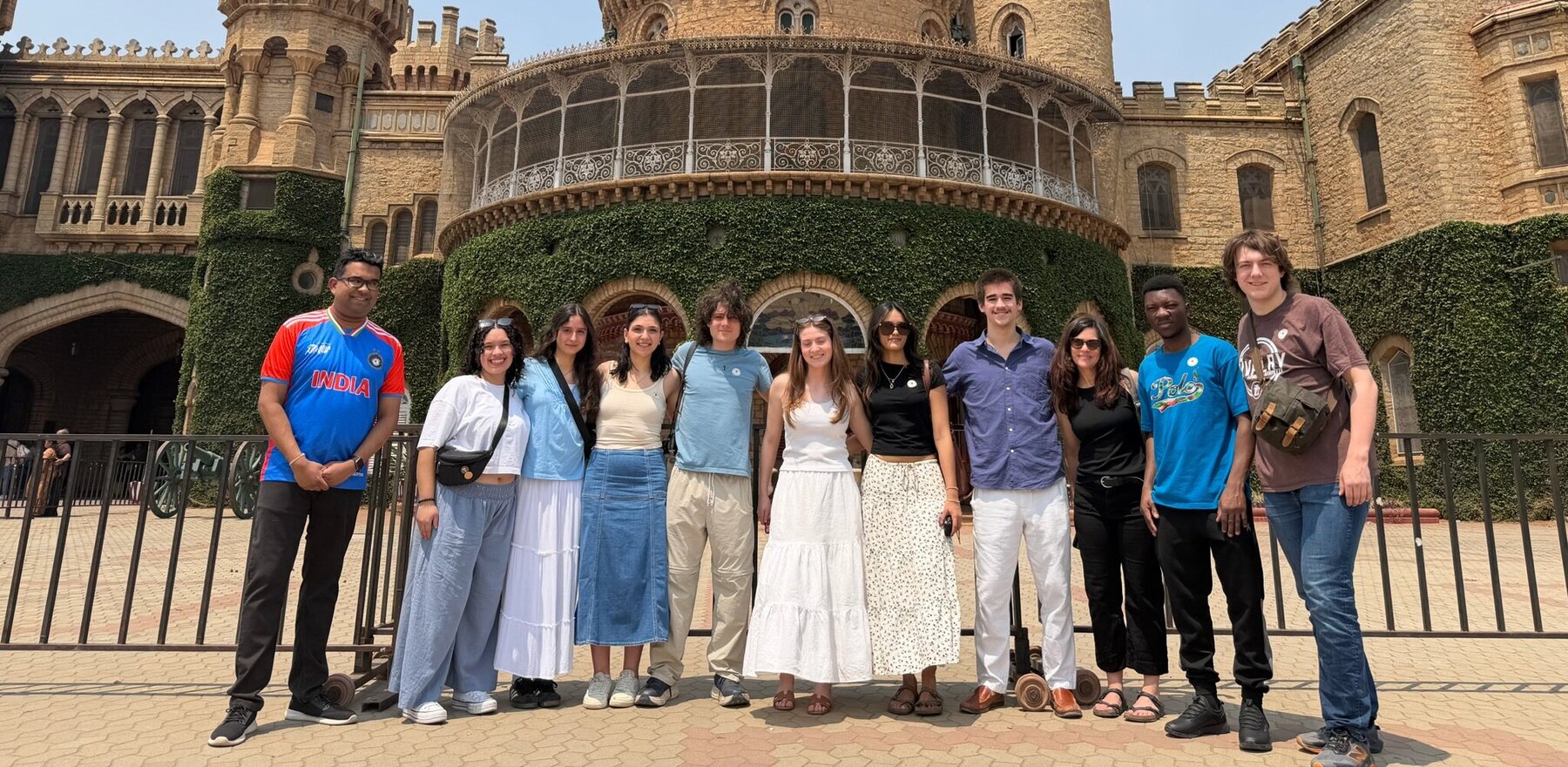
Morrell was among the Lehigh students who traveled to India for a week this past spring break through “Equitable Innovation: Lehigh x India,” a new course led by Dhruv Seshadri, assistant professor of bioengineering.
The course continues Seshadri’s work to build long-term academic and research partnerships with institutions in South India while rethinking how engineering students engage globally. The embedded spring break travel component lets students apply semester-long coursework during a one-week experience rather than commit to a full semester or summer abroad.
“Collaboration was essential”
“I’m deeply grateful to Lehigh for creating the space and support to make experiences like this possible,” Seshadri said.
“In India, I get to watch our students grow in real time, not just as engineers, but as thoughtful, globally aware future makers who learn that impactful innovation begins with listening, understanding context, and designing with purpose,” he said. “Seeing that shift in perspective, from solving problems in theory to engaging with real people and real systems, is one of the most rewarding parts of this work.”
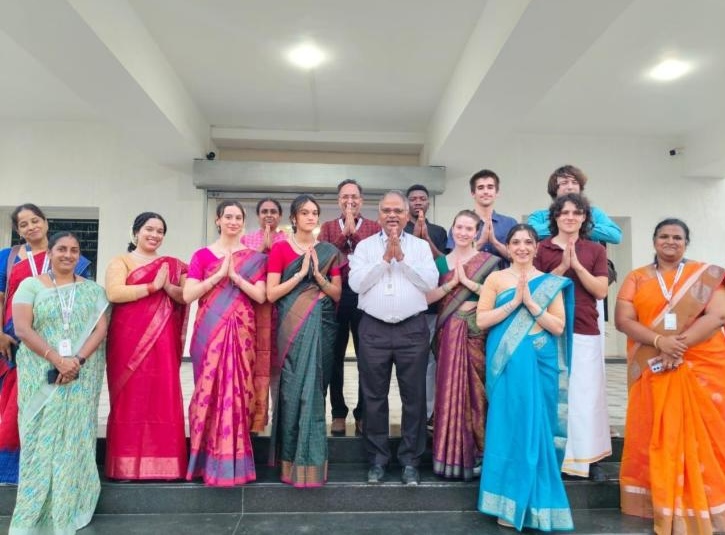
The course was established with support from a Faculty Internationalization Grant from Lehigh’s Office of International Affairs (OIA). It also helped formalize a memorandum of understanding with the Tamil Nadu-based KGiSL Institute of Technology, one of Lehigh’s global institutional partners.
Through the course, Lehigh students collaborated virtually with peers from KGiSL before working with them in person during the trip. They also engaged with hospitals, universities and innovation ecosystems in Indian cities, including Bangalore.
Among those students was Paul Firuzie, a senior majoring in population health and biology, who worked on a project developing wearable health monitoring technology using sustainable materials. They explored how agricultural waste could be repurposed into electrodes for physiological monitoring devices.
Addressing real-world challenges
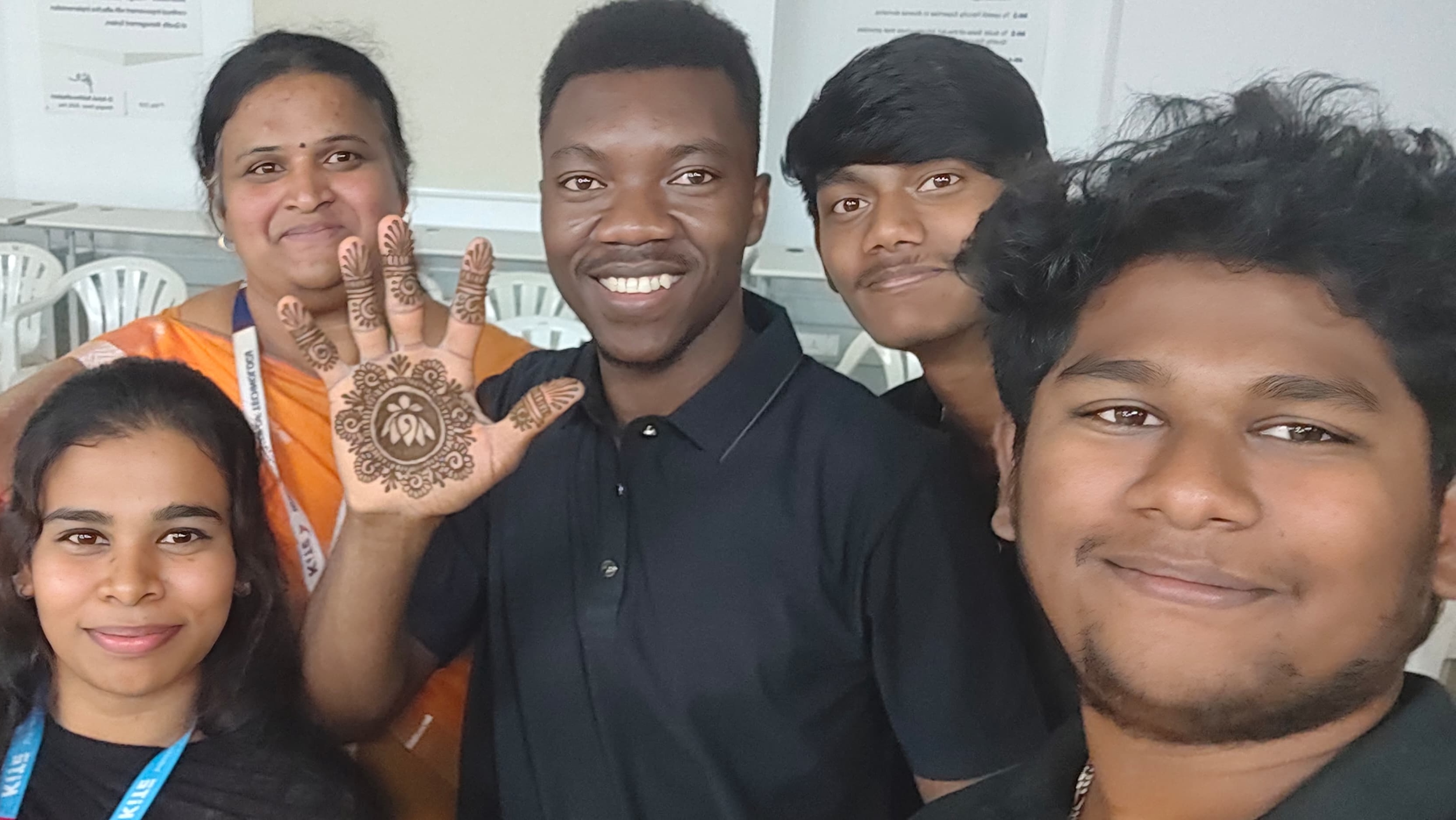
After testing their concept at Lehigh, the team validated it again in India using locally sourced materials, an important step toward real-world application. Working closely with students from KGiSL, Firuzie said the collaboration was essential, helping bridge both technical and cultural gaps.
“They really helped us throughout the whole process,” he said. “They were able to translate and help us connect with people in a meaningful way.”
S. Suresh Kumar, Principal at KGiSL Institute of Technology, said the collaboration between Lehigh and KGiSL has fostered a strong and enduring academic and research partnership, catalysing nurturing solutions that address real-world societal challenges.
“We look forward to advancing this association through deeper research engagement, immersive student exchange opportunities, and impactful global collaborations that continue to drive innovation and create meaningful societal impact,” Kumar said.
Student projects addressed real-world, scalable challenges such as artificial intelligence for breast cancer screening, ultra-low-cost biomedical electrodes made from agricultural surplus, biodegradable menstrual pads and technologies to reduce maternal and neonatal morbidity.
Cultural immersion and research productivity
Kavya Famolari, a bioengineering and molecular biology IDEAS student with a minor in health policy, was among the Lehigh students who traveled to India. She said the experience showed how quickly ideas can evolve when tested in real-world settings.
Her team initially focused on using artificial intelligence to predict early signs of shock. However, after working directly with clinicians in India, they shifted their approach to dialysis units, a setting where the technology could have more immediate impact.
“We had to pivot once we got on the ground,” Famolari said. “After speaking with clinicians and seeing the hospital environment, we realized there was a better fit for what we were building.”
Beyond the technical work, Famolari said the trip offered a powerful blend of research and cultural immersion, shaping how she thinks about innovation.
“It was a great blend of cultural immersion and research productivity,” she said. “You’re not just working on a project. You’re seeing how it fits into people’s lives.”