Written by Gianna Cusumano | February 24, 2026 | SHARE


Lehigh alumna and Devex journalist Elissa Miolene returned to campus to examine the global fallout of USAID’s dismantling and the uncertain future of humanitarian aid.
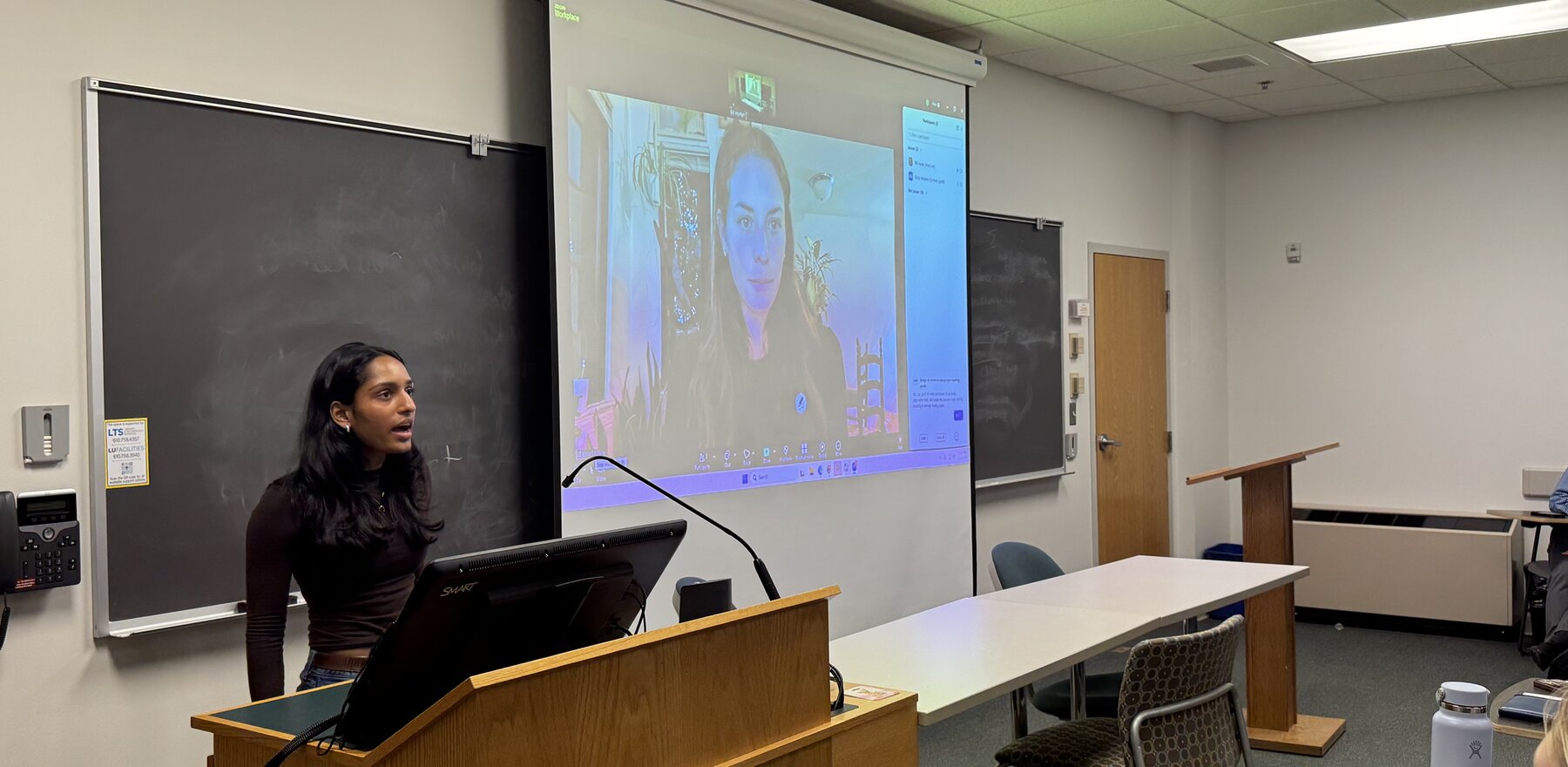
On Thursday, Feb. 21, the Lehigh University/United Nations (LU/UN) Partnership hosted Elissa Miolene, a global development journalist for Devex, to speak on the dismantling of the United States Agency for International Development (USAID).
Throughout the presentation, Miolene shared her journalistic perspective on how the Trump Administration's decision to end USAID has impacted the rest of the world. She also focused on the limits of the “waiver system” or “Emergency Humanitarian Waiver to Foreign Assistance Pause,” a plan put in place to uphold life-saving treatment formerly funded by USAID.
Miolene also shared her thoughts on the future of humanitarian aid, touching on the recent bill passed to allocate $50 billion on Feb. 3, to foreign affairs, including foreign assistance.
An alumna of Lehigh University, Miolene graduated with both a bachelor’s and a master’s degree in 2015. She earned a joint bachelor’s degree in Communications, Journalism, and Related Programs and Global Studies. Alongside this, she received a master’s degree in Politics and Policy.
After working as a journalist for newspapers such as The Wall Street Journal and The Mercury Times, Miolene was offered a position in D.C. to cover the U.S. government for Devex two years ago. Miolene says that Devex is the world’s largest publication focused primarily on global development and humanitarian aid.
Students and staff were invited to attend the event together in Coppee Hall, where Miolene presented and held a question-and-answer session via Zoom.
Bill Hunter, director of Fellowship Advising and the UN program, began the seminar by introducing Miolene, his former student, to the audience.
Led by Hunter, the LU/UN Partnership organizes speaking engagements on a range of global affairs topics. Hunter explains that this was one of the few times that the LU/UN program organized an event around domestic politics; however, the global impact of this issue is undeniable.
“USAID is not a United Nations-related program, but has had an immense impact on the stability of developing nations by supplying need-based aid around the world,” Hunter said. “Its demise has impacted the global community in a very negative way.”
To start her presentation, Miolene gave an overview of USAID and the ripple effects of its disbandment today.
Miolene said that USAID provided 40% of the world’s humanitarian aid and 22% of the UN’s operating budget. According to her, the USAID budget of around $35 billion represents a small fraction of taxpayers’ dollars, despite appearing to be a huge amount. For reference, the United States government’s budget for 2026 is $2.48 trillion dollars.
Miolene also talked through her reaction to President Trump’s 90-day freeze on US foreign assistance.
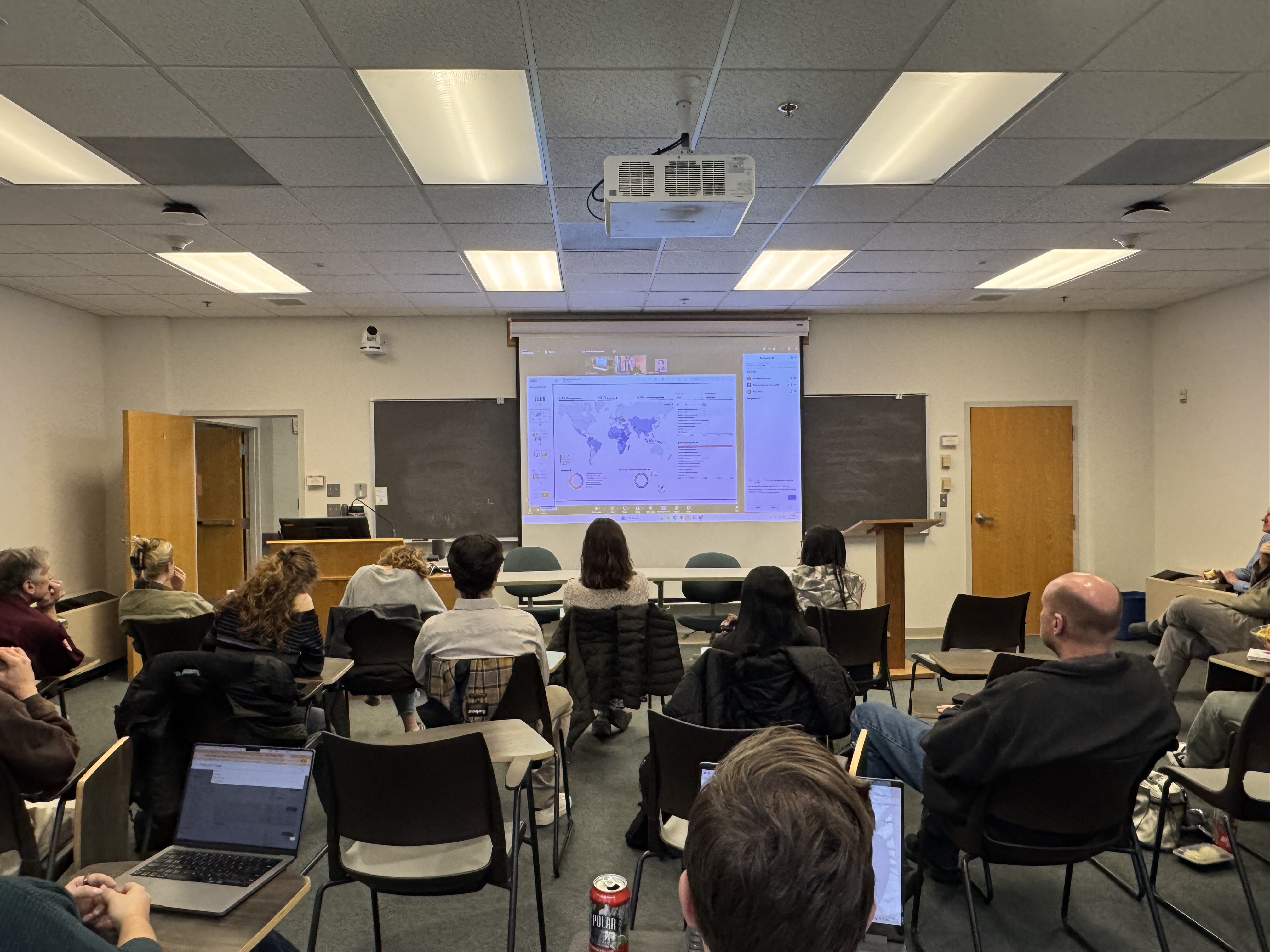 “The whole world of foreign assistance was just kind of panicking; didn't know what to do, didn't know who applied, didn't know who didn't apply, didn't know what to do with existing projects,” Miolene said, “And as a reporter, it was a really insane kind of situation to be in when you actually start to see your beat collapse from beneath you.”
The 90-day period was then followed by the State Department issuing a stop-work order, declaring that no new money would be funneled towards USAID.
As a global development reporter, Miolene was tasked with speaking with individuals affected by the cancellation of USAID.
She told a story about interviewing an employee at a health organization in South Sudan who was legally unable to distribute antiretroviral medication to HIV patients. The clinic worker said that they kept the door open, hoping that people would know to come in, but could not lawfully treat them.
“Of course, we've heard many stories of people dying, and I just remember this moment of sitting on Capitol Hill and watching Secretary of State Marco Rubio say, no one is dying on my watch, no children specifically are dying on my watch,” Miolene said. “And the juxtaposition of that as a reporter, kind of hearing these things from the ground, and then you're looking at politicians and hearing from politicians telling a completely different story, was pretty mind-boggling.”
Miolene also spoke about investigating the “waiver system” or “Emergency Humanitarian Waiver to Foreign Assistance Pause.” She said she was proud to say that she and her colleague were among the first journalists to report that this system was not accessible to organizations in need of waivers.
“This rhetoric versus reality of what was happening on the ground was not matching what kind of solutions were offered up by the administration to what was going on,” Miolene said, “There were a couple of exceptions… but the fact that I can, like, know them on my head just shows you, I think, how rare that was.”
Miolene says that the erasure of USAID is indicative of a larger trend worldwide, as some European countries are acting similarly.
“We’re seeing it in country after country and in a lot of ways that's because of the increase of defense spending and retracting money from foreign assistance,” Miolene said. “It’s also because of different political changes going on throughout the world. We’re seeing a rise in nationalism.”
Chloe Fisher, ‘29, is an intended International Relations and Economics major and attended the event to learn more about different career paths for Lehigh students interested in world politics.
“I think it's important for students at Lehigh to take advantage of, like, the resources that are presented to them, like these events are the type of thing that, like, no, they're not mandatory. Do you ever really need to go to one? No, but it really broadens your horizons.”
While giving career advice to the Lehigh community members in attendance, Miolene said that these recent developments have given her a new outlook on her work:
“I think in some of the darkest times of reporting, it's when you get the most motivation to continue.”