Written by Gianna Cusumano | November 18, 2026 | SHARE


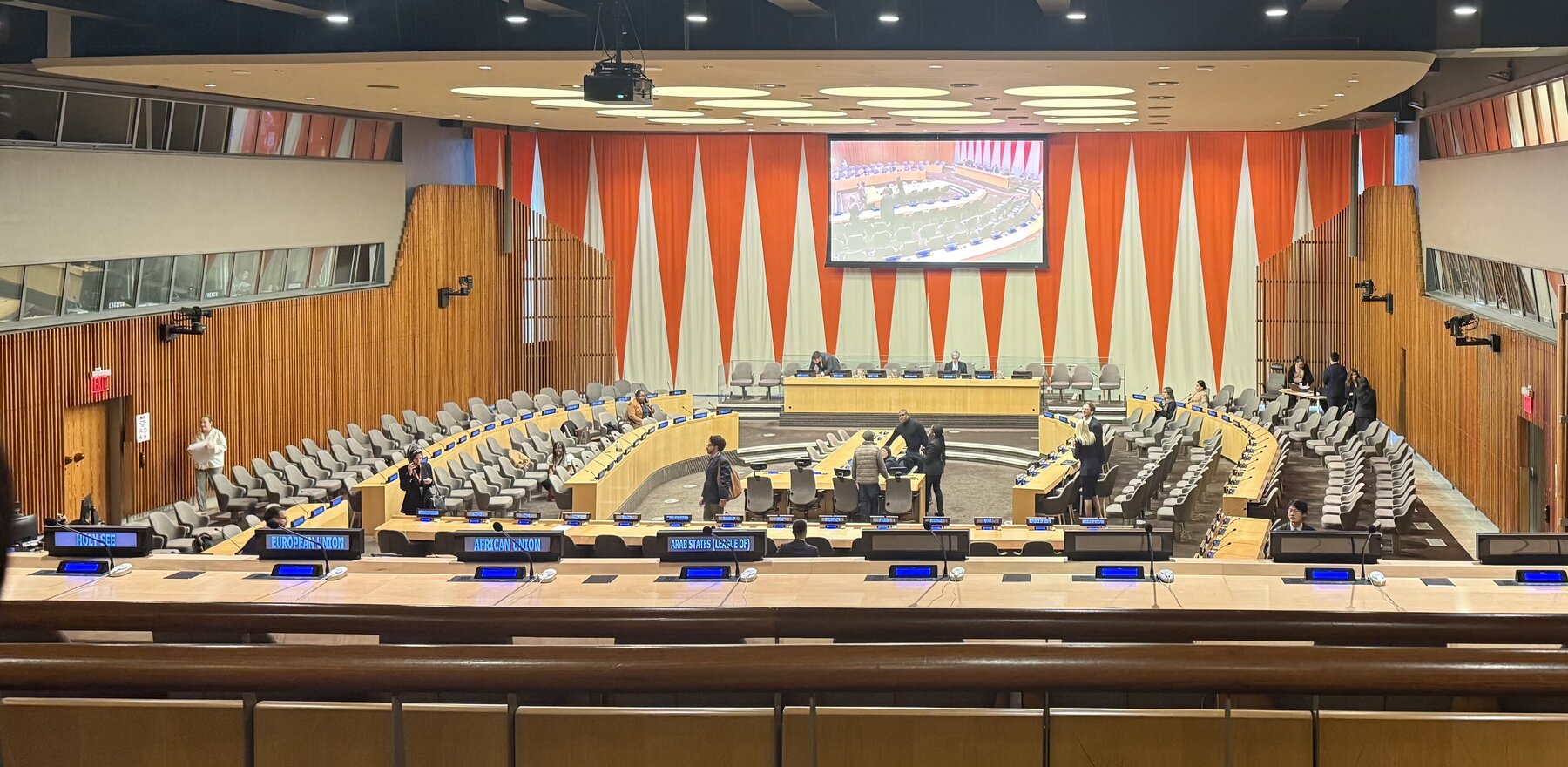
Lehigh students met with a UN human rights officer and Ecuadorian diplomats in New York to explore how the UN reviews countries’ human rights records and how Ecuador makes its voice heard.
Why hasn’t every member state of the United Nations ratified the Convention on the Rights of the Child? How does Ecuador balance industrial development with sustainability as a less developed nation?
These were just some of the burning questions Lehigh University students had the opportunity to ask on their Friday trip to the United Nations.
During the trip, students participated in two experiential learning opportunities, discussing the responsibilities of the Office of the High Commissioner for Human Rights (OHCHR) and the Ecuadorian Mission. The trip focused on teaching students more about how the United Nations works and the responsibilities of its employees and member-state representatives.
At the first stop, Lehigh students met with Maria Del Carmen Vivar Aguirre, a human rights officer at the United Nations headquarters in New York. Later that day, the cohort met with Deputy Permanent Representative Pablo Agustín Escobar Ullauri of Ecuador's Permanent Mission to the UN in New York.
How human rights reviews work
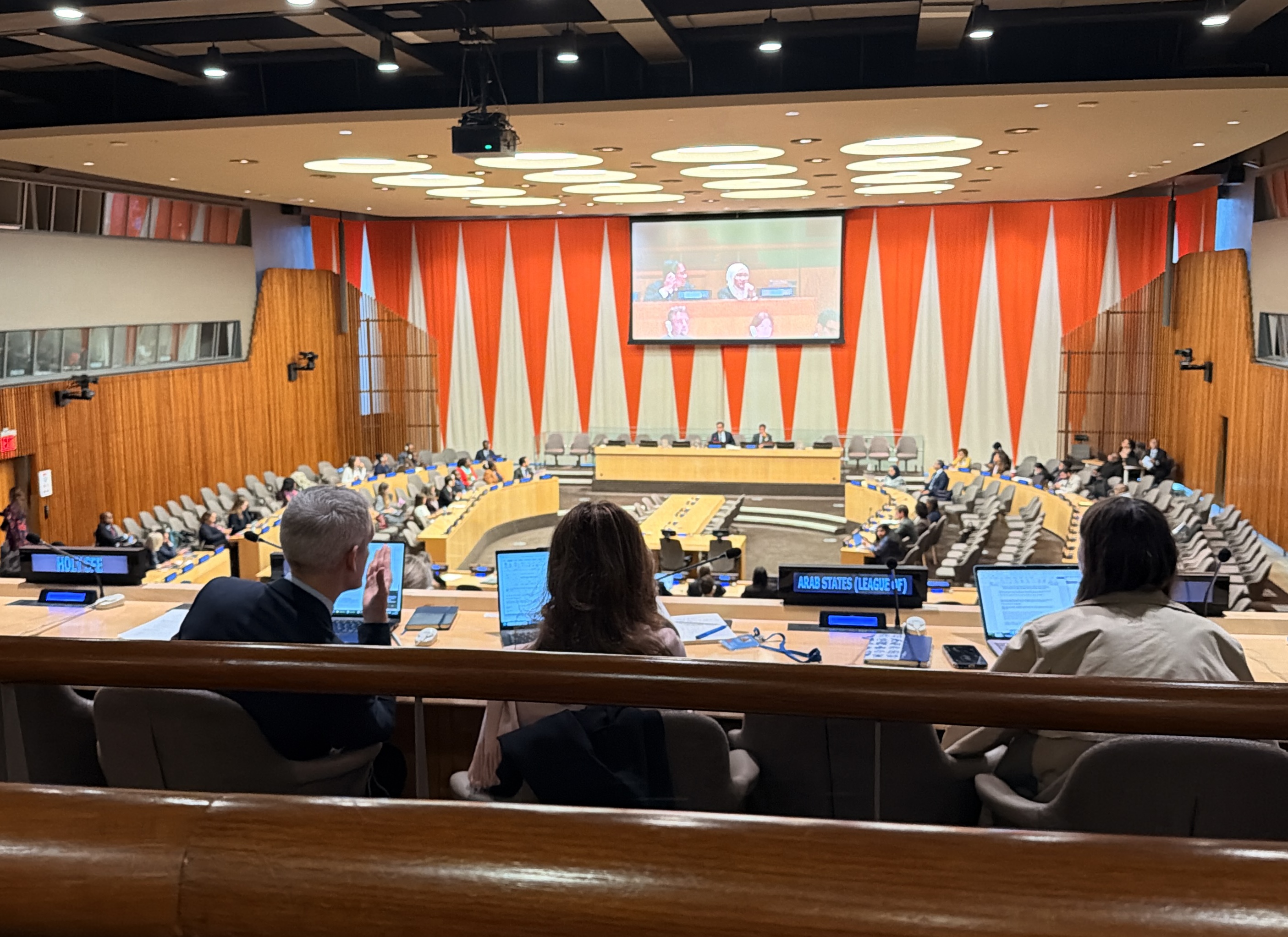 The Lehigh group first heard a presentation from Aguirre, then had the opportunity to ask her questions about the state of human rights worldwide and her personal background as a Human Rights Officer.
In her presentation, Aguirre explained that the OHCHR promotes the Universal Declaration of Human Rights. She explained that her office supports the Universal Periodic Review (UPR). This process assesses all 193 UN Member States every four and a half years.
The OHCHR then publishes its findings and recommendations online.
Taryn Johnson ‘26, is a current graduate student pursuing a Master of Arts in Environmental Policy and was interested to hear more about how the OHCHR encourages member states to follow through with the recommendations.
“They [the UN] can't legally make a country do something. That's not how the UN works,” Johnson said. “A big part of their process is not making the regulations, not getting everyone on board; it's actually just making sure the countries actually do it.”
Aguirre said these reports can help the press and, in turn, the people of a country hold their governments accountable for their actions.
Some Lehigh students asked questions about the United States’ recent decision to skip its scheduled review in November 2025.
Aguirre said that this hesitation to participate in UN procedures sometimes comes with a change in political administration.
Inside Ecuador's UN Mission
In addition to learning about the offices within the United Nations, students learned how a member state interacts with and serves the UN.
At the Ecuadorian Mission, they learned more about how the United Nations is organized, including the Security Council and the International Court of Justice, as well as the modern history of Ecuador’s role in the UN. In the presentation, Deputy Ambassador Ullauri was joined by Marcel Gross, an election officer and mission representative.
Ullauri and Gross discussed Ecuador’s 2023-2024 term on the Security Council, where the country helped address conflicts in Gaza, Ukraine, Sudan, and the Democratic Republic of the Congo.
They also described Ecuadorian diplomats’ efforts to give countries at different levels of development a greater voice at the UN. This means ensuring that countries with different levels of development are represented in UN structures. They want to make sure more voices are heard than just the “P5,” or the five permanent members of the United Nations Security Council.
“The whole court gets stronger when it’s represented by every region and every different legal system,” Ullauri said.
Ullauri and Gross specifically discussed Ecuador’s campaign for a seat on the International Court of Justice, an unusually ambitious move for the country.
“Ecuador has never been in the International Court of Justice,” Ullauri said. “To be, just to have a candidate for the International Court of Justice is something that’s out of the ordinary for smaller countries.”
Hannah Zeller ‘29, attended the trip and used the speaker sessions to reflect on her future career plans. As a neuroscience major and political science minor, Zeller is especially interested in pursuing a career in law. She was inspired by Aguirre's daily work as a human rights officer.
“I see myself doing this and talking about human rights with people, and genuinely caring with my whole entire heart,” Zeller said. “Especially when she said she worked with domestic violence victims, I just thought she was inspirational.”