Written by Colin McEvoy | September 3, 2026 | SHARE


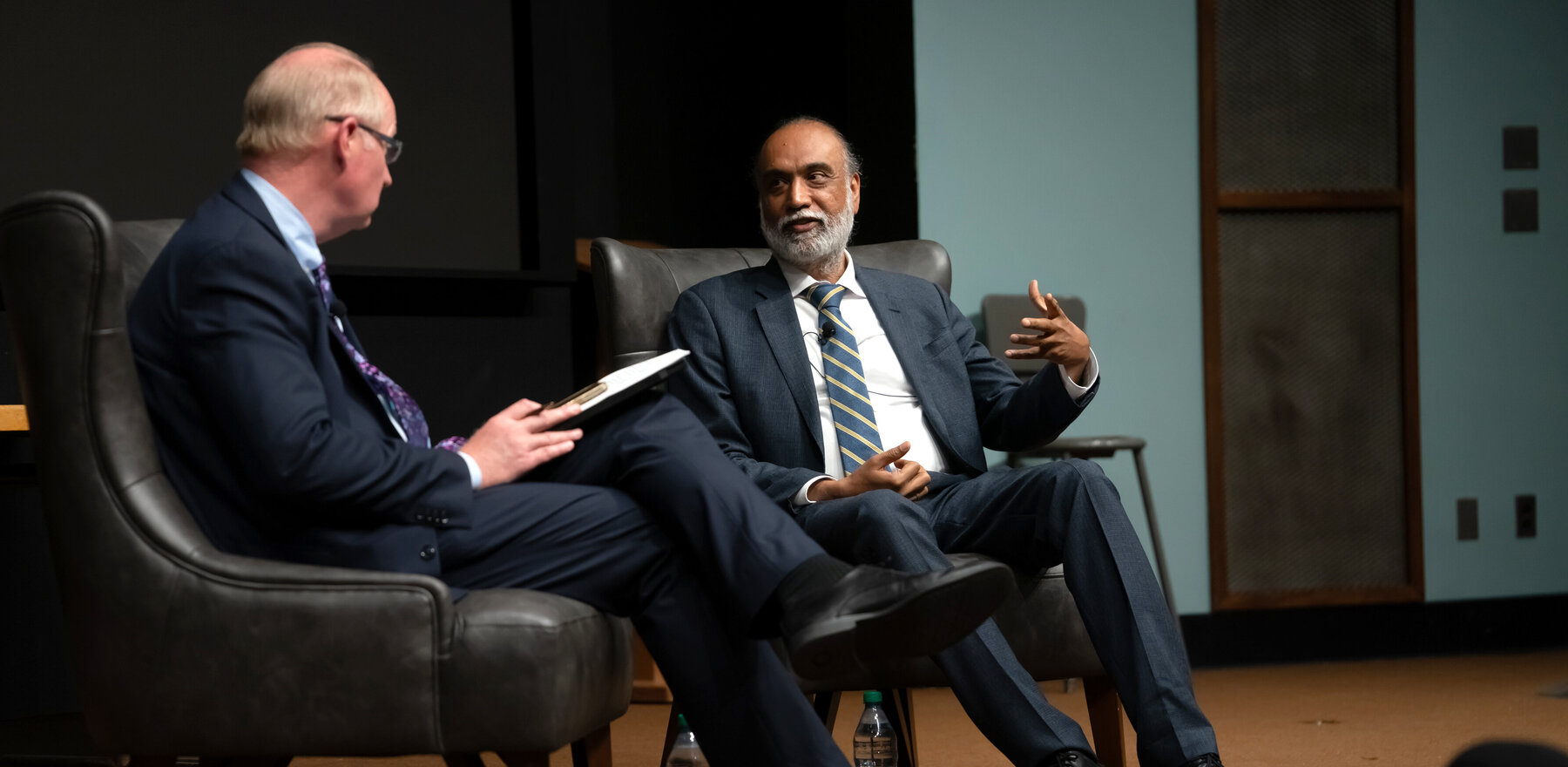
U.N. tech envoy Amandeep Gill urged the Lehigh community to move beyond fear and hype around artificial intelligence and take an active role in shaping its future.
Artificial intelligence is neither a guaranteed utopia nor an inevitable apocalypse, and we should stop treating it like one, according to Amandeep Gill, the United Nations Under-Secretary-General and Special Envoy for Digital and Emerging Technologies.
Gill, who leads tech innovations for the U.N., discussed the future of AI during a presentation for more than 150 attendees at Lehigh University on Sept. 2. As the U.N.’s chief tech envoy, he spearheads global AI governance, digital cooperation, and the implementation of the U.N.’s Global Digital Compact.
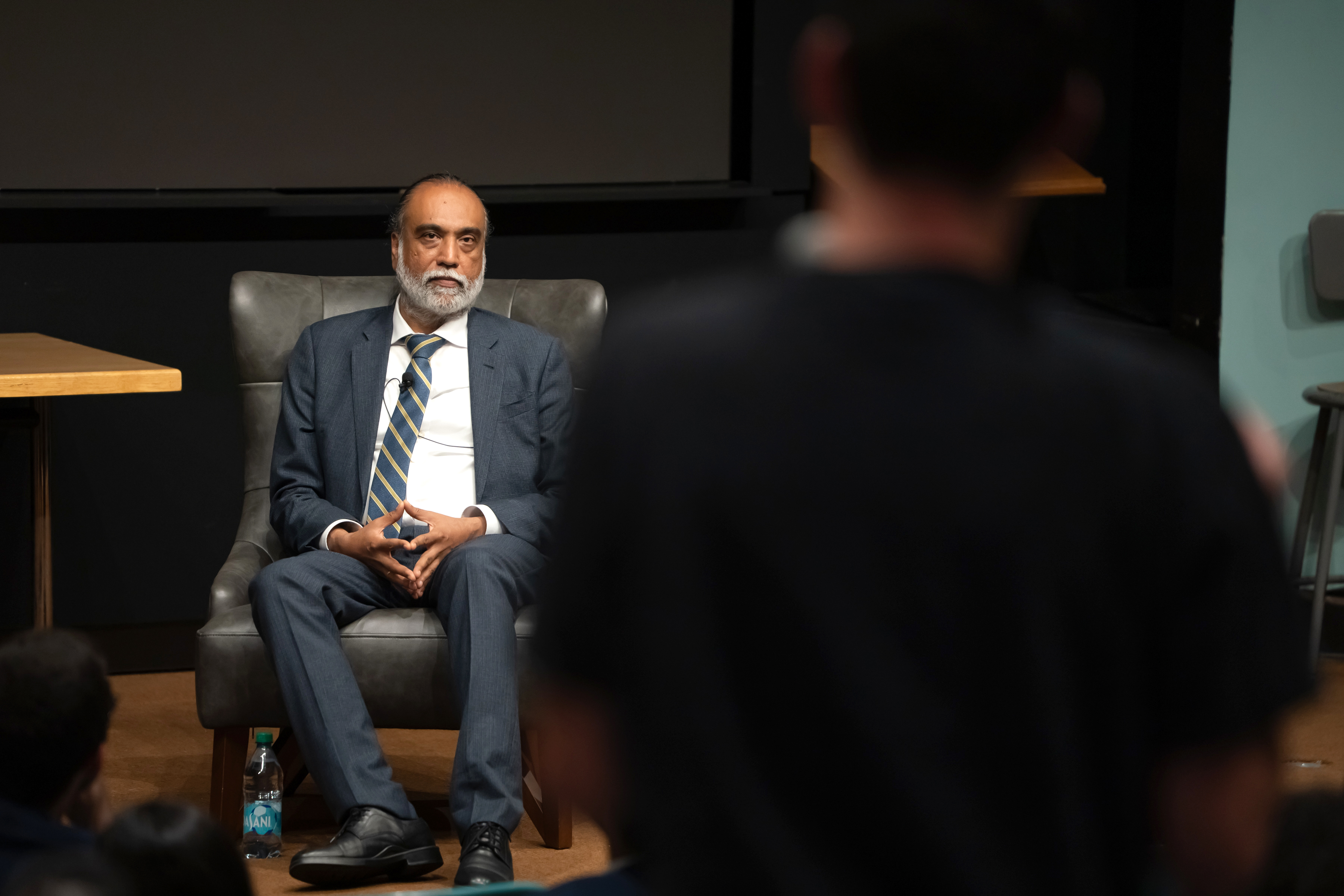
Gill rejected the idea that technology alone will determine AI’s future, arguing that people still have control over how it develops. As technological power becomes concentrated among fewer private companies and infrastructure limits emerge, Gill urged policymakers, educators, and students to take an active role in shaping AI before it causes serious harm.
“There are no dystopias or utopias either,” Gill said. “This is one of the traps to be avoided today, and some people actually would like us to fall into one of these traps, so we fear losing agency or can be sold a dream. Between the hype and the horror, there is a wise path, and that's what we should be looking at.”
Shaping AI’s Future
This event was co-sponsored by the Office of the Provost and the LU/UN Partnership. The Partnership provides opportunities for Lehigh students, faculty, and staff to gain skills necessary to become successful global changemakers by engaging with the U.N. in meaningful ways.
“My job partially is to put you in the room with global decision makers like today. Help to do the introduction and then get out of the way,” said Bill Hunter, Director of the LU/UN Partnership. “That’s the joy of my job, because you are future makers. You are future leaders.”
Gill cautioned against thinking of AI as a form of human consciousness. AI models recognize patterns and calculate probabilities, while human intelligence relies on experience, context, and social learning. Gill argued that human judgment therefore remains essential.
Gill also highlighted global inequalities in AI development. The technology depends on infrastructure including power grids, semiconductors and data centers, with 90% of global computing capacity concentrated in the United States and China. Africa, by comparison, has less than 1% of the world’s data center capacity.
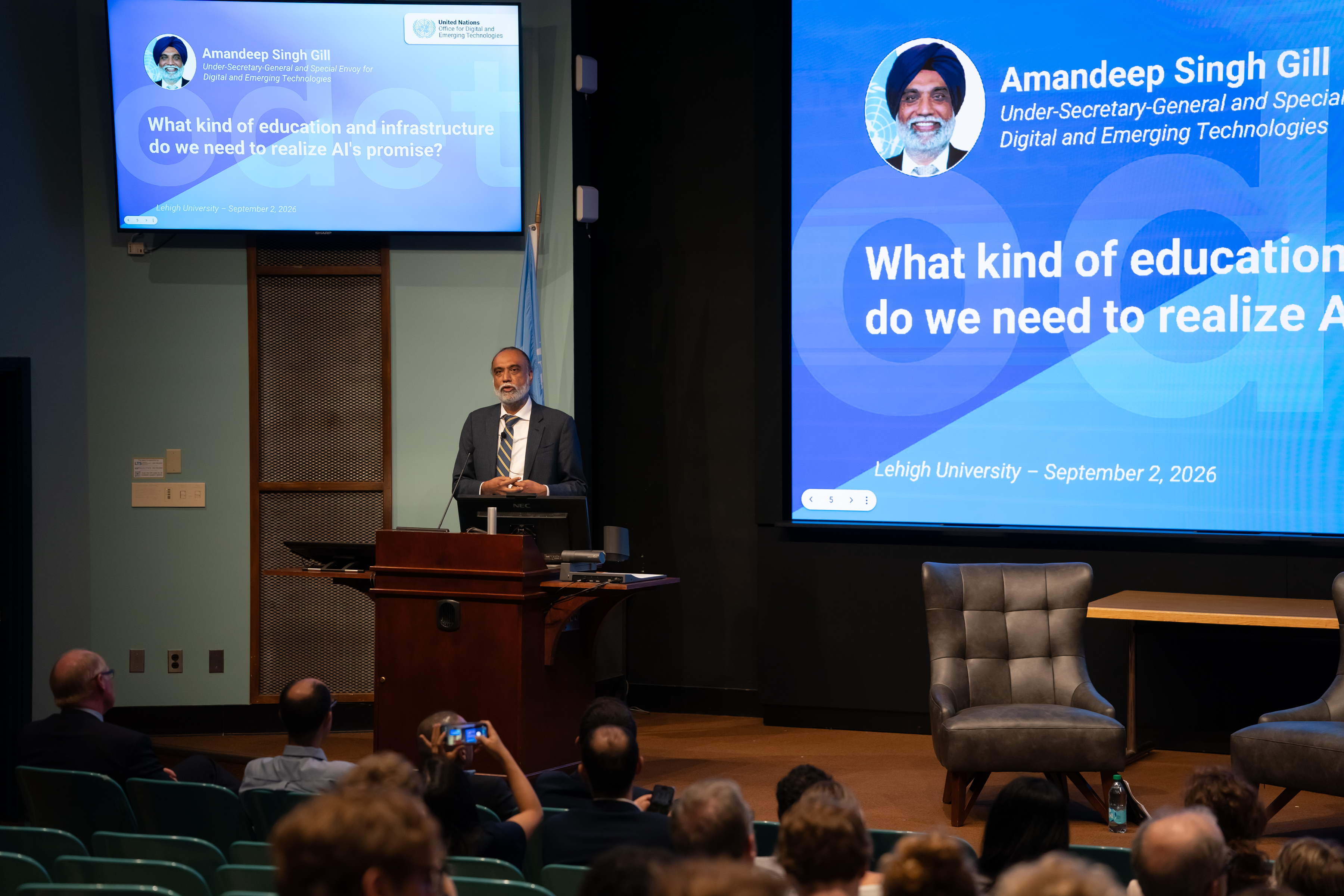
The U.N. seeks to address these challenges before AI causes harms similar to those associated with social media, where regulation often came too late, Gill said. He outlined a U.N. strategy focused on science, policy and capacity. It includes a global expert panel, greater policy coordination, and efforts to expand digital infrastructure in developing regions.
Preparing Students for AI
Gill said generative AI is also changing higher education, including testing and essay writing. He encouraged students to use AI while maintaining independent judgment and developing the ability to connect ideas across fields.
Rather than avoiding the technology, he encouraged students to use AI while continuing to think independently. Future workers, he said, will stand out not by memorizing information machines can retrieve, but by making connections across different fields.
“Let the machine carry what can be counted and documented, and spend the time it gives back to you on everything else that cannot be counted or documented,” he said. “Your work was never the words you memorized. The machine can hold all of that.”
Gill encouraged students to look beyond their own fields of study when working with AI. Rather than siloing technical skills, he said some of the most valuable uses of the technology come from combining computer science with areas such as healthcare, ethics and environmental science.
“Everything about AI is multidisciplinary,” Gill said. “The great value in AI should be found at the junction of disciplines: health and AI, biology and AI, bio geo food systems. So that's where your focus should be in terms of your own learning.”
Engaging with the U.N.
Gill visited campus as the keynote speaker in the LU/UN Partnership Ambassadorial Series. More than 30 Ambassadors to the United Nations have presented to the Lehigh community in support of this global programming initiative.
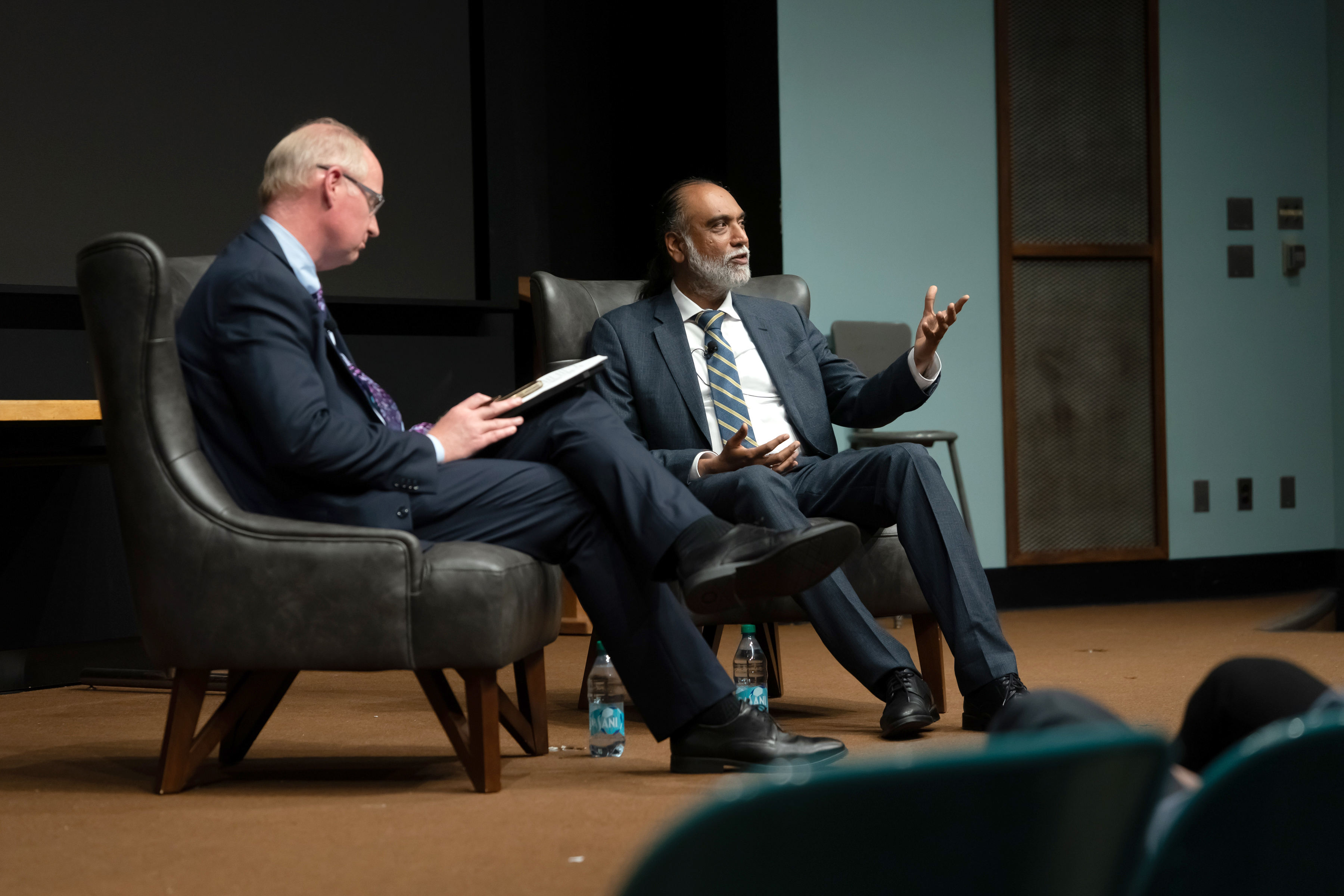
Lehigh has a long-standing relationship with the U.N., and in 2004 became the sixth university in the world to gain U.N.-accredited Non-Governmental Organization (NGO) status. In 2025, Lehigh became one of only 20 higher education institutions worldwide to be officially granted U.N. Economic and Social Council (ECOSOC) NGO special consultative status.
“Lehigh has gained the highest level of NGO status at the United Nations, giving us the same status as the Red Cross, Greenpeace, and Doctors Without Borders,” Hunter said. “ Let that sink in a moment. That's who we are. That’s the access we get at the United Nations”
Gill was appointed by the U.N. Secretary-General in 2022 to lead efforts on digital cooperation, AI governance and implementation of the Global Digital Compact. He previously co-led the Secretary-General’s High-Level Panel on Digital Cooperation and helped develop international recommendations on autonomous weapons and UNESCO’s guidance on AI ethics.
A career diplomat, Gill served as India’s Ambassador and Permanent Representative to the Conference on Disarmament in Geneva from 2016 to 2018 and has worked extensively on disarmament, emerging technologies and international security. He holds a PhD from King’s College London and a degree in electronics and electrical communications from Panjab University.