
Written by Colin McEvoy | January 14, 2026 | SHARE


A recent conversation at Lehigh explored how coaching can deepen reflection, foster integration, and make global learning more transformational for students and educators alike.
Coaching can reshape global learning at Lehigh University and beyond, offering new ways to engage with difference and to integrate personal and social transformation.
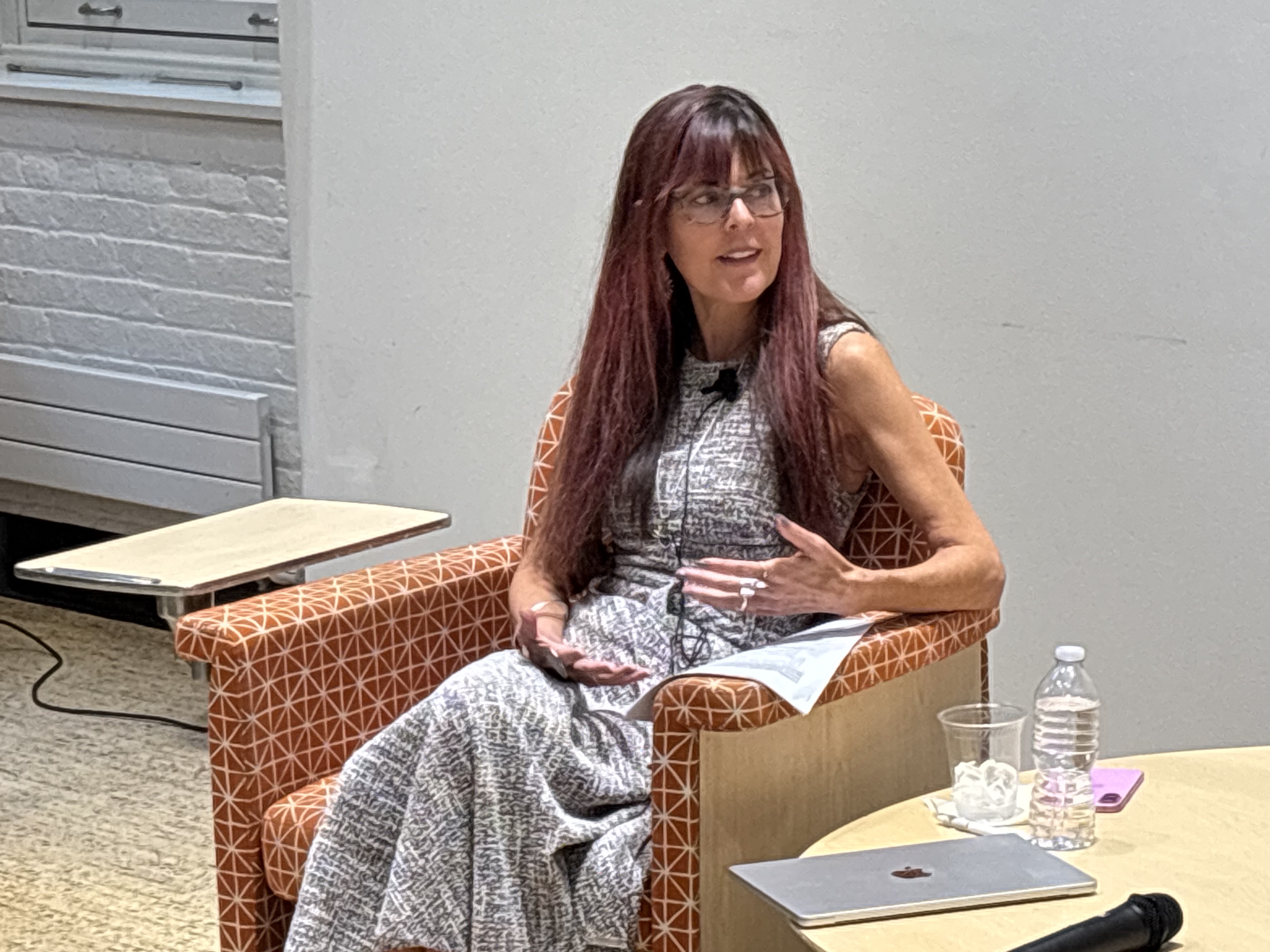
That was the focus of a recent conversation at Lehigh with Angelina Rodríguez, whose new book, Coaching the Soul: Self, Other, World Learning in Global Education, explores how coaching can deepen reflection, integration, and transformation in international education.
In a dialogue hosted by Cheryl Matherly, Vice President and Vice Provost for International Affairs at Lehigh, Rodríguez traced the origins of this work to the COVID-19 pandemic—when new approaches were needed to help students process disrupted study abroad experiences—and discussed how those ideas continue to shape Lehigh’s programs today.
Matherly: Coaching is having a cultural moment. Everyone seems to have a coach, but beyond the buzzword, what does it actually mean to you? How do you define coaching in the context of your work, and where do you see it showing up (or where could it show up) in how you engage with students, colleagues, or partners in international education?
Rodríguez: I’m glad you started with the “buzzword” question, because coaching often gets confused with mentoring, advising, or even therapy. Mentoring is sharing your own experience, advising is giving specific direction, and therapy focuses on mental health. Coaching is different.
In our context—higher education and professional practice—coaching can mean a sustained, one-on-one engagement with someone, or it can be a simple practice of asking thoughtful questions that help a person clarify what they think and want to do. Beyond individual interactions, it can also shape a broader coaching culture—not just adding learning experiences, but creating space to integrate those experiences into how we work and engage with others.
At its heart, coaching is about recognizing people’s innate wisdom. It isn’t about fixing or enlightening them, but shining a light so they can discover what they already know and what wants to emerge—whether in themselves, in our work as educators, or even at a societal level.
Matherly: Since you arrived at Lehigh, you’ve often spoken about the connection between coaching and global learning. How did you come to that perspective, and why does global learning sometimes feel transactional? How might a coaching approach help make it transformational?
Rodríguez: When I first began coaching about ten years ago, I quickly saw how much it paralleled intercultural learning. In global education, we put students into new contexts so they make the strange familiar—and then turn the familiar strange by questioning their own assumptions. Coaching does the same thing at the interpersonal level: it’s about asking, What’s it like to be you? What’s important in your world? The skills are the same—listening, slowing down, suspending judgment, and asking good questions.
This work matters because education too often becomes transactional—about credits, ROI, and metrics. Those things are necessary, but they don’t create transformation. True transformation requires space to process and integrate experiences. Otherwise, students return home, drop their “backpack” from abroad, and move on without making meaning of what happened. When that happens, the deep potential for growth is lost.
Coaching offers a way to reclaim that space. It helps students and faculty embody what they’ve learned so it becomes permanent and re-applied—not just “a cool experience,” but something that truly changes how they engage with the world.

Matherly: Right now higher education is so focused on outcomes, ROI, and even the disruption of AI. In your introduction, you quoted bell hooks on teaching in a way that “respects and cares for the souls of our students.” How does your work speak to that idea in this moment?
Rodríguez: Right now we’re facing so many pressures on our “souls”: the digital takeover of our attention, unfettered AI, deepening political divides, post-COVID disconnection, and the constant inhumanity we see in the news and on social media. Students feel this too. They’re not just intellects; they also have emotions, bodies, and spiritual lives, and higher education needs to acknowledge the whole person.
That’s why I see global education as so vital. It’s about being fully present in a place—smelling the food, feeling the context, engaging face to face—rather than living only in our heads. Coaching complements that by bringing the somatic and emotional alongside the intellectual. At its core, coaching is about alleviating suffering. If we want students to take on the world’s biggest challenges, we need to give them the inner resources to sustain themselves. Otherwise, the weight of those problems will simply be too much.
Matherly: Your book introduces the “self, other, world, soul” framework, which you’ve also brought into OIA’s work. How does this idea of inner work preparing us for outer work show up in practice?
Rodríguez: Inner work and outer work aren’t separate—they happen together. It means checking ourselves: noticing how we react, widening our perspective, and learning to realign. If we don’t build that awareness, as Thomas Merton wrote, we end up projecting our issues onto others.
This focus on regeneration and self-awareness is gaining traction well beyond coaching—in systems change, social activism, and other fields. Education is beginning to catch up, though we’re often slower to embrace it.
Matherly: Coaching can seem resource-intensive, but you’re not talking about assigning every student a coach. How do you think about scale, and what does it mean to approach this work with a “coaching mindset”?
Rodríguez: It’s not about giving every student a coach—that would be impossible, and not everyone needs one all the time. Nor is it about turning everyone into a coach. What matters is the pedagogy: the structure, scaffolding, and mindset behind it.
A coaching mindset means letting go of the need to control everything, listening closely, and supporting what emerges—while still providing structure, just as in teaching. It can show up in many ways: a single conversation, a course, or even how we design programs. The key is helping people articulate their learning. When students can put words to why an experience was transformative, that articulation leads to integration—and that’s what makes the change lasting.
Ultimately, coaching sharpens how we listen and notice patterns. It’s less about putting people into boxes and more about recognizing what matters to them in the moment. That attentiveness can scale across contexts, from one-on-one work to program design.
Matherly: This all sounds great in theory, but what does it look like in practice? Can you share some examples of how you’ve applied a coaching approach in OIA—with students, fellows, or staff?
Rodríguez: We’ve applied coaching in a variety of ways. Last summer, with two colleagues, I led a program for 25 Mandela Washington Fellows that combined individual and small-group coaching to help them reflect on how they show up as entrepreneurs. We’ve also done individual coaching with students, which is rewarding though not sustainable, and offered training sessions for groups like the Griffins and Lucy students on when a coaching approach can be useful.
Within OIA, staff have piloted projects using this model with international students and internship programs, and we’re now expanding that work. Even our Passport program is being redesigned to integrate the self–other–world framework. In practice, it’s a simple but powerful way to weave reflection and relational awareness into everything from program design to everyday communication.
Matherly: With your background in study abroad and your recent work with the Forum on Education Abroad, how do you see the future of global learning—both in the field and here at Lehigh? What do you hope it looks like five years from now?
Rodríguez: Predicting the future feels unwise, but I’d start by saying that the progress we’ve made in study abroad over the past two decades won’t be enough for what’s coming next. We haven’t given enough attention to the humans involved—students, faculty, staff—and without spaces for integration, we’re essentially saying parts of them aren’t welcome.
Looking ahead, I hope we focus more on the inner lives of both students and educators, since burnout doesn’t end at age 21. I think we’ll also see new ways of gathering, with people craving deeper, more intimate discussions. And I’d like to see us open more to diverse epistemologies and ways of learning, valuing something like an apprenticeship in the Amazon as much as an internship in a financial hub.
For Lehigh, my vision is programs that cross old divides—liberal arts vs. business, “hippie” vs. tech—because those categories are false. We need broader, more inclusive approaches while still keeping what sustains us: strategy, data, and institutional survival.